
Endless War, Exorbitant Privilege: How America's Military and the Dollar Feed Each Other
Inside the military-industrial complex and dollar hegemony that outlast every war from Eisenhower's warning to the Iran ceasefire nobody believes will hold

Months have passed since the United States and Iran went to war. In recent weeks, the two sides have appeared to reach a temporary break, though the story is nowhere near its end.
There has already been no shortage of analysis. Over the past few months, I have also written extensively on the strategic calculations and historical baggage that shaped the conflict. I will not repeat those arguments here.
Instead, I want to discuss a question that experts seldom ask, despite it lying at the very centre of this war.
The US burned billions of dollars in taxpayers’ money, only to arrive close to where it had begun. It revealed far more of its own constraints than it intended, while barely reached any victory. How did the world’s most powerful country find itself here?
More importantly, what is the purpose of fighting a war that almost everyone knew would lose?
Many have mocked Donald Trump, arguing that he was played by Benjamin Netanyahu, or persuaded by the whispers of Steve Witkoff and Jared Kushner. From a distance, the public watches Washington and Jerusalem quarrel over tactics, as though the story were little more than another episode of political theatre. Yet those sitting behind the table had already secured what they came for.
Did the United States truly intend to defeat Iran?
I would argue that defeating Iran was never the objective.
When the birds have all been hunted, even the finest bow is eventually put away. Those who benefit most from America’s wars watched this conflict with composure. They did not need victory. They merely needed the game to continue.
In the Chinese Three Kingdom era, general Sima Yi quietly stroke his beard atop the walls of Xicheng. His enemy Zhuge Liang just staged a famous act by pulling an instrument on top of the city wall. Zhuge had barely any armies inside the city but he pretended he did. He bluffed so well and showed a great amount of confidence playing an instrument in front of enemies casually.
Was Sima Yi, an equally strategic and wily general, stupid for not sensing the city was actually unguarded?
Sima Yi saw something beyond the battlefield. He understood that if he were to crush his archenemy now, he would have been demoted by the emperor as he would have been no more use.
Sima decided to withdraw, and the game of Three Kingdom went on for more decades.
The Military-Industrial Complex: Why America’s Wars Never Truly End
To understand why America fights the wars it does, one has to begin with the first pillar of its modern war machine: the military-industrial complex.
The term was coined by Dwight D. Eisenhower.
Few people were better qualified to make such a warning. Eisenhower was the Supreme Allied Commander during the Second World War, a five-star general who defeated the Nazi Germany, and later President of the United States. Throughout the Cold War he maintained a hard line against Communist China (and pissed off Mao so much that Mao “welcomed” him with artillery), yet it was this lifelong soldier, standing at the end of his presidency in 1961, that chose to leave Americans with one final caution.
“In the councils of government, we must guard against the acquisition of unwarranted influence, whether sought or unsought, by the military-industrial complex. The potential for the disastrous rise of misplaced power exists and will persist.”
More than sixty years later, those words read less like a warning than a prophecy.
The United States had already shown signs of becoming a great power under Theodore Roosevelt. Yet only until the Second World War the US was throned into supremacy. The war not only made America stronger but also established the foundations of an international order centred on American power.
When people think of America’s victory in the Second World War, they often remember the mushroom cloud over Hiroshima. Far fewer remember that Washington also armed much of the Allied world, financing the war largely through borrowed money, which became one of America’s greatest strategic assets ironically.
The more wars it fought, the more debt it accumulated. Instead of weakening the country, the process strengthened its position within the international system. I will return to this paradox in the next section.
The numbers remain astonishing. The US spent roughly $323 billion on the Second World War, of which nearly $211 billion was financed through borrowing. Between 1940 and 1945, real GDP expanded by more than 70%. America became what Franklin Roosevelt famously called the “Arsenal of Democracy.” Men went overseas to fight. Women remained at home to build ships, aircraft, tanks and ammunition.

Before the WWII, Americans had little appetite for maintaining a large standing army during peacetime. Each major conflict was followed by demobilisation. Permanent arms manufacturers barely existed. Standing armies were expensive, and early America was still somewhat an innocent baby.
The Second World War changed that forever.
Between 1940 and 1944, Washington awarded more than $175 billion in prime defence contracts. Roughly two-thirds went to just one hundred companies, while one-fifth flowed to only five.
The federal government also became the country’s largest industrial investor. It financed shipyards, steel mills, aluminium plants and chemical factories, investing well over $17 billion into industrial capacity. Government procurement transformed what had once been a relatively modest aviation industry into one of the largest sectors of the American economy.
Christopher Nolan’s Oppenheimer brought the Manhattan Project back into public attention. Yet the project’s greatest legacy was not the atomic bomb. It forged an enduring partnership between government, industry and universities.
When you create an Alien embryo, it will be impossible to terminate it. After the WWII, the world walked into the Cold War era, which witnessed superpower competition. You cannot do superpower wresting with two pieces of pita breads - you need, arsenals.
In 1950, the Truman administration adopted NSC-68, arguing that the United States should permanently maintain an enormous peacetime military establishment. From that moment onwards, defence contractors, the Pentagon and congressional defence committees became permanently intertwined, and the triangle is solidified to an unbreakable level.
Anyone familiar with Chinese history knows that downsizing an army has always been one of the hardest tasks for any ruler, ranking alongside succession struggles, taxation, and wars against the Huns. If disbanding armies were truly easy, Chinese history books would lose 70% of the volume.
The United States is no exception. The military-industrial complex understood from the very beginning that it would eventually come under public scrutiny. Its solution was simple: make itself indispensable to every major centre of political power.
The mechanism has a Jack the Ripper type of elegance. Defence companies sell weapons to the Pentagon. The Pentagon requests larger budgets from Congress. Congress then approves those budgets. Contractors generate larger profits, which allow them to build more weapons and lobby for even larger programmes. Then, every participant benefits from expansion.
Some might ask why the Pentagon does not simply purchase less, or why Congress does not refuse to appropriate more money. The reason is simple, as the buyers and the sellers are often the same people.
Retired generals frequently become executives or board members of defence contractors. Defence executives, in turn, move into senior government positions. Folks rotate between public office and private industry. They change the hats but not the roles. You don’t want Coke? That’s fine, they will offer you Pepsi, which is from the same company. Then we are in a game where judges and players are the same guys.
Second, the industry found something even more politically powerful than national security - employment.
Rather than concentrating production in one location, major weapons programmes deliberately scatter manufacturing across as many congressional districts as possible. A single fighter aircraft may contain components produced in forty different states. As a result, every member of Congress has a constituency to protect. Cancelling a weapons programme no longer means reducing military expenditure but eliminating jobs back home.
Even the most determined reformer would face an immense flood of attacks if he were to cut military spending, which equates to job cut now.
In 1993, then Deputy Secretary of Defense William Perry attempted what many before him had considered impossible. He invited the chief executives of America’s largest defence contractors to dinner and gave them a simple choice: the government could no longer afford to sustain so many companies. They would either merge or disappear. The gathering later became known as the Last Supper. The executives agreed. Washington wanted consolidation; the industry was happy to “oblige”.
Over the following years, dozens of defence firms merged into five dominant giants: Lockheed Martin, Boeing (following its merger with McDonnell Douglas), Raytheon, Northrop Grumman, and General Dynamics. Readers with an economics background will immediately recognise the outcome. Once an industry consolidates into an oligopoly, marginal costs fall, competition weakens, and market power becomes increasingly concentrated. Today, these five companies account for nearly half of America’s hundred largest defence contracts.

Between 1948 and 1989 alone, the United States spent well over US$10 trillion on defence.
As the Soviet Union collapsed, the US military power lost a target. Now it needed to find a new adversary - terrorism. In my Iraq essay, I wrote about how Saddam Hussein gradually fell from Washington’s strategic partner to one of the world’s most recognisable villains before ultimately ending his life on the gallows. Interested readers may refer.
The broader pattern, however, repeated itself across decades. From Yugoslavia to Afghanistan, from Iraq to the more recent wars in Ukraine and Iran, America’s military machine simply kept moving from one battlefield to the next. According to Brown University’s Costs of War Project, the post-9/11 wars cost approximately US$8 trillion, directly killed around 929,000 people, and displaced nearly 38 million more.
Yet weapons alone do not sustain wars. Wars require narratives. Defence contractors fund think tanks, sponsor policy institutes, finance research programmes, and cultivate television experts who repeatedly arrive at similar conclusions: the threat is growing, deterrence is insufficient, and military spending must increase. Fear is the fuel that keeps the machine alive, and after decades of practice, it has become exceptionally efficient at manufacturing fear.
I remember arriving in Iran for the first time in 2017 and feeling genuinely puzzled. The Iran I encountered bore little resemblance to the Iran read in newspapers. Over the following decade, as I travelled across countries that had each, in one way or another, been turned into villains of the international order, I gradually found my answer. If there is no demon, there is no fear. Without fear, there is no justification. Without justification, there is no profit.
Between 2020 and 2024 alone, private companies received roughly $2.4 trillion in Pentagon contracts. Many still assume that America’s military establishment remains fixated on the Middle East because of oil. No. Today’s Washington is increasingly organised around China.
The “China Threat” has become an industry in its own right, shaping think tanks, media narratives, lobbying efforts and increasingly public policy itself. Ironically, many of those promoting this narrative are not driven by personal hostility towards China. Some built fortunes doing business in Beijing. Their children study Chinese and love China. Some went to Tsinghua or PKU. A direct military confrontation with China would mean suicide, but, talking about a potential confrontation, however, remains highly profitable.
Since 2012, the United States has spent at least US$3.4 trillion preparing for potential military competition with China, which is more than the $2.4 trillion it spent in Afghanistan over two decades. At the same time, Silicon Valley has quietly entered the battlefield. Companies such as Palantir and Anduril represent the emergence of a new military-industrial complex rebranded as the military-technological complex involving artificial intelligence, venture capital, surveillance and defence procurement.
For the United States as a country, the wars were financial failures. Washington spent roughly $2 trillion fighting in Afghanistan for twenty years, only to replace the Taliban with the Taliban. It spent another $27 billion bombing Iran, only to replace Khamenei with Khamenei. Eight trillion dollars could have built hospitals, schools, and perhaps even the universal healthcare generations of Americans desperately wanted.
Is the American government stupid? Hardly. On the contrary, it is too smart. The problem is that this careful calculation does not serve the American public. It serves the special interest groups, whose wealth and political influence depend upon perpetual mobilisation. For them, war is not an unfortunate necessity. It is a profitable business model, one that continuously renews itself and rewards those inside it. And for these guys, they possesses enough power to ensure that the war machine will operate eternally.
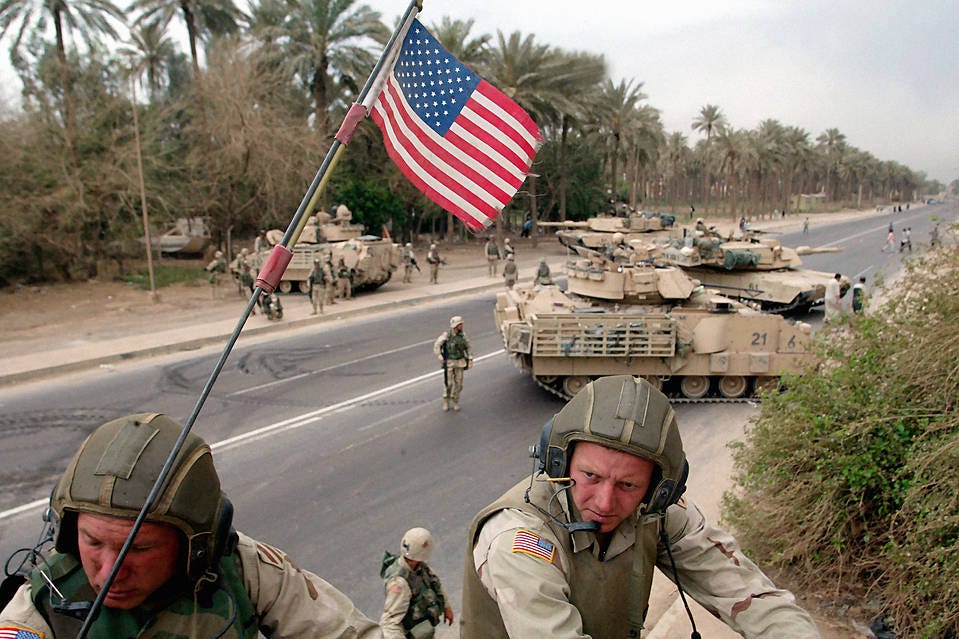
Money Never Sleeps: Dollar Perpetuity
If the Chinese emperors had a limitless bank, they might have fought huns all the way to Hungary.
War is a money cremators. It enriches defence contractors while draining national treasuries. Germany’s debts after the First World War helped pave the road to the Second. Saddam Hussein emerged from the Iran-Iraq War financially exhausted before marching into Kuwait. No country can remain trapped in an unwinnable war without eventually paying the price, whether through economic collapse, political instability, or generations of wasted lives.
The United States was once no different. That’s why Washington had little interest in maintaining a large standing military. Soldiers required salaries, weapons, logistics, infrastructure and constant maintenance. Financing a permanent military establishment placed an enormous burden on any government. During the Second World War alone, America’s debt-to-GDP ratio rose from roughly 42 percent in fiscal year 1941 to over 106 percent by 1946.
As I mentioned earlier, the money that financed America’s wartime production did not come from government coffers. It came largely from borrowing. The US armed much of the Allied world while simultaneously accumulating an unprecedented mountain of debt. At first glance, this appears to be a terrible bargain.
However, my readers, if you dream big, you’ll understand what the US gained is not money returns - it’s hegemony.
The war left the United States as the world’s only industrial superpower. In 1944, the Bretton Woods system placed the U.S. dollar at the centre of the international monetary order. Even after President Nixon suspended gold convertibility in 1971, turning the dollar into a purely fiat currency, the world had already become dependent upon it. International trade was settled in dollars. Oil was priced in dollars. Central banks accumulated dollars as reserve assets. The modern financial system gradually came to revolve around a currency backed not by gold, but by confidence in American power.
It’s what the French called - the “exorbitant privilege”.
Once the world conducts trade in dollars, everyone needs dollars. Once everyone needs dollars, everyone also needs U.S. Treasury securities. As demand for Treasury bonds continues to grow, Washington gains something few governments in history have ever enjoyed: the ability to borrow at extraordinarily low interest rates without limit.
The system extended the US governments “seignorage”, which is the dollar tax.
Most countries in the world must first produce goods, export them, earn foreign currency and only then purchase what they need abroad. The United States can create the currency that everyone else requires, and use that currency to purchase real goods and real labour produced by the rest of the world.
Several weeks ago, while chatting with an American friend in Beijing, he mentioned a Chinese acquaintance who had studied at the best universities in both China and the United States, yet now earned around RMB 10,000 (~$1,400) a month working in the public sector. He found it rather unfortunate. I replied that perhaps salary was not the only thing this person had gained. Public service often provides networks, experience and opportunities. Yet my friend’s instinct also revealed something more. That salary was denominated in renminbi rather than in the world’s reserve currency. From the perspective of someone accustomed to earning dollars, it’s pitiful little.
By the end of 2025, the largest foreign holders of U.S. Treasury securities were Japan, the United Kingdom and mainland China, holding approximately $1.19 trillion, $863 billion and $684 billion respectively. Why China holds so much US debts? China exports goods to the United States and receives dollars in return. Those dollars must eventually be invested somewhere. U.S. Treasury securities remain one of the few markets large enough, liquid enough and secure enough to absorb them.
China is just one rather banal example in the T-bill world. Central banks, exporters, pension funds and institutional investors across the world all require dollar assets. Collectively, they finance America’s borrowing on terms that few other countries could ever hope to obtain.
Could another country simply imitate the United States by printing money freely? Argentina and Turkey tried and had a financial collapse. They found out that they borrowed in dollars but could not print dollars. They needed to pay the debts using dollars. The United States also owes dollars, but, it could print dollars to satisfy the debts.
America can finance expensive wars not because it has a dragon sized vaults but because it has exclusive cheating plug-ins: printing money to finance a war and remain “solvent”. And the reason it remains solvent relies on the controlling power of the US armies.
It is simultaneously the borrower and issuer, judge and player. It can “persuade” allies from Japan to Israel to Singapore to Australia to purchase an F35 by $80 million despite the jet spent much of its operational life inside a hangar. After commiting, the spare parts, software updates, maintenance and system upgrades remain dependent upon Lockheed Martin for decades afterwards. Global F35 programme’s estimated lifetime sustainment costs now exceed US$1.5 trillion.
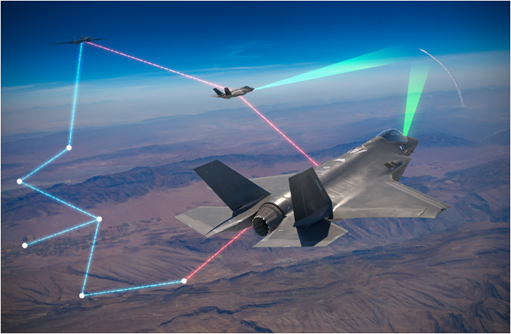
Readers might conjure: wait what’s the difference between a gang dealer and this. Well, not much different.
You might say, well I will not play.
It’s very brave you think this way - and Cuba, Iraq, North Korea, Russia, and Iran have all once thought so.
The Middle East: From Israel to Iran
Every machine requires a point of leverage. In the Middle East, that point is Israel.
Each year, Washington provides Israel with roughly $3.8 billion in military assistance. Much of that aid, however, must be spent on American-made weapons. The money leaves Washington only to return to American defence contractors. Israel therefore serves not only as one of the military-industrial complex’s most reliable customers, but also a visible showroom.
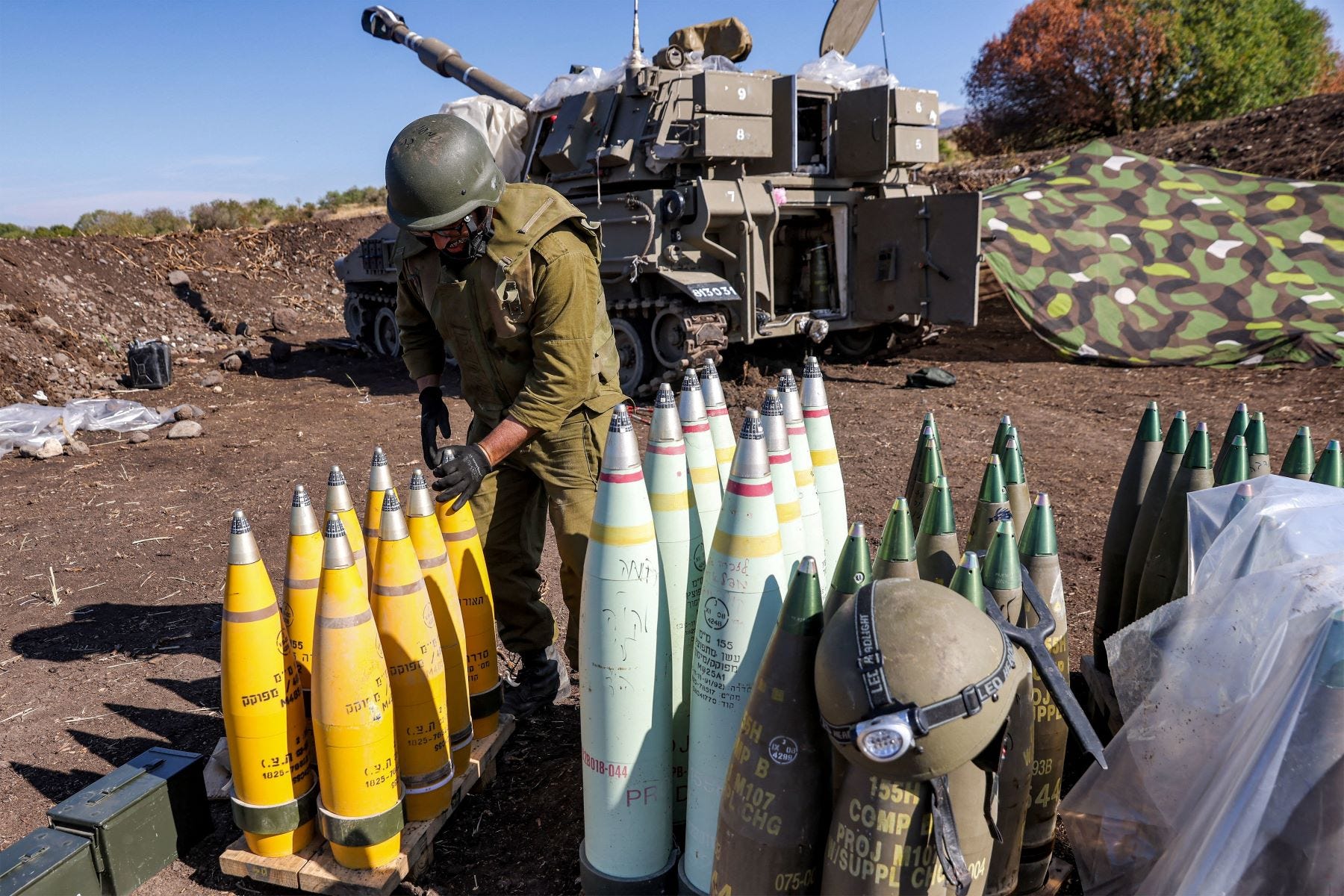
Israel’s strategic behaviour cannot be understood without recognising one geographical reality. It is a country with almost no strategic depth. We know that big dogs are reticent and small dogs bark. Israel’s story is an essay of its own.
Iran’s strategy is similar to your attitude at work - noncooperative.
Tehran understands that America’s perpetual motion machine rests upon two pillars: military power and financial power. The two are connected by energy.
The Strait of Hormuz remains one of the world’s most important maritime chokepoints. Nearly a fifth of global oil passes through a narrow stretch of water only a few dozen kilometres wide. The straight is also a thin line for the ocean. Once sea mines are deployed, they recognise no nationality. They do not distinguish between American tankers and Chinese ones. The Strait is either open to everyone or close for everyone.
Although the two sides have now signed a memorandum of understanding, the central issue has not changed. Iran’s nuclear programme remains unresolved.
Both governments agreed to continue negotiations over the following sixty days, with technical talks originally scheduled to begin at Switzerland’s Bürgenstock Resort. Tehran insisted that Israel first halt its military operations against Hezbollah in Lebanon before substantive negotiations could proceed. Given Israel’s security posture, that condition appears difficult to satisfy. Only days later, Israeli airstrikes in Lebanon once again pushed diplomacy backwards.
By late June, commercial shipping had resumed through the Strait of Hormuz. Analysts estimated that the conflict had depleted significant quantities of precision munitions and interceptor missiles, inventories that may require three to five years to replenish. For ordinary people, that represents another enormous bill. For defence contractors, it represents several years of guaranteed orders.
Meanwhile, Steve Witkoff flew to Switzerland, where Jared Kushner was already waiting. Over the previous four months, negotiations had travelled from Muscat to Islamabad, from Doha to the Swiss Alps. The invoices for private jets, luxury hotels and diplomatic summits are settled in ruins in Lebanon.
There is an old Chinese saying: when the cannons fire, gold is worth its weight many times over. While the elites scoop the last bits of war caviar, your stocks continue to embrace a freefall.
Do you remember William Perry we talked about in section one? He later became one of the world’s strongest advocates for nuclear disarmament. Like Eisenhower before him, Perry understood the machinery of war precisely because he had spent a lifetime inside it. He repeatedly warned that the probability of nuclear catastrophe today may be even higher than it was during the Cold War, despite how little public attention the danger receives.
In 2011, Perry joined the board of a biotechnology company called Theranos, chaired by the now-infamous Elizabeth Holmes. The company would eventually defraud investors of hundreds of millions of dollars before collapsing. Its rise and fall later inspired John Carreyrou’s bestselling book, which by the way, is called - Bad Blood.
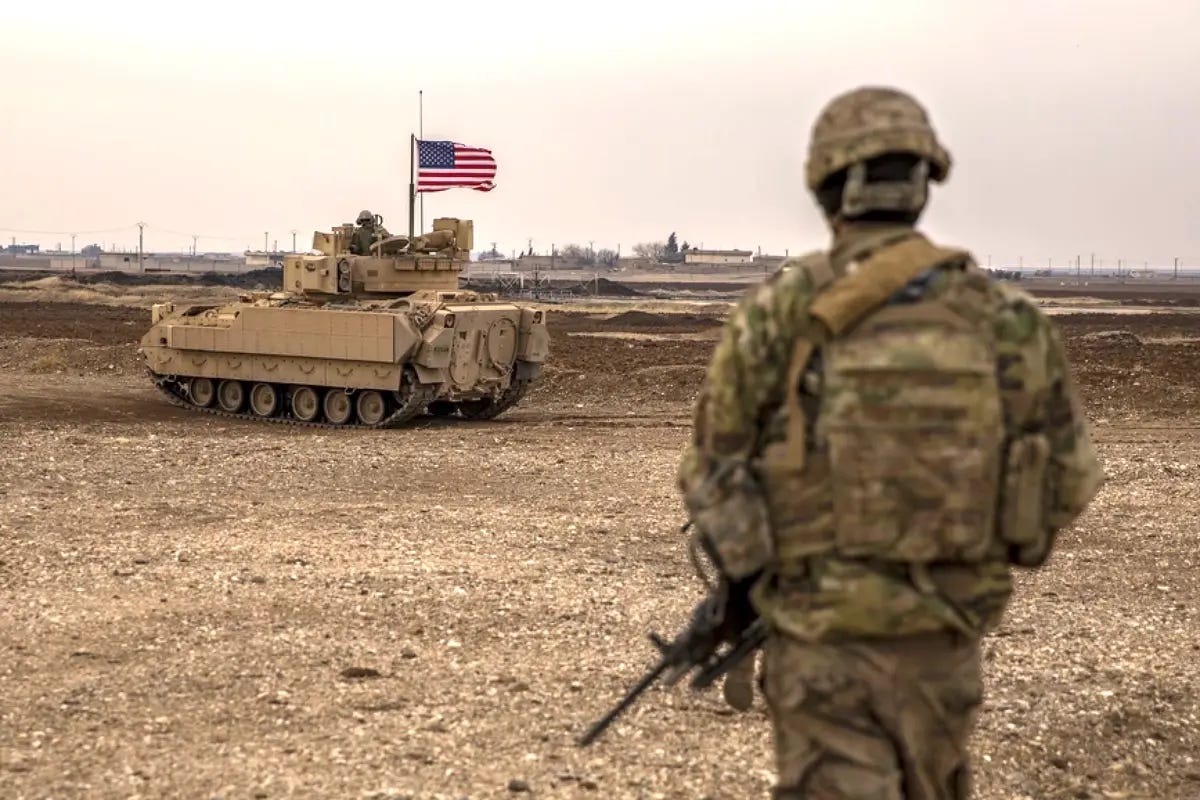
*I wrote this article around Freedom 250 celebration. Iran-US negotiations went on with new information, but the fundamentals remain unchanged, as illustrated by the article.