
From Nasser al-Din to Khamenei: A Century of Unfinished Sovereignty
Iran Between Empires: 1896–2026

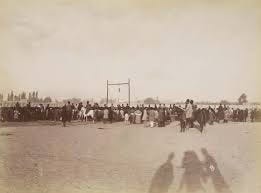
On 10 August, 1896, Mirza Reza Kermani, the assassin of the Qajar Shah Nasser al Din, was publicly hanged in Tehran. The Shah he assassinated was one of the most important shahs in Iran’s modern history, not because he unified Persia and won the title of Shahanshah, but because he failed to do so. An insecure and impulsive ruler, Nasser al Din ruled Persia for half a century. Under his rule, the thorny issues of foreign influence, modernisation, women’s rise, secularisation, religious conservatism and rebellion imploded. He did a mediocre job at a turbulent time when mediocrity in such an era could prove fatal to a state. He nevertheless faced extremely bright, sharp, and sometimes ruthlessly calculating domestic and foreign figures.
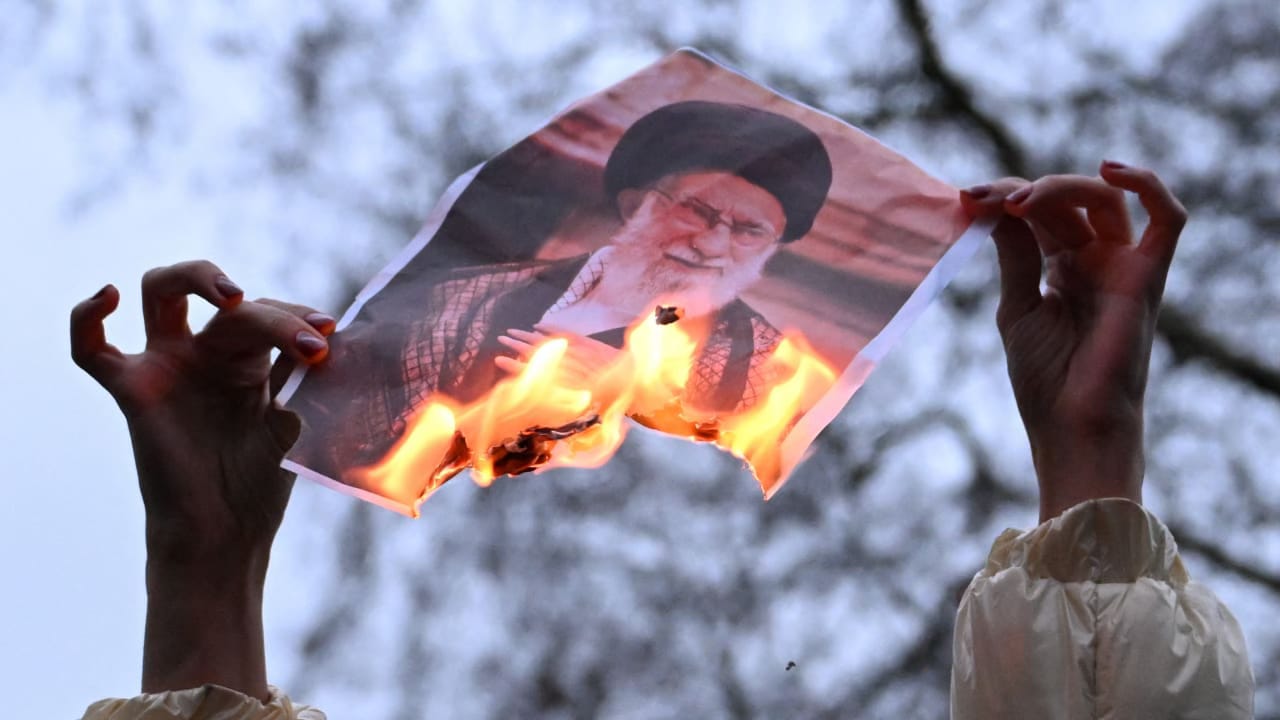
In 2026, 130 years after Kermani’s execution, Nasser al Din has long been buried in the dust of history. However, the same issues that haunted his reign persisted into today. The abrupt removal of Iran’s de facto ruler of three decades, Ali Khamenei, by the joint US-Israel airstrike, sent the country into divided fervour. Many urban Iranians who have long suffered from the suffocating economy celebrated in exhilaration. The veiled Khamenei supporters instead stood together and wept in defiance.
Persians were no less divided than the Americans, whose contest over the meaning of freedom runs from the pre-Independence era to Trump’s second presidency. Iran’s past, present, and future, are shaped by evolving forces. Between the two deaths lies a century of unresolved arguments about where Iran belongs and a relentless struggle for self-rule.
Anti-Western Resistance: Story of Jamal al Din Afghani
Before Mirza Reza Kermani carried out his audacious act, he sought his mentor Jamal al-Din Afghani’s guidance.
Afghani, the controversial polyglot who could converse fluently in Arabic, Persian, Turkish, French, and English, had spent his entire life traveling across continents preaching “pan-Islamism”. Born in 1839 and died in 1897, Afghani witnessed the tumultuous century when the historical “Orient” was under intense Western influence, both by coercive force and subversive cultural influence. Through his travels, Afghani saw how the Middle Eastern rulers from Tehran to Cairo to Istanbul were reforming on the surface while subservient in hands to the West.
In Egypt, Afghani saw how the Egyptian Isma’il Pasha pegged his country’s future to the more “advanced” Great Britain and France. Isma’il dreamed of modernising Egypt and elevating its rank to the same as the imperialists. He helped orchestrate the Suez Canal construction inside Egypt and borrowed $1,000,000 from the Europeans to host a luxurious grand opening of the Suez Canal. To fund his ambition to take Egypt, which is “no longer only in Africa” but “now part of Europe”, he borrowed lavishly from the Powers only to bankrupt Egypt and had himself dethroned by the British-French joint force in 1897.
Afghani’s idea to counter Western domination was “pan-Islamism”. Whoever believes in Islam should be united into one against foreign invasion instead of being internally rifted. Disillusioned in Egypt, he left the country and returned to his home country Persia, only to be prosecuted by Shah Nasser al Din and dragged out of Shah Abdol-Azim Shrine, where sanctity should have offered protection, by force. In the midst of the winter, he was plucked out “half-naked” and strapped on a mule to be expelled forever.
Afghani continued to speak abroad and his ideas aroused multiple anti-Western revolts during and after his death.
As of today, we do not know what exactly passed between Mirza Reza Kermani and Jamal al Din Afghani, or whether Afghani had encouraged or even plotted alongside Kermani to assassinate the Shah. When Mirza Reza Kermani was captured, he cited the Shah’s tyranny, concession to foreigners, corruption, and moral decay as the motives behind his action.
Afghani eventually laid his body in today’s Afghanistan, where he earned his moniker, Afghani.
From the Constitutional Movement to 1979: Intellectual Oscillation
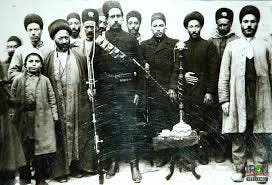
The century following the deaths of Nasser al-Din and Afghani did not settle Iran. It unsettled it further. Thinkers, politicians, and diplomats left their marks, often oscillating between opposing impulses, revealing not confusion but the genuine complexity of Iranian modernity.
Hassan Taqizadeh, born in 1878 and died in 1970, helped recover the lost Iranian chronicles and reorder the Persian identity, which had been scattered through centuries. He was a key figure during the Persian Constitution Movement and advocated for “total Westernisation”.
Ahmad Kasravi, born in 1890 and died in 1946, sought a modern and “purified” national identity and was eventually assassinated by the Shi’ist extremist. Inspired by some of Kasravi’s ideas, Seyyed Jalal Al-e-Ahmad, born in 1923 and died in 1969 attacked Western intervention, popularising the term gharbzedeghi, Westerntoxification.
Then came Ali Shariati, one of the most influential intellectuals of the pre-revolutionary era. Born in 1933 and died in 1977, Shariati produced a cerebral reinterpretation of Shi’ism as a language of resistance. He framed the return to a purer form of Islam as a defence against Western domination and materialistic suppression. He called forth the power of proletariat to rise against Gold, Force, and Deceit, which could be interpreted as capitalists, dictators, and corrupted clerics. In the process, extreme acts might be tolerated as martyrdom might wake the numb majority.
Like Afghani, Shariati also died before seeing his ideas transformed by history. The 1979 Islamic Revolution drew from many of these currents and were welcomed by sections of society that included women and secular men. Unfortunately, the Revolution betrayed many of its supporters and became the very shackles it used to vow to topple.
From 2026 to Onwards: Where Iran’s Future Would Hold?
With the symbol of religious tyranny fallen, many young Iranians feel relieved, whether or not the death of a figurehead would actually mean a better future for the Persians. I have written before that the sprawling grip of Iran’s religious network extends far beyond the country itself. Religion is not a bunch of people saluting to one God; it is secular network and power.
When the US and Israel helped remove the hated target, it would also be natural to expect them to insert control, similar to how the Great Britain and France played Pasha Isma’il in Egypt and how Russia and the Great Britain played Shah Reza Pahlavi.
Iran was no stranger to foreign interventions and in fact, its very fate was fiddled by superpowers for centuries. Similar to the drifting era after the fall of the Hosni Mubarak in Egypt and the fall of Saddam Hussein in Iraq, power vacuum might not mean order. It could derail into chaos, which is precisely the result of the US-Israel attack, an operation whose long-term political implications remain uncertain.
After Nasser al Din’s death, Iran endured a succession of weaker Qajar rulers that granted more foreign concessions (including oil). The storm of reform, religion, technological change, and imperial intervention intensified rather than subsided. From 1896 to 2026, history will determine whether the assassination of Khamenei will mark renewal or repetition.