
Iran's Ceasefire: A Refuel, Not a Resolution

It was a casual Friday night in Esfahan, sometime around 2022, at the height of the Mahsa Amini protests. The sanctions had been biting for decades. The rial had collapsed, inflation was running wild, and Washington felt Iran’s hated regime was finally about to yield. After all, half the country seemed to be rising against it.
I was at a party in central Esfahan. Music was playing. People were dancing. Someone had managed to get hold of a bottle of something that wasn’t supposed to be there. Nobody was talking about sanctions or the regime. If anything came up, it was the recent wave of women’s rebellion triggered by the tragic death of Mahsa Amini, but even that felt distant from the music.
This is the Iran that headlines do not depict.
Now the regime has come under a more severe attack. Time reported up to 30,000 murdered during the crackdown, as anti-regime sentiment runs rampant and the head of state has been assassinated. I saw friends of friends getting killed, many of them young, in their twenties. Meanwhile, Donald Trump made another dramatic move, this time threatening to wipe out an entire civilisation at the cost of global markets and American taxpayers.
Since the ceasefire was announced, Israel has continued to pound southern Lebanon. On April 8 alone, at least 87 were killed and 722 injured in Israeli airstrikes, after the agreement. A ceasefire does not work if only one side ceases to fire. Neither Trump nor Netanyahu understand the real Iran, and Israel’s interests are clearly not in any lasting ceasefire. As someone who lived in Lebanon during the 2025 ceasefire and watched buildings collapse ten minutes away, I remain skeptical.
Iran’s 10-Point Maximum Demand List
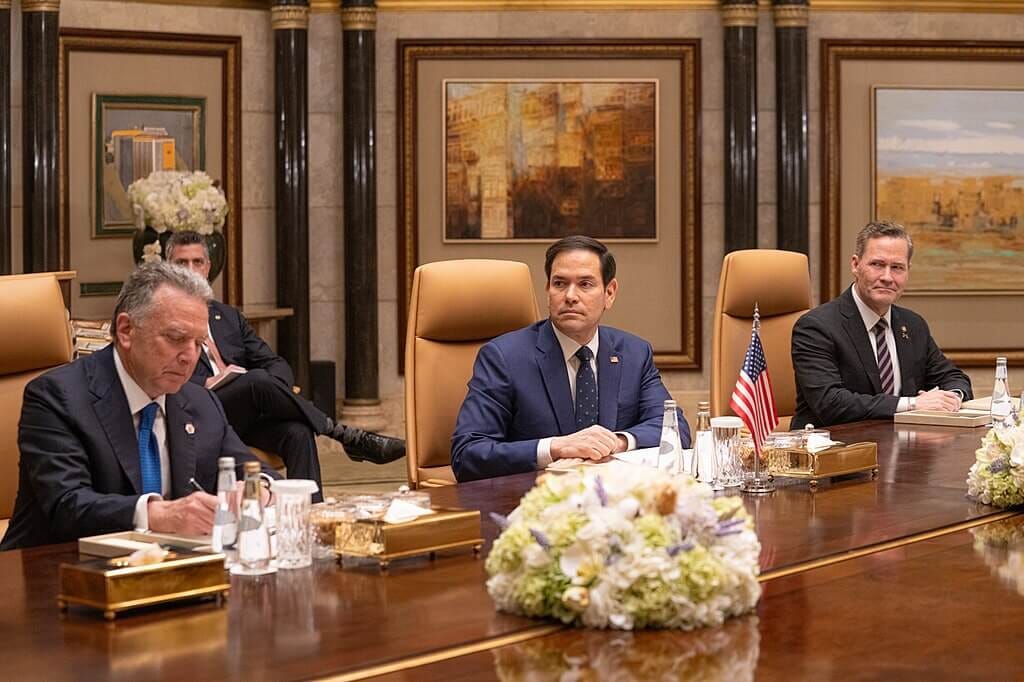
On April 7, with hours to spare before his own deadline, President Trump agreed to suspend bombing Iran for two weeks. The conditions: Iran would reopen the Strait of Hormuz, and both sides would enter negotiations in Islamabad on April 10.
If we review the 10 pointer proposed by Iran, sent to the US negotiation table via the hands of Pakistan, something interesting emerges. It’s surprising that Iran, barely having any spare cards but an unbreakable spirit, opts to raise a rather daring maximum demand list. Among the list, Tehran asked for:
U.S. troops out of the entire region. - The U.S. currently maintains over 40,000 troops across at least 19 bases in Bahrain, Qatar, Kuwait, Iraq, Jordan, Saudi Arabia, and the UAE. The annual cost of these overseas bases runs to an estimated $55 billion. US Troop’s presence in the Gulf and surrounding countries is a fundamental stationing of America’s Middle Eastern policy, aimed at countering Iran. They are not going anywhere unless Iran ceases to be a strategic enemy economically, militarily, and culturally. That would mean Iran gives up its defense in exchange for economic prosperity, like the other U.S. “allies” such as Saudi Arabia, Japan - nations that traded their fangs for access. Congressional legislation makes this doubly impossible.
Full lifting of all primary and secondary sanctions. - The U.S. sanctions architecture against Iran has been built over four decades. Dismantling it would require a diplomatic maneuver of historic proportions comparable in scale to the Nixon-era opening to China. It would also require Congressional action. Neither the political will nor the domestic consensus exists.
War reparations. - The U.S. has already spent an estimated $18 billion on the war as of late March, with the Pentagon requesting an additional $200 billion. The Arab states have absorbed over $120 billion in economic damage. Do you ask the gang to pay its own bill?
Permanent Iranian control over the Strait of Hormuz. - Iran is already the de facto gatekeeper of the Strait. It closed it, and the world felt it. In Lebanon, fuel shortages worsened overnight. In the Gulf, Saudi oil exports ground to a near halt. I watched this from both sides. What Iran is asking for now is formal recognition of that reality, which may, ironically, be the one point on this list closest to achievable.
Recognition of Iran’s right to nuclear enrichment. - Iran has over 450kg of 60% enriched uranium, enough material for nine to eleven nuclear weapons, with a breakout time now measured in days according to IAEA reports. Recognising enrichment rights without a verification framework is something neither the U.S. nor Israel will accept. This point alone is likely to collapse the Islamabad talks.
Cessation of hostilities on all fronts, including Lebanon While living in Beirut, I watched Hezbollah operate as a state within a state, providing services the Lebanese government couldn’t, commanding loyalty the army never had. The 2024 ceasefire in Lebanon was already fragile. During it, Israel continued to bomb the South, sometimes a hundred times a day. Now in 2026, Israel has detained UN peacekeepers in the South and pushed beyond the Litani River. Its intention appears to be not merely the dismantling of Hezbollah, but a broader territorial project across what it calls the Promised Land.
In short, Iran closed the Strait of Hormuz, shot down an American F-15, and weathered six weeks of bombardment without regime collapse. Tehran unilaterally declared “victory” much as Trump unilaterally declared his “greatness.” Neither claim is entirely wrong. Neither is entirely true.
Chinese Experience: Why Ceasefire Does Not Work?
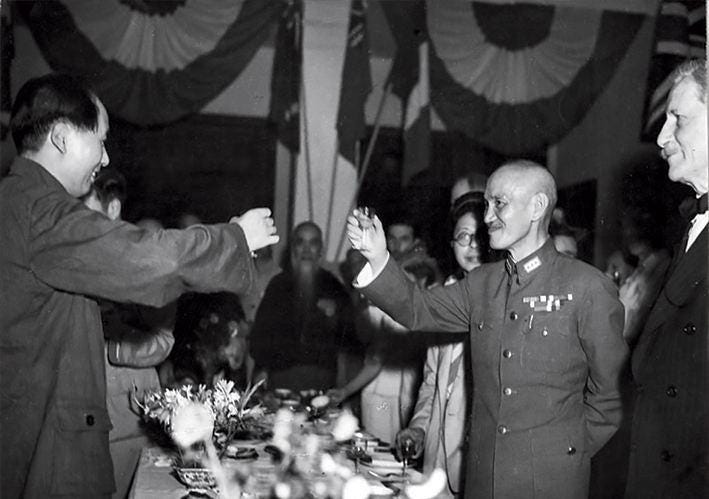
In 1945, the KMT Chiang Kai-shek and CCP Mao Zedong sat down in Chongqing for 43 days of negotiations. At the time, both parties had not yet tore down the smily masque and claimed both would sincerely seek peace. The KMT commanded approximately 4 million troops at the time; the CCP controlled an estimated 900,000 troops and liberated areas encompassing roughly 95 million people across northern China.
After 43 days of negotiations, both sides signed the Double Tenth Agreement on October 10, 1945. They agreed to avoid civil war, form a coalition government, and reorganise their armies. Mao and Chiang shook hands and posed for photographs. The world breathed a sigh of relief.
However, even as the negotiations were ongoing, both sides were fighting. The CCP launched the Shangdang Campaign on September 10 while Mao was still at the negotiating table in Chongqing. Mao himself described the agreement as “a mere scrap of paper” and told Soviet advisors that civil war was “virtually inevitable.” Chiang, for his part, had already written a secret letter to the Governor of Shanxi Province about military operations against the CCP during the talks.
Three months later, Chiang tore apart the agreements and initiated offensives in Manchuria, Jehol, Hupeh, and Kwangtung. However, despite being better equipped, U.S.-supplied, and numerically superior, Chiang’s army proved to be a paper tiger in front of the poor but resolute CCP. Three decisive campaigns - the Liaoshen, Huaihai, and Pingjin, sealed the KMT’s fate. Within four years, KMT fled to Taiwan, yielding the entire mainland to CCP.
There is a Chinese saying: 得民心者得天下, those who win the hearts of the people win the world. The CCP’s rise from a hunted minority to the governing authority of 600 million people is perhaps history’s most dramatic proof of that principle.
Negotiating tables are not endpoints. They are places where both sides catch their breath, regroup, and prepare for what comes next.
Similar to that of Chongqing, the fundamental issues surrounding Iran’s peace talk, raised in the 10 points, have not moved an inch. A two-week pause resolves none of them. Henceforth, the agreement, whatever form it takes, sounds like Chongqing in different costumes.
Resistance As Narratives
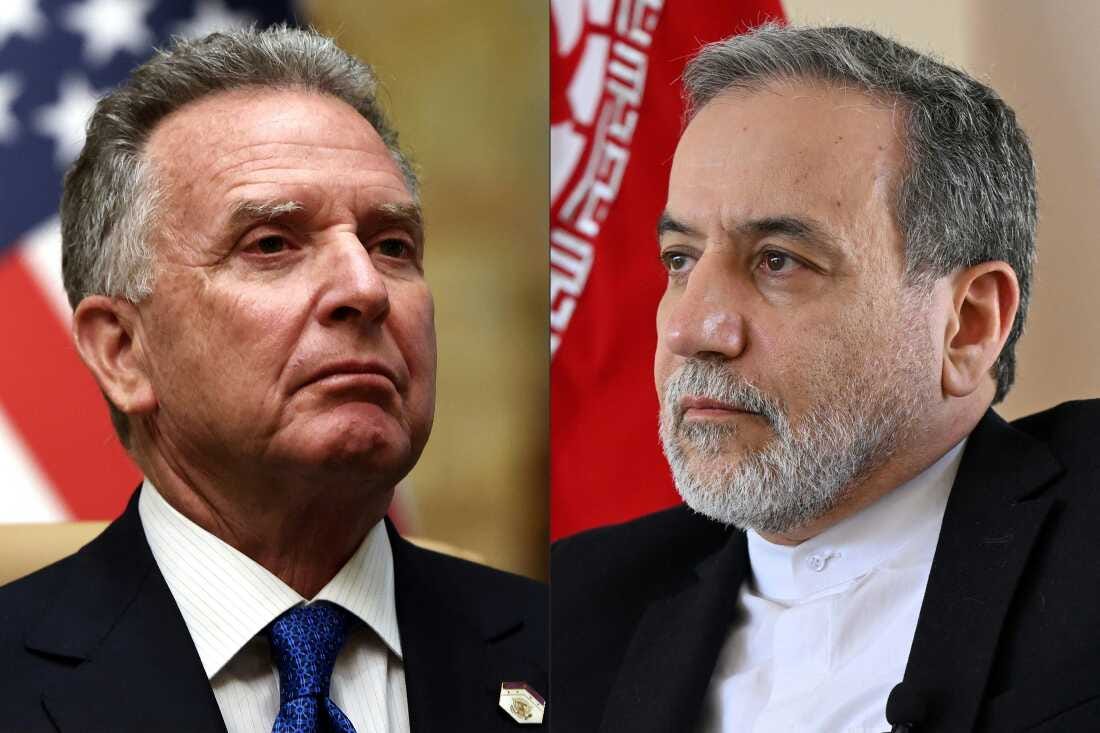
The regime doesn’t survive because Iranians love it. Anyone who has spent real time in Iran knows this. It survives because every time an outside power threatens Iran, domestic forces find unity and countermeasures. This does not stem from loyalty to the government, but from something older and deeper: a thousand years of memory of what it means to be on the receiving end of an empire.
The ceasefire buys two weeks. It gave Trump a headline and time to play the markets, and gave Iran time to regroup. But it does not change the underlying reality: two sides with fundamentally incompatible visions of what the Middle East should look like.
That incompatibility ends only with the collapse of one side, or the exhaustion of both. As I have long argued, until the world’s international order undergoes a clear shift in power, the Iran deadlock will not be solved. What is most tragic is Lebanon — too small and too peripheral to hold international attention. As Israel continues to advance what it frames as the recovery of the Promised Land, the next Hezbollah, the next PLO, is almost certain to rise from the rubble and the refugees.
The market’s awaited suspension of aggression, unfortunately, is only a refuel for more violence.