

Quasi-economic Takes on Inequality | Money Grows Money, Good Character Grows Nothing
Many years ago, before I graduated from my bachelor, I wanted to apply for a MSc in Inequalities and Social Science at LSE. Thomas Piketty was a professor at the Institute of Inequality of LSE. I even visited the Institute of Inequality in London and chatted with the dean. Later, after years of study and practice in economics, finance and social sciences, I garnered a little bit shallower understanding of the evolution of the societal infrastructure. Oftentimes I came across talented youth in the world but found many of them underappreciated, not reaching the fullest potential they could. I always remembered in Snowball, Buffett travelled to the Three Gorges in the early days of China before its Open Door Policy. Seeing the trackers on the Yangtze River, Buffet sighed and said how many of these trackers could have had the potential to become another Chinese Buffett. Because of the economic conditions, education, and markets of the time, they did not turn into a Buffett and probably never would. The candid Buffett has been outspoken in interviews that the number one factor contributing to his wealth is the growth of the free capital market in the United States over the past few decades. Every time I meet very talented entrepreneurs in less developed countries, I often think that they all want to make the next Berkshire Hathaway, but the market structure of their countries may never be able to fulfil their dreams.
- The origin and measurement of inequality -
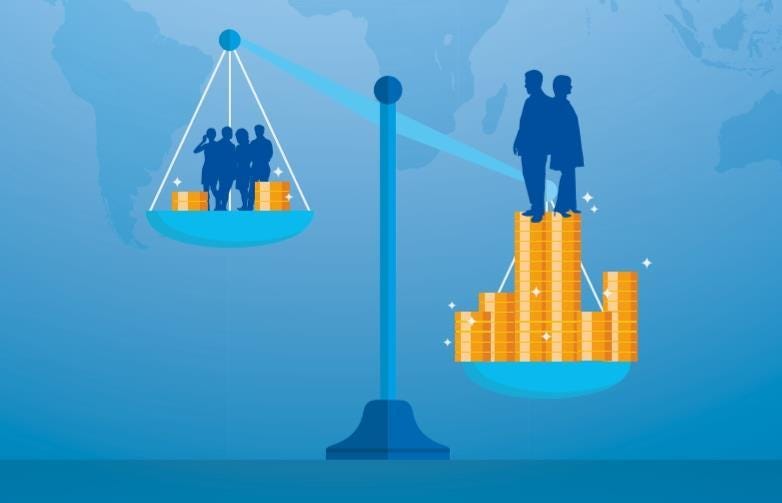
The economic "pie" has two rough measurement dimensions, which are the total amount i.e. the size of the economic pie, and the redistribution of income, so how the pie is shared. Confucius said, "Do not worry about scarcity but worry about uneven distribution." In fact, neither scarcity nor inequity is desirable. There may be social unrest and stalemate in the poor and unequal countries. Turmoil is not an inevitable result, because social unrest is not necessarily the result of poverty and inequality only.
Inequality is relatively light in a simple kinship-oriented society, but it has penetrated our society since the emergence of complex human civilization. The economy, social class, political rights, educational resources, gender, ethnicity, sexual orientation, political power, age, etc. all affect the relative equality and inequality of the social structure. In the past one hundred years, sociologists often use socioeconomic status to roughly describe inequality. In a feudal society, depending on the state, power divided classes, and the inequality created by power may not be considered a bad thing in different societies. For thousands of years, Chinese feudal society has basically valued the collective over the individual. The inequality and hierarchy caused by power have not given most of the Chinese citizens in feudal society the opportunity to ask whether its existence is reasonable. After capitalism swept the world, wealth became the object of competition, because wealth combined with democratic elections bring power in a free society. For example, in England, when the early laissez faire emerged, cities mushroomed, and the middle-class joined the lower parliament with money as a bargaining chip and then controlled the national debates, not to mention that the politicians supported by these classes have already filled in the power vacuum left by the receding monarchy.
In the early view of economic liberty, inequality is a must-have feature of a free society. Society encourages competition, individuals do their best and compete for the best, and those who have wealth have more wealth. In a material society that encourages competition, achieving higher social status and more wealth is the goal of struggles and the embodiment of individual ambitions. It is precisely because of inequality that the lower class theoretically have the motivation to fight for a higher status, which engineers social production. Since inequality is acquiesced to be a part of the game, what society needs to do is to ensure social mobility, i.e., channels for upward mobility and reasonable rewards and punishments.
Today, the 100% laissez-faire system has already been repaired and adjusted in the past centuries. We generally believe that inequality is not a good thing, and that national policies are the strongest driver for bridging inequality. 100% elimination of inequality seems to be an utopia, and how to manage inequality has become the central topic.
- Important Social Science Theories Affecting Inequality in Modern Times -
Many economists, sociologists, and philosophers have excellent insights into inequality. Here, I give a high-level summary of some theories that I think are pertinent to my essay. The revelation of "inequality" basically comes from the discussions of power.
Everything about inequality can be traced back to Adam Smith, the founder of our current economic system. Although The Wealth of Nations was written in 1776, the same age as the United States. Some of the book’s contents can be outdated such as its stance on slavery, but some others last. One of the most important expositions of WoN is the revelation of wealth development, wage growth, and land value. The wages exchanged for "manpower" and the interest rate of wealth growth are normally inversely proportional, so under normal circumstances the landlords need to weigh how much salary is given. Smith stated, “the affluence of the rich excites the indignation of the poor, who are often both driven by want, and prompted by envy, to invade his possessions”, so the government must be able to maintain social order.
A few decades later, Max Weber, one of the three godfathers of social science, divided the causes of social stratification into roughly three categories: economic social class, non-economic privilege (religion, etc.), political affiliation. Because Weber's most important influence was in developing a theory that made capitalism serve Protestantism, he had an influence on the conception of the rational man (homo economicus). His thoughts greatly influenced the later Frankfurt School, and the central idea of the Frankfurt School was Critical Theory. Critical theory basically excavates the discussion of the structure of "power" in economic system.
Then came Marx. The historical materialism developed by Marx and Engels fundamentally shook the previous idealism. The simple revelation of historical materialism is that "environment creates heroes". Marx's solution is to change the social class (environment) through actions. What Marx himself said through Das Kapital is simple. Classical Marxism roughly divides society into bourgeois and proletarians. Marx also mentioned the "petit bourgeois", generally referring to managers that work for the bourgeois and the new well-to-do such as journalists. This petit bourgeoisie was only a small group of people in mid-19th century Germany when Marx lived, but this group of people eventually became the mainstream of some societies such as the United States. In Marxism, human inequality comes from the social structure of class. If the social structure does not change, the inequality will not change. Since the economic development inevitably leads to inequality, inequality is embedded in a society with different classes. Nevertheless, revolution is bloody, and the impression of Marxism today is linked to the authoritarian Leninist-Mao doctrine.
In the early 20th century, scholars of the Frankfurt School studied the distribution of power. Among them, the critical theory questioned an ideology passed on by the ruling aristocracy to the society. It debated on the domination of minorities by the public, especially extending the observation of power and social class to cultural hegemony. The cultural hegemony here does not involve a country's cultural hegemony and national cultural export in the future but refers to the cultural brainwashing of the society by the ruling class, as well as the cultural hegemony that bullies minority groups. Most theories of the Frankfurt School are more philosophical, so I won't say much here. Max Horkheimer of the Frankfurt School proposed that the government be placed between the free market and citizens, thereby easing production relations and productivity.
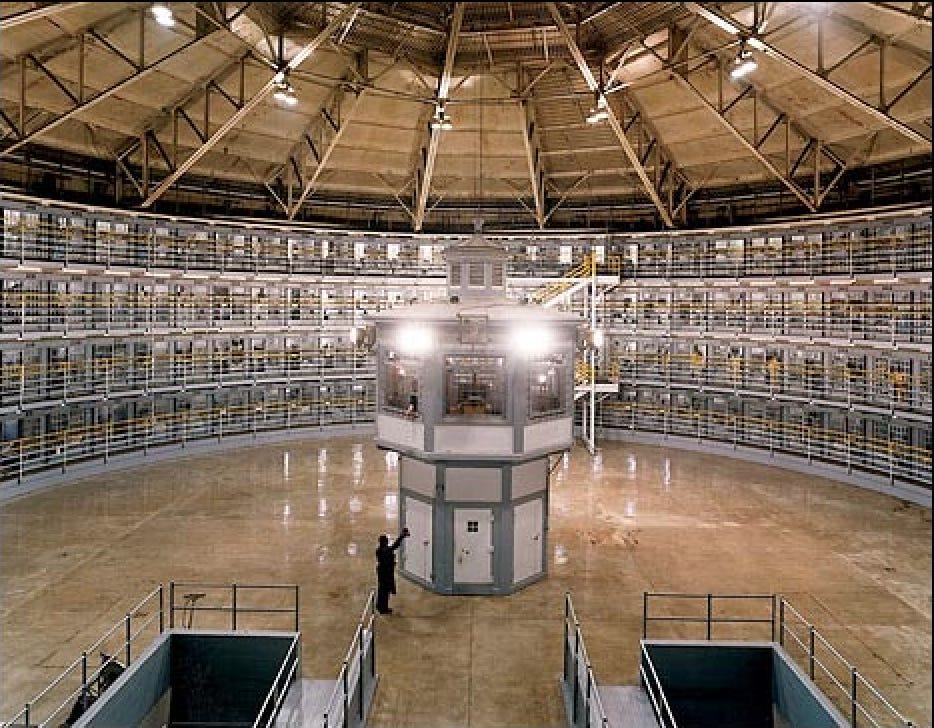
The arrival of post-modernism also revealed the origin and development of inequality. Michel Foucault states that "knowledge" (le savoir) and social relations are power (le pouvoir),), and this power is scattered in society, the more "knowledge" someone has more, he/she/they have more power. However, this knowledge is not the "knowledge" of Francis Bacon's "knowledge is power". Rather than knowledge, I prefer to call it information. In a modern society, perhaps the most powerful group is the group that maximises access to information, in most societies where power is relatively concentrated, that is, the government. Due to advances in technology, the collection of data and privacy yields power. Foucault's famous panopticon is the most vivid expression of this truth. In the panopticon, the central monitor can monitor the surrounding people in all directions without blind spots. Outsiders cannot see the centre but the centre can see them. In theory, the monitor can leave for home and watch Netflix, so prisoners can jailbreak if the monitor chills. However, because the prisoners do not know when someone is watching or not, so they dare not to take the chance and escape.
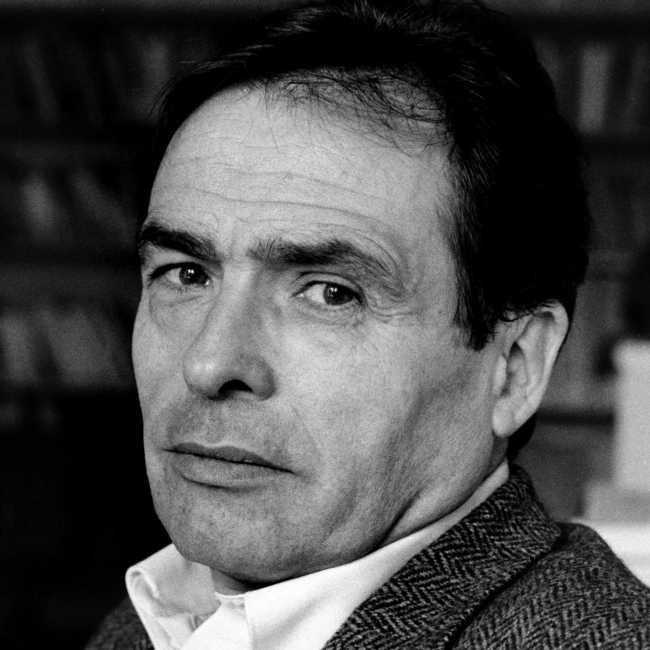
Finally, Pierre Bourdieu was one of the “fieriest” theorists of the distribution of power at the end of the 20th century. Bourdieu divides the sources of power into four types: economic, symbolic, cultural, and social. Social class is also determined by such a combination of four sources. Bourdieu does not believe that education can perfectly encourage the rise of the lower class to the upper class, and many upper classes remain upper classes after several generations. Their education from childhood, taste, hobbies, fashion, food, habits, artistic appreciation… all consolidated the cultural and symbolic power in their hands.
- The widening of inequality and the revelation of the Solow model -
Has inequality increased or decreased since the Industrial Revolution? It depends on the data. On the one hand, Lakner, an economist at the World Bank, said that between 2008 and 2013, global inequality fell, mainly due to the economic development of large economies such as China and India. On the global level, the absolute inequality is reduced. After all, the number of people living a well-off life in these populous countries has increased. However, inequality actually increased in regions. For example, in absolute terms, Qatar, the richest country in the world, has a GDP per capita of $117,000, which is 177 times that of the Central African Republic, the poorest country in the world, with a GDP per capita of $661. China’s official Gini index has risen from 0.16 in the early days of the Open Door Policy to a range of 0.49-0.46 in the past decade. Some scholars believe that this is an underestimated data. When it comes to income inequality, China and the United States, a love-hate pair, are very similar. After the Thatcher-Reagan-style privatization reforms in the 1980s and the expansion of large corporations in the Western world, the top 1% in the United States today control 20% of the wealth, an increase of 8% from 12% in 1978. In China, despite being in the early stages of the wealth accumulation period, the 1% now controls 12%, double the 6% in the 1980s. Benefiting from the early expansion of the economy, the real income of the bottom 50% of the population in China has increased in the past, compared to the fact that the real income of the 50% in the United States has declined. However, China's population base is much larger than that of the United States, and the growth rate of income from a small starting base is of course faster. In fact, the poor in China are much poorer than the poor in the United States, and the economic growth rate of the rich in China is approaching that of the United States over time.
Why do the rich get richer and the poor get poorer? Not the extreme scanty, the income of the middle-class erodes in real term.
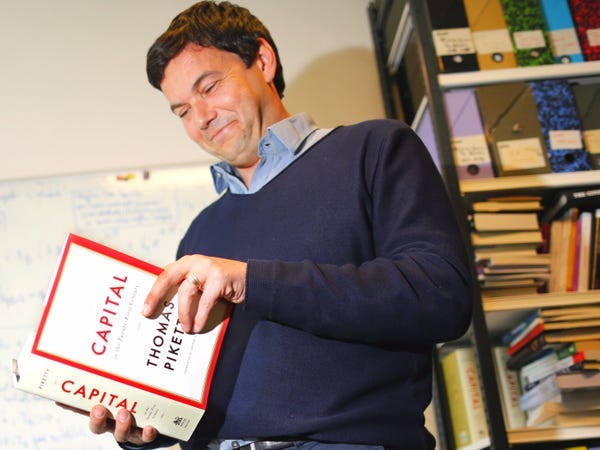
I would like to draw from Solow model and Piketty predictions in 21st Century Capital, an extension on Solow model.
The Solow Model was proposed by Nobel Prize winners Robert Solow and Trevor Swan in 1956. Solow’s model is very simple. It shows the mystery of economic growth with a simple model. It is a classical exogenous model, which opens a beginning of many subsequent economic studies.
Solow model is built on the simple Y = AK^αL^(1-α), where Y is gross product (GDP), A is technology, K is capital, L is labor, α is a measure of K and L accounts for A measure of how much Y is. The K capital is not cash capital, but "hardware" investment, such as infrastructure. Solow model looks at not just the total amount of these things, but their growth rate. In the derivation k˙ = sk^α– (n+g+𝛿)k, the small k-band point on the left is a time representation of the equation on the right. The important thing is the right side. If the left side is equal to zero, we can find s^kα= (n+g+𝛿)kt, and the other s, n, g, and 𝛿 are all given, and we can find the constant k value. Here s is saving, which is the saving rate.
The application of Solow model is mainly used to mine the mystery of the growth of national wealth, visualised as the following figure.
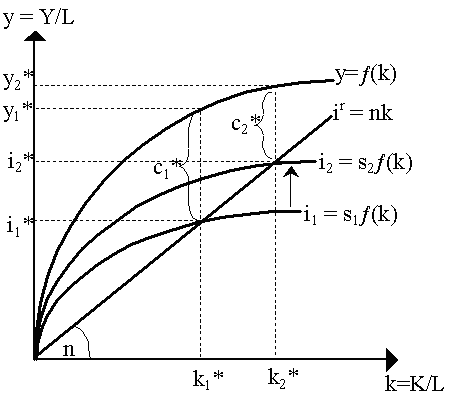
Here, the horizontal axis is the small k, which is the capital per capita of investment, and the y-axis is the small y, which is the per capita production value. The middle curves i2 and i1 represent two saving rates, one larger (i2) and one smaller (i1). Here the economic growth of a country (the top y curve) first experiences a period of growth, as the curve slows down, the growth becomes smaller but still there is growth, until this growth approaches the horizontal line, which means that the growth rate is almost stagnant. The national economic aggregate may still be there, but the growth rate is gone. In the early days, the state invests in K capital to promote growth. For the two major socialist countries, the old Soviet Union, and today's China, early economic development mirrored the model's predictions, namely, investing in infrastructure. In addition, economically developed countries have also invested a lot of human capital, policy subsidies, etc.
What if the economy slows down? The classic Solow model takes technology an exogenous factor, which means it is a godsend factor.
In addition to capital investment and technology, countries can also add labour to fuel growth. If technology does not grow, and our population growth is slowing down, and in real life, the growth rate in many Western countries is already zero or negative, how will the economy develop? Here is Piketty's evolution of Solow.
By observing r-g (return on capital/occupancy rate/interest rate – economic growth rate), Piketty proposes the substitution between capital and labour. Solow himself also commented on Piketty's point of view, saying that the higher the production value of one person, the smaller the variety of jobs available to each person in a constant economy. The higher a person's real salary is, the more likely he or she will lose job. Given the higher allocation of human resources, the economy will prefer to allocate capital with a higher rate of return. In the long run, society is more inclined to allocate investment in capital and less investment in human capital accumulation (education) and innovation.
In this regard, Piketty's Capital in the 21st Century gives a very pessimistic final word: our society will perpetually chase capital, and inequality will perpetually expand.
Piketty's views are also debated by scholars, and there are many other updates based on Solow model in the past decades. After all, economic rhetoric is based on certain assumptions. When assumptions do not hold, opinions can also be overturned.
I do not have Piketty's detailed data to quantify a result. From my personal experience, I do think certain countries are chasing the return on capital and put less focus on the power of human development, resulting in the collapse of average salary and average domestic education.
What is closely related to our lives today is that the epidemic has prompted the central banks to adopt a lax monetary policy, resulting in an (excessive) abundance of dollars in the world. People with capital gain more capital, while the real income of ordinary people is getting less and less. Inequality is moving fast on the path that Piketty predicted.
Reference:
http://www.scielo.br/scielo.php?script=sci_arttext&pid=S0103-20702018000300049
https://www.wider.unu.edu/publication/global-inequality-historical-perspective
https://insights.som.yale.edu/insights/the-roots-of-economic-inequality#gref
https://www.undp.org/content/undp/en/home/blog/2019/addressing-the-root-causes-of-inequality.html
https://scholar.princeton.edu/sites/default/files/yuxie/files/xie2010_inequality-english.pdf
https://www.epi.org/publication/books_starting_gate/
https://lareviewofbooks.org/article/where-does-inequality-come-from