Saudi and Iran: Tale of Two Countries at Crossroad

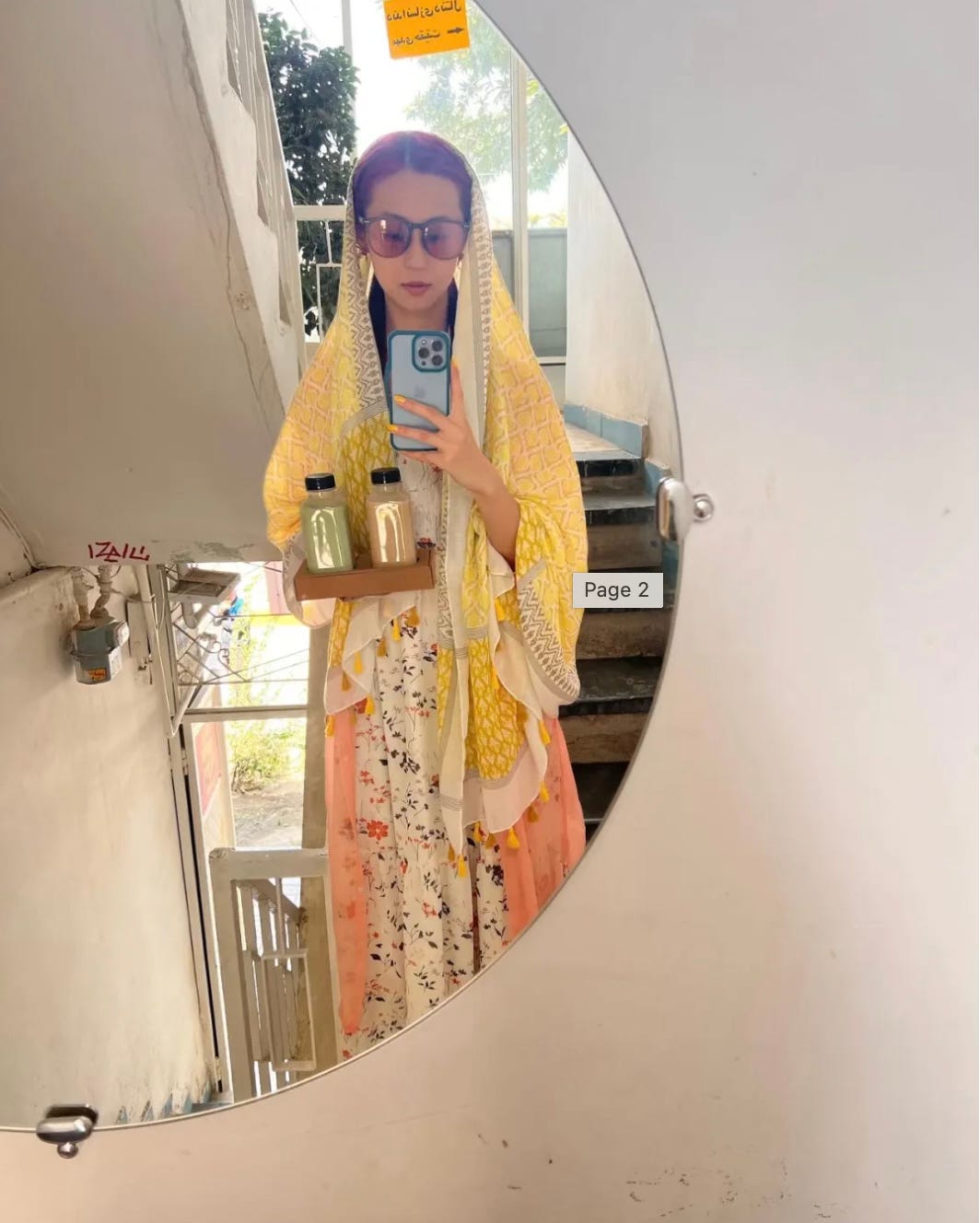
At one dinner party in Riyadh, I was conversing with a newly acquainted friend that has been working in Riyadh for decades. Like many chitchats in the region, we naturally waded into the topic of travelling to Iran. The friend commented, “yes I have been to Iran, like 10 years ago, in 2009.” I said, “ok, then don’t worry. Iran today is still the same.”
The same remark would have been inaccurate in the case of Saudi Arabia. Since Mohammed bin Salman’s glass-shattering modernisation reform in 2019, Saudi Arabia is quickly metamorphosing into a futuristic powerhouse accelerating in every aspect. The change is not limited to the piling of modernist buildings and designs across cities. The change is in the rising power of women, the de-scaffolding of gender segregation, the establishment of secular legal system, the restructure of micro-organisation of politics, the education of the youth, the expansion of employment market, the diversification of the oil economy, and the shifting waves in international relations.
Raised in the Chinese “open door policy” hub, I feel too much in sync and in awe to see the growth of Riyadh. Shenzhen went from a fish village to the Silicon Valley of the East in 3 decades. Riyadh seems to plan to catch up with the ambition.
Among the small Chinese community in Iran, we joke that Mahan Air is a time-travelling machine, which transports us from 2023 to year 1402 from Beijing to Tehran. In 1975, Iran’s GDP per capita was $1,575, roughly 10 times the Chinese one of $178. In 2023, Chinese GDP per capita is expected to be $12,150 and Iran $5,649. Today, many Iranians still believe Persia is 10 times stronger than China and the Eastern dragon is nothing but a blurring vast land occupied by rice-picking peasants. The almost 3-decade intermittent boycotts and sanctions on Iran have retracted the country from international growth and fed ignorance.
On the other hand, Saudi has also been reset by a time machine. The radical reformation policies since 2018 and 2019 have fast-forwarded the country from a strict Wahhabist state to an aspiring hotpot of cutting-edge technology and intermingling thoughts. Since, the open-mindedness is not a sole label for Hejaz. Nejd upgraded from within.
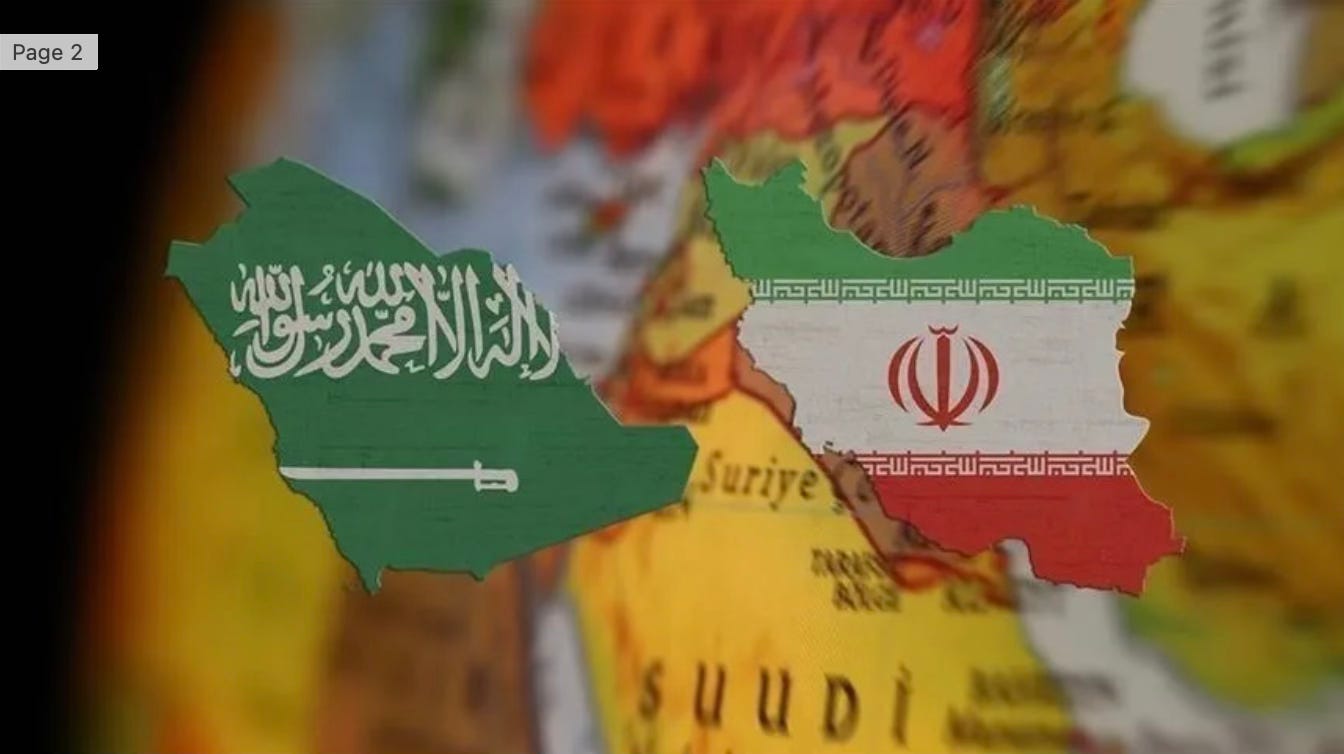
Pre-Modern Saudi and Iran: of Arab Camel and Persian Lion
On June 8th, 632, Prophet Muhammad was met at his deathbed. Days leading to his death, he suffered an extremely painful headache and had trembling legs. Unable to recover from the syndromes, Allah’s prophet died,. His last word was “O God, forgive me and have mercy on me; and let me join the highest companions (أللّهُـمَّ اغْفِـرْ لي وَارْحَمْـني وَأَلْحِقْـني بِالرَّفـيقِ الأّعْلـى).
Prophet had an uneasy life. The first 40 years of his life was happy by worldly standard, as he was born to an affluent family, although he had lost his father early. His grandfather sheltered him, and his uncle Abu Talib feathered him. At the age of 25, he married his first wife Khadijah, with whom he shared a happy mutually exclusive marriage until her death. At the age of 40, he had a series of shocking and haunting dreams unveiled by Archangel Gabriel. Initially scared, he eventually grew to accept God’s revelations and took over the responsibility for preaching God’s messages. The journey was very difficult, as adamant oppositions stormed the man. Nevertheless, today we know, this small band of Muslims beat all odds and established empires that found their base on divine will.
In 661, the Rashidun caliphate came to dissolution after decades of post-Prophet expansion and prosperity. The one kingdom ruled by God permanently split into two ideologies, sealed by the Islamic civil war that was remembered by Ali’s slaughter.
Like all thorny issues of inheritance, after the death of Muhammad, the question of who would inherit both the divine rightfulness and the leadership excellency became the central dispute in the Islamic world. One faction supported Muhammad’s father-in-law, and they ultimately won the civil war, establishing empires under Sunni rule. Another faction supported Ali, Muhammad’s son-in-law. Ali was eventually assassinated, and the Shi’ites that supported him never regained control of Arabian Peninsula. The Shi’ites later found refuge in Iran.
For Shi’ites, Muhammad clearly said, “I am the maula of whoever Ali is the maula of.” For Shi’ites, this statement seals the inheritance lineage. For them, maula means leader, so Ali should be the leader of Islam. Verbal sparring again happened in serious historical context.
Sunnis, however, view this statement merely as an expression of affection by Muhammad. It is like saying “mi casa es tu casa” – “brother, treat my house as yours”. But if one were to take such a statement to court and demand property rights on it, one would likely receive a big eye role from the “brother”.
In any case, whether Muhammad’s words were mere slip words or serious conviction remains the debate. And this debate sparked the Islamic civil war. After many years of conflict, Ali was assassinated. As Ali was killed in an ambush, Shi’ites believed that the Sunni illegitimately seized power. In addition, Sunnis would soon embark a series of persecutions on Shi’ites. This led to the bad fate of Fatimah, the beloved daughter of Muhammad, who would soon pass away in poverty and illness due to the persecutions. Ali’s son, Hussain, would also perish in the Battle of Karbala during the civil war. In present-day Iran, to commemorate Hussain’s death, a ritual of self-harming known as Ashura has emerged, where participants would whip themselves on the back in the sombre display of grief.
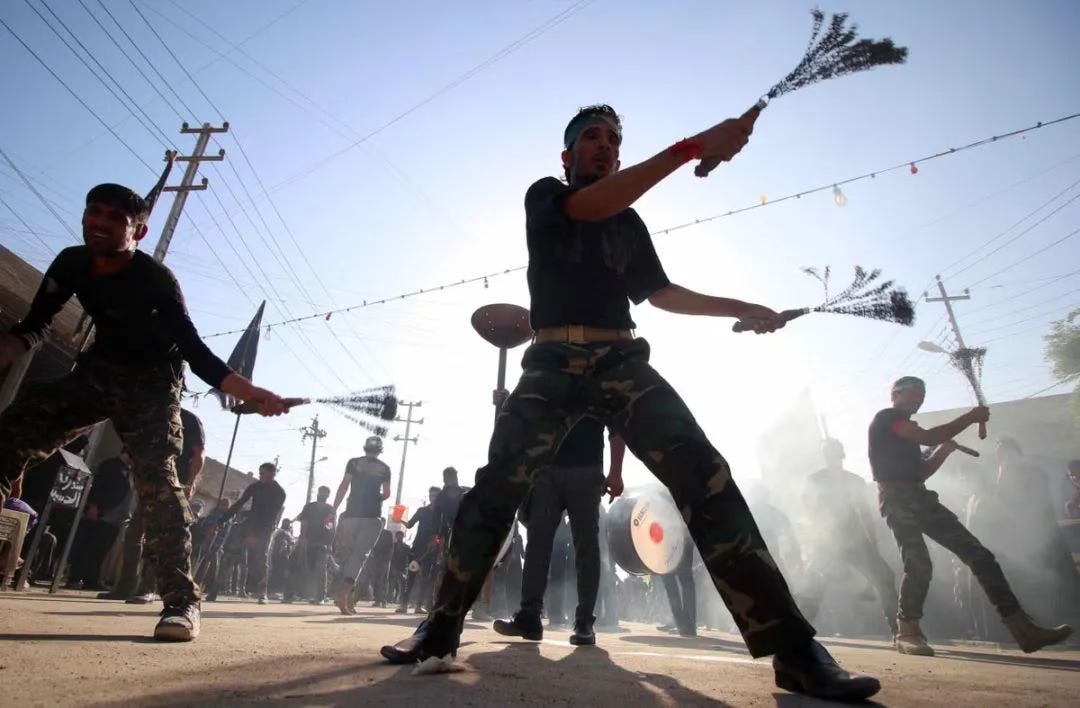
Then, two very different historical trajectory and narratives unwind in the peninsula of Arabia and the old Persia heartland.
Prior to Islam, the land of Arabia hardly had significant human civilisation. On the contrary, Persia has long been one of the oldest human kingdoms long before Jesus. When Xerxus invaded Greece in 480 BC, Arabia was nowhere in the history. After the Islamic civil war, the peninsula of Arabia went through two caliphates: Umayyad and Abbasid. Umayyads controlled some of the Persia lands, and the rulers even adopted certain level of Farsi. However, they never treated Persia as equals. Persians that went to Arabic heartland were considered second-class citizens. As Umayyad faltered, the new Abbasid lost more control of Iran. Many parts of Iran lived in autonomy, embracing a combination of Arabic and Iranian elements. These states also had crossover with some parts of today’s Uzbekistan.
Islamic conquest of Iran changed the country at its core. Since antiquity, Iran has faced stronger enemies. The Greeks and Macedonians for the Achaemenid. Romans for the Parthians. Arabs and Turks were no exception. Through centuries, a sense of being unfairly repressed and persecuted inscribed into Persian gene. By the time Ali was slain, this sense of being cornered and the subsequent need to rebel against the enemies found its justification. No longer was the external enemy too powerful, but also was there an unjust usurp of divine lineage. Today, the US assumed the role of such an external enemy.
In the 13th century, when the Mongols swept the Eurasian continent, neither Arabic dynasties nor Persian states remained intact. Through horrendously bloody tactics, Mongols destroyed many historical hubs along the Silk Road. Some of the metropoles never recovered. In 1258, Mongols conquered Baghdad. At the then capital of the Abbasid, they sacked 36 public libraries that contained the greatest knowledge and wisdom of Islamic golden age. The Mongol atrocity was so bad that a tale in the 16th century claimed the books tossed into Tigris tainted the river black from ink. In Persia alone, Mongol conquest killed 2-15 million people.
Following the conquests, Mongols established Khanates that had local ethnic participation in the region. Many regional empires grew in the two lands respectively.
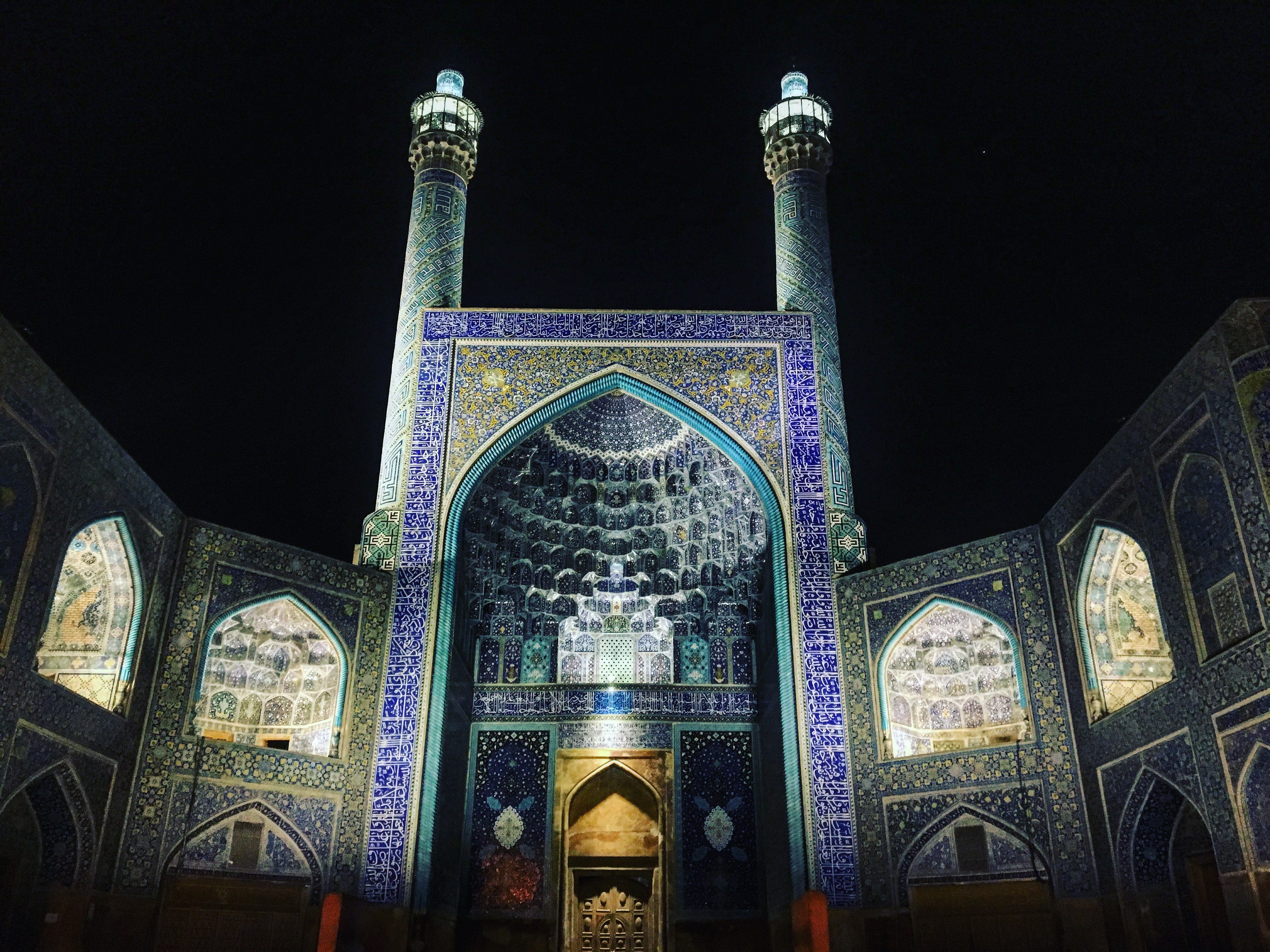
The last of Iran’s prosperous Muslim dynasty Safavid shined between 16th century to mid 18th century. The dynasty left lasting legacy to Iran today as many parts of the administrative systems and construction of Safavid are still used today. The dynasty also had good influence on India. Taj Mahal is a very condensed representation of such influence. Iran’s empires and dynasties had great success in cultural transmission for centuries. When Safavid gradually came to its end, Saudi Arabia only started to shape its kingdom. In 1727, Saudi Arabia’s ruling family House of Saud started from an unassuming castle called Diriyah. The new army was aided by a strict Wahhabi doctrine.
Today, many Iranians still consider Saudi Arabia a country of shallow cultural roots beyond religion. We can very well see the reason. When Persians already spread Cheloh Kababs to the world, Saudis might have just found their first footholds in Diriyah.
The two countries would continue to find a unified picture during the centuries leading to modern time. They both faced rivalry from the Ottomans. The ruling families both struggled to retain power. However, their fates would soon diverge as the first explorative ship from the West drew near the Persian Gulf.
Oil-led Western Influence Changed Regional Dynamics
In the 20th century, Western participation shook up the power dynamics in the region. Oil was a mystery box, as one did not know if it would bring the Western gunpowder or Wealth of Nation. It tested the valour of leaders in the most turbulent era.
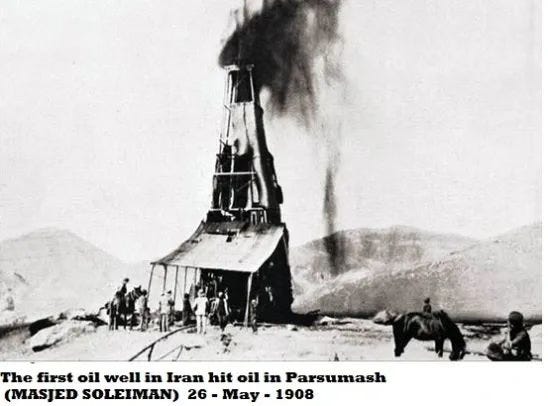
In 1908, the British-controlled power discovered oil in Iran. At the beginning of the century, British had long been circling around Persia seeking new resources and more play of power. Under the reign of the weak Qajar dynasty, Iran was unable to defend itself against the aggressive Western interests. The rise of the West in the Middle East was not solely in Iran, since the Allies would soon face off the Ottomans on the sea and directly contributed to the breakdown of the last Caliph during World War I.
Today, we know that Saudi Arabia is the world’s largest oil exporter. However, it was not the case before. Why oil brought Iran an immense misfortune yet helped Saudi transform its economy?
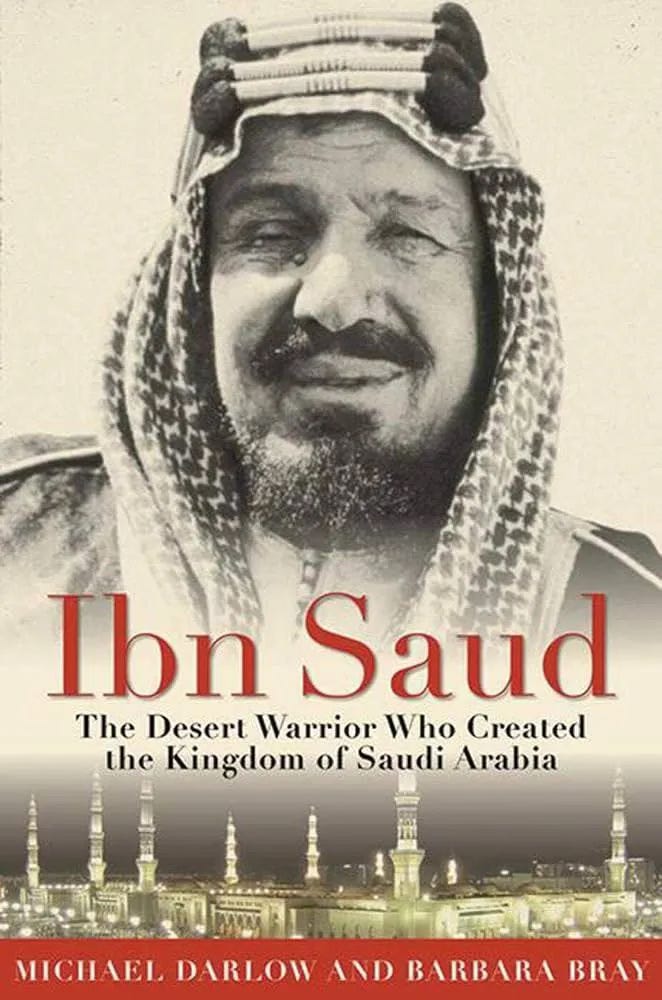
After the Anglo-Persian Oil Company found black gold in Iran, many state-sponsored Western companies sought for new lands and opportunities. Arabia was initially considered a no-oil reserve. The ruler, King Ibin Saud, was busy unifying the kingdom, so at the beginning, oil discovery did not occupy a high priority. However, history soon pushed the oil search to Ibin Saud’s agenda. World War I highlighted the importance of oil as an essential and decisive factor for artillery and industrial production. Both sides had suffered great loss in incidents when oil supply could not meet the demand. In between WWI and WWII, the Great Depression hijacked people of their wealth; thus, pilgrimages to Saudi plummeted more than 50%, greatly restraining the new kingdom’s income. From 1920s, Ibn Saud started sponsoring oil discovery missions across the kingdom. In 1938, the former body of ARAMCO, i.e., Arabian American Oil Company, found oil in Saudi Arabia. The decades leading to oil discovery and after, the Ibin Saud regime proved to be mostly stable and powerful, as it unified the two kingdoms of Hejaz and Nejd. This drew a sharp contrast against the notoriously servile Qajar dynasty in Iran at the same time.
Following the oil discovery, the different Iranian regimes unsuccessfully made a series of ill agreements with the foreign oil companies, majority of which were headed by the British. Through these agreements, various oil “concessions” were created. Foreign companies retained the majority of the oil-generated revenue made in these concessions. Iranians had no rights to these concessions for decades until the late 20th century.
On the contrary, Saudi Arabia dealt mainly with America, who soon would rise to be the only superpower post WWII. Saudi Arabia made successful attempts increasing Saudi’s profit-sharing proportion in the agreements. It was also able to extract tax revenue from these oil revenues. In the latter half of the 20th century, Saudi Arabia used the oil money to build better infrastructure, sea tunnels, refineries, etc. Oil enriched the country and changed ordinary people’s life. It also gave Saudi Arabia an economic ground beyond political agenda. The situation in Iran was much complicated. British, French, and Russians flocked to Iran vying for the last piece of a shattered empire. In between, the country also went through many painful regime changes, one coup d’état (against Mosaddeq) played by the US, and subsequent collaboration in oil production with the US.
From the late 1950s, Iranian government started to push for nationalisation of the oil companies and renegotiate the profit-sharing terms. In 1950, Iran exported 700,000 barrels per day (bpd) and Saudi 555,000 bpd. Iran was the number one exporter in the region. Both countries’ oil companies were British and American companies by large, each having different revenue sharing scheme. In 1970s, Saudi Arabia and Iran were the two biggest oil exporters, and both were the initial members of OPEC. In 1975, Saudi Arabia produced 7,080,000 bpd and Iran 5,350,000 bpd.
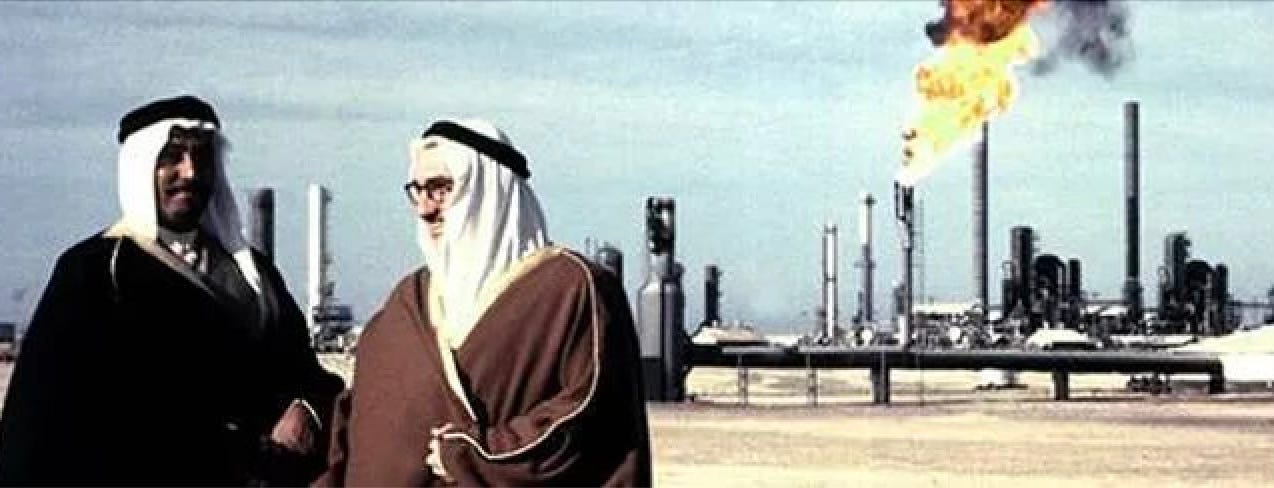
Before the 1979 Iranian Revolution, both countries were important allies for the US. Their oil was instrumental to the revitalisation of Japan and Western Europe post Marshall plan. The US had distributed significant resources helping both countries. Through negotiation with Saudi Arabia and OPEC, the US managed to peg its dollars to the oil transaction business after fixed-rate dollars collapsed in 1971. The petrodollar negotiation again changed power dynamic. Post petrol-dollar peg, oil is no longer just a vital commodity that is reigned by supply and demand, but also a financial and monetary tool used by both the oil exporter and importer. In fact, since the Shale Oil Revolution in the US, Uncle Sam is already a stable oil player by itself. However, oil for the US is not just a commodity, but much more.
Post 1979: Divergence of Two Countries Drew by Liberal Economy Order
In 1979, the historical watershed happened in Iran, which dragged Iran from year 1979 back to a chronicle based in the years of 14th century. The Iranian Revolution not only divided Iran into two different phases led by different regimes, but also cut the tie between the US and Iran. Once Iran was excluded from the US-led liberal economic order, its fate in the 21st century was sealed. On the contrary, Saudi Arabia continued to strengthen its relations with the US and committed to make infrastructure investment and mingle in regional and global affairs, hosting 5 US military bases on its land.
In economics, no professional would ever understate the importance of the global liberal economy led by the US. China made an economic miracle only after it brokered peace with the US over Pinpong Diplomacy and participated in WTO. Today, China is often considered an enemy to the US, but, in reality, the two are in a love and hate relationship. During Cold War, China chose the right “camp” in a time when such choice was considered impossible and a betrayal. This proved that diplomacy is full of possibility depending on the will and might.
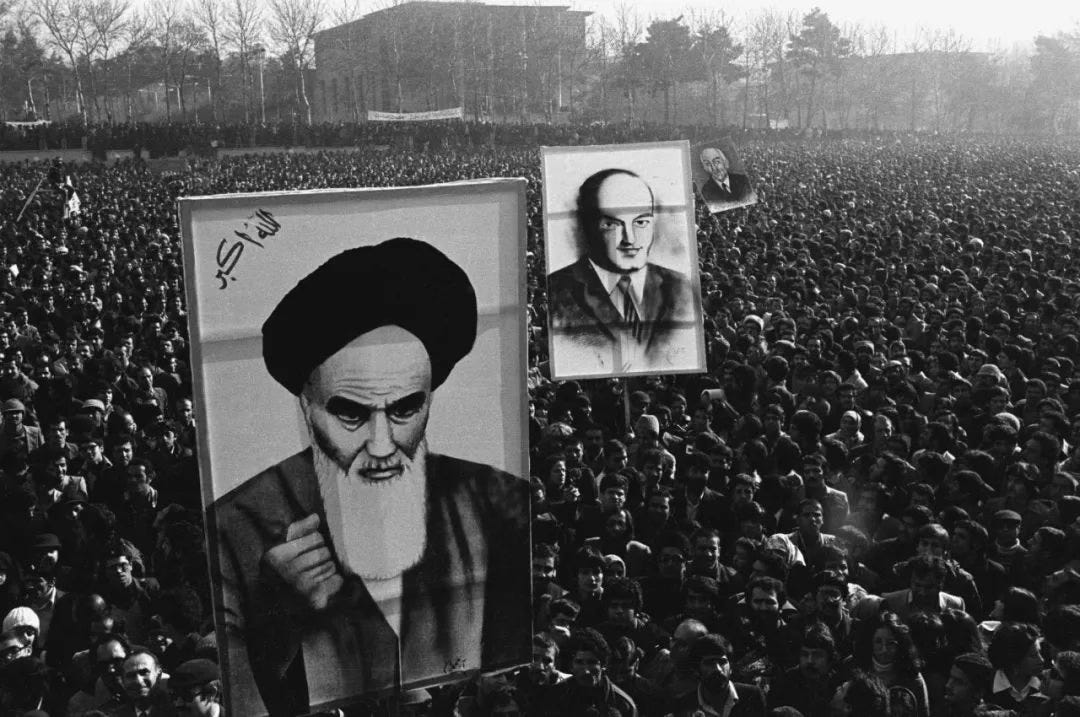
Back in 1979 when the Iranian Revolution happened, not many of its supporters realised the new regime’s fury would quickly turn against them. In the Shah era, despite Iran experienced a stunning series of economic growth at 10% every year, great redistribution of wealth, and tolerance towards all religions, the authoritarian leader’s high-pressure secret police (SAVAK), conflict with the clergy, gruntles of small farmers during White Revolution, etc. made people unsatisfied. Eventually, these things became unbearable and many, including freedom-loving women and students, turned to the banished Khomeini. People hoped it could be a better world. The following 444 days Iranian Hostage Crisis sent the relations between the US and Iran to zero point. After the new regime was stored, a series of sanctions soon showered the country. In the 1980s, the country was involved in the eight-year deadly and costly defensive war against the invading Iraq led by Saddam. Iranian inflation has been in the range of 20% in the decades to follow, and unemployment, especially given a soaring young population, remained around 10%.
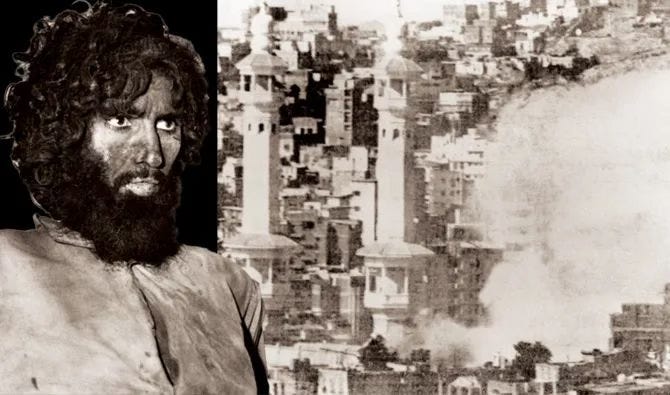
The 1979 Iranian Revolution not only sent a shockwave to the world, but also influenced Saudi Arabia, as anti-government riots emerged at the same time. In the last two months of 1979, extremists captured the Grand Mosque in Mecca, echoing disbelief to the increasingly Westernised and thus “non-Islamic” Saudi monarchy, which had been spending its oil money lavishly. Nevertheless, riots were crushed and stricter Islamic norm was installed. The country continued to strengthen its tie with the US and purchased military equipment from the West.
While Iran would embrace a series of conservatism in the next decades except for the struggling moderate reform brought by Khatami, Saudi followed the path of consistent moderate reforms under the new King Abdullah. Deregulation, privatisation, and stronger ties with the West continued to be implemented. MBS’s reform looks groundbreaking today and it is, but this change did not come from nowhere. Saudi Arabia has advanced with small steps for decades before the millennial announced Vision 2030.
Saudi Arabia is a non-nuclear-weapon country. It seceded its nuclear rights in exchange for more help in developing nuclear energy for civilian use and for the greater economic goods. Nuclear weapon is a necessary and sufficient condition for world’s power. Having nuclear weapon is a must as a world’s power, although having it does not guarantee the becoming of a power. Under the current world order, it is nearly impossible for non-permanent 5 to develop nuclear weapons. Most countries traded nuclear weapons for economic prosperity. On the contrary, Iran insisted on testing its own nuclear weapon, which is an unfavourable yet one of the few deterrents against Israel. In 2013-2015, JCPOA was finally reached and Iran was willing to cut its uranium by 98% to trade for a lift of sanctions. However, following Trump’s denial of JCPOA in 2017, Iran’s nuclear non-proliferation commitment quickly disappeared. There are renewing reports claiming Iran and stakeholders will resume JCPOA talks and secure a deal soon, but no confirmation has been reached yet.
Post Covid: Vision 2030 and Mahsa Amini
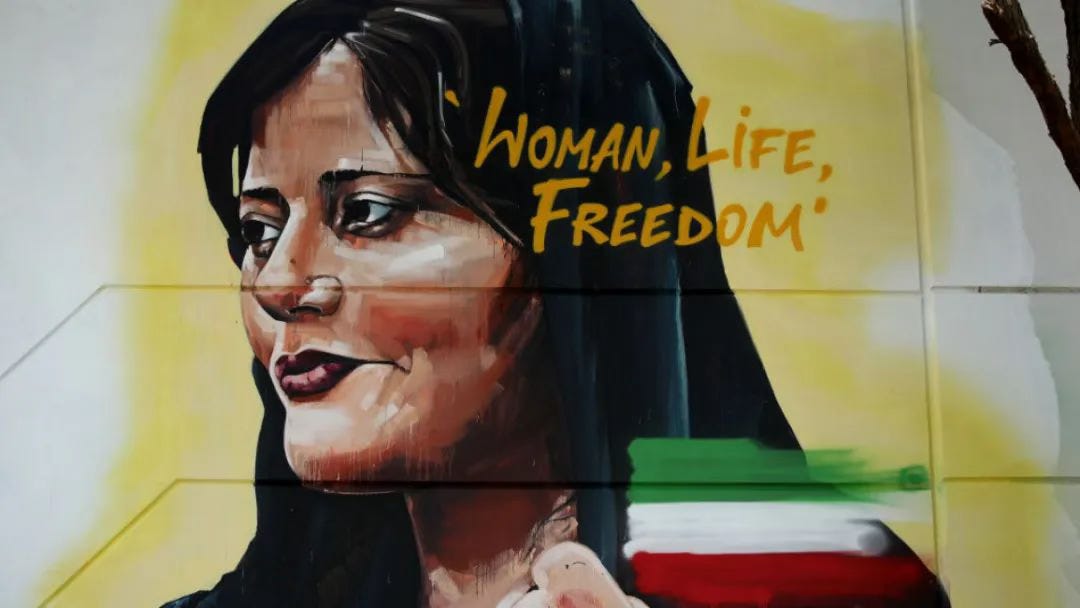
During the Covid years, if there has to be one defining social movement in Iran, it has to be the “woman, life, freedom” movement fueled the death of the young 22-year-old Mahsa Amini. The young Kurdish lady was believed to die following the abuse of morality police on her dress code, namely not wearing hijab properly.
In Iran, it is not uncommon for women to only loosely fit a scarf on their head as this is considered fashionable. Tightly fitting a scarf is considered old-style especially in big cities. The death of Amini is actually an unfortunate case because many people had not wore headscarves properly, and the act of not wearing scarf properly has become a social custom, representing women’s silent protests against headscarves, conservatism, and religious authority. Before Amini’s death, Iran had been in an economic slump for years, which worsened after a series of bad events at the end of 2019. In January 2020, the US killed the revered Qasemi Soleimani (revered in Iran but feared elsewhere) in a drone strike in Iraq. Iran vowed to revenge, only to shoot down a civilian plane full of Iranians by a much uncalculated human accident. Covid-19 made the situation worse. Mahsa Amini’s death ignited decades’ long dissatisfaction towards gender inequality, bad economic performance, state expropriation (which stifled entrepreneurship and birthed severe corruption), low women participation in labour force (17%, among lowest in the world, despite 60% of the STEM degrees are obtained by women), unsuccessful diplomatic breakthrough, etc.
While drawing the data from Saudi Arabia, women labour participation rate is 37% in 2022. Saudi inflation rate keeps at an average of 2.5% for the past decade. World Bank’s Doing Business tracks how supportive an environment is for entrepreneurs in many countries. While Iran consistently ranked the least welcoming for entrepreneurs, Saudi is newly ranked in one of the most improved and quickly climbs up the chart.
In the latter half of 2023, the gains of the Iranian mass movement began to recoil. Morality police was restored in mid 2023. Today, no constructive change has been made. Protests and mass demonstration were not unusual in Iran throughout decades. Often, these protesters ended in jail, women raped, and men swiftly death sentenced without due procedure.
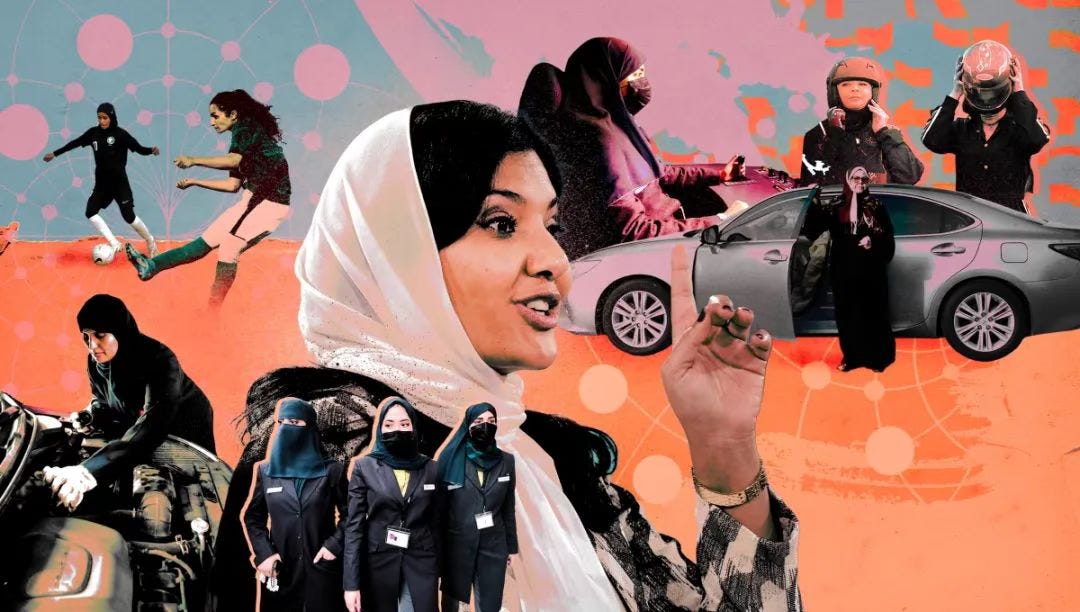
In authoritarian Shari’a-ruled countries like Iran or Saudi Arabia, giving long jail terms or death sentence to protesters is a normal activity. However, what makes or breaks a society is not the prospect of body punishment but the hope towards a better future. Economic projection is a delicate dream. Iranian regime has underperformed for decades, yet Saudi seems to beat the target.
Post Covid, the biggest gulf economy rebounded rather successfully, seeing a growth rate much higher than other GCC countries. Driven by the massive investment brought by Saudi gigaprojects, Vision 2030 served as the lighthouse that mobilises economy. The US has also understood that Saudi Arabia now constitutes 10% of the global oil production, and any strike against the nation would make it difficult for the US to find substitute in short time.
While the recent improvement in relations with Saudi Arabia has brought a brief breath of fresh air to Iran, this diplomatic breakthrough won’t fundamentally change Iran’s economic situation. Unlike the Pinpong diplomacy between China and the United States in the past, Saudi Arabia does not have the power to alter Iran’s destiny. As long as the domestic rigidity and tense relations with the West (intensified after Amini) persist, Iran’s industries will continue to decline.
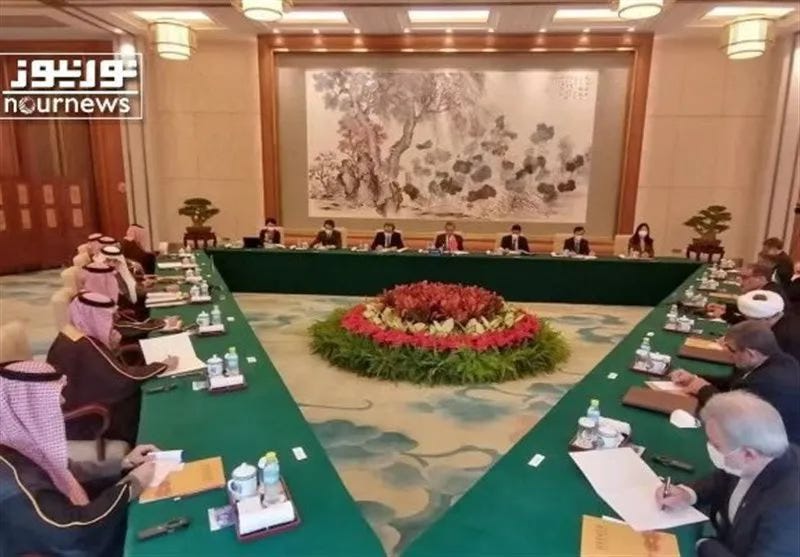
Has the U.S.’s maximum pressure policy worked on Iran? Yes and no. It has not destroyed the country; history repeatedly proves the resilience of the Persian people. The pressure has not broken Persians; instead, it brought greater resentment towards the United States. However, the maximum pressure has economically crippled Iran. As a resource-rich nation with a big population and educated workforce, Iran has the potential to be a regional power. Nevertheless, in the 21st century, the economy is the foundation of everything. The country’s deadlock (corruption + external sanctions) can only be resolved in one way under the current international situation. People, deprived of tangible economic benefits, have become a pawn that was sacrificed in diplomatic power play. Their discontent may one day reach a turning point, as envisaged in the white paper that designed the maximum pressure policy decades ago.
On the other hand, present-day Saudi Arabia receives more economic protection. As the legitimate heir to Islam and the protector of two mosques, it is in a much more glorified position than Iran. As a result, the country does not have the aggressive ambitions seen in many other formerly colonised countries.
In any case, the world is changing, and we are right here in the changing history. How will you shape the history?