Syria: War-torn Nation Poised for Rebirth
Reflections from my 2025 journey to a nation rebuilding its economy after war

Before going to Syria, I was afraid - just as I had been years ago before my first trip to Iran.
After years of civil war, Syria had just seen a new government arise to power. The Chinese embassy had withdrawn during the height of the conflict. When I mentioned the trip over dinner to some Chinese friends in Beirut, they warned: “Don’t go. The embassy isn’t there anymore. If anything happens, no one can save you.”
I researched nevertheless and found a few travelers who had visited recently. Perhaps Syria was still doable. I decided to go.
It turned out to be one of the best decisions I’ve made. Not long after, the Chinese embassy returned to Damascus. I’m grateful that I was able to witness, in this era, the rebirth of a nation.
Along the journey, I passed through villages only recently freed from war - places where the scars of airstrikes, tanks, and machine guns were still fresh. These were not massacres buried hundreds or thousands of years ago with only bones and ruins. These were tragedies of the digital age, traceable still on social media.
Do you remember about ten years ago when TikTok was still new, the footage of ISIS entering Aleppo and the slaughter that followed? I remember watching residents filming their shattered homes with trembling hands, tears streaming down their faces:
“If you’re seeing this video, it means my home has already been destroyed. I no longer exist. Don’t forget Aleppo. Don’t forget us.”
The camera blundered as another airstrike hit. The post ended abruptly. Later, all that remained were the numbers of dead on the news and the bodies of the killed, blanketed in dust and darkened blood.
Palmyra: Zenobia’s Gilded Kingdom and the Homeland of a Martyr
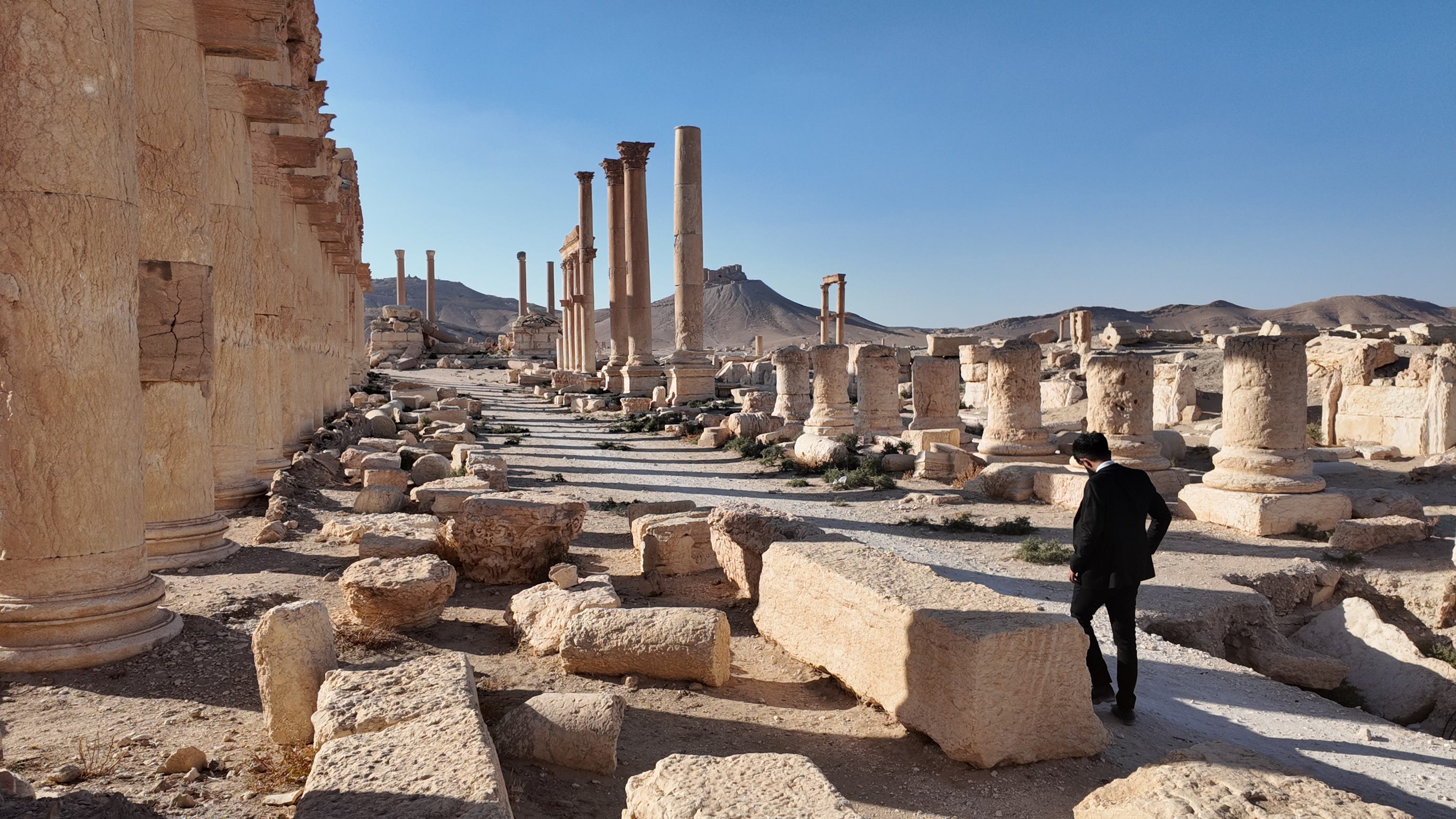
First day of my trip, my guide and I set off towards two places: westward to Krak des Chevaliers, and eastward to Palmyra. Palmyra was really the reason why I was in Syria.
In Arabic, Palmyra is called Tadmor (تدمر), meaning “the land of palms.” The palm, an ancient symbol of fertility and endurance, gave the city its name Palm-yra as the place of palms. Located in the desert heart of Syria, it once linked the Mediterranean to the Euphrates and the Persian Gulf. As a vital node on the Silk Road, it was known as “The Bride of the Desert.” In 1980, it was inscribed as a UNESCO World Heritage Site.
Palmyra’s history stretches back to the first millennium BCE, when it was already a trading post. For centuries, it connected East and West through the exchange of spices, silk, and gemstones, absorbing Greek, Roman, Persian, and Arab influences into a civilisation of remarkable hybridity.
By the first to third centuries CE, it had become one of the wealthiest provinces of the Roman Empire. During this golden age rose a woman who would outshine her time: Queen Zenobia. For centuries, Syria was not a nation but a prosperous frontier under vast empires. Before Zenobia, another famous Syrian woman had risen to power - Julia Domna of Homs, the Syrian born empress who accompanied her Roman husband and sons on military campaigns, patronised scholars, and even inspired the iconic braided hairstyles later imitated by Zenobia.
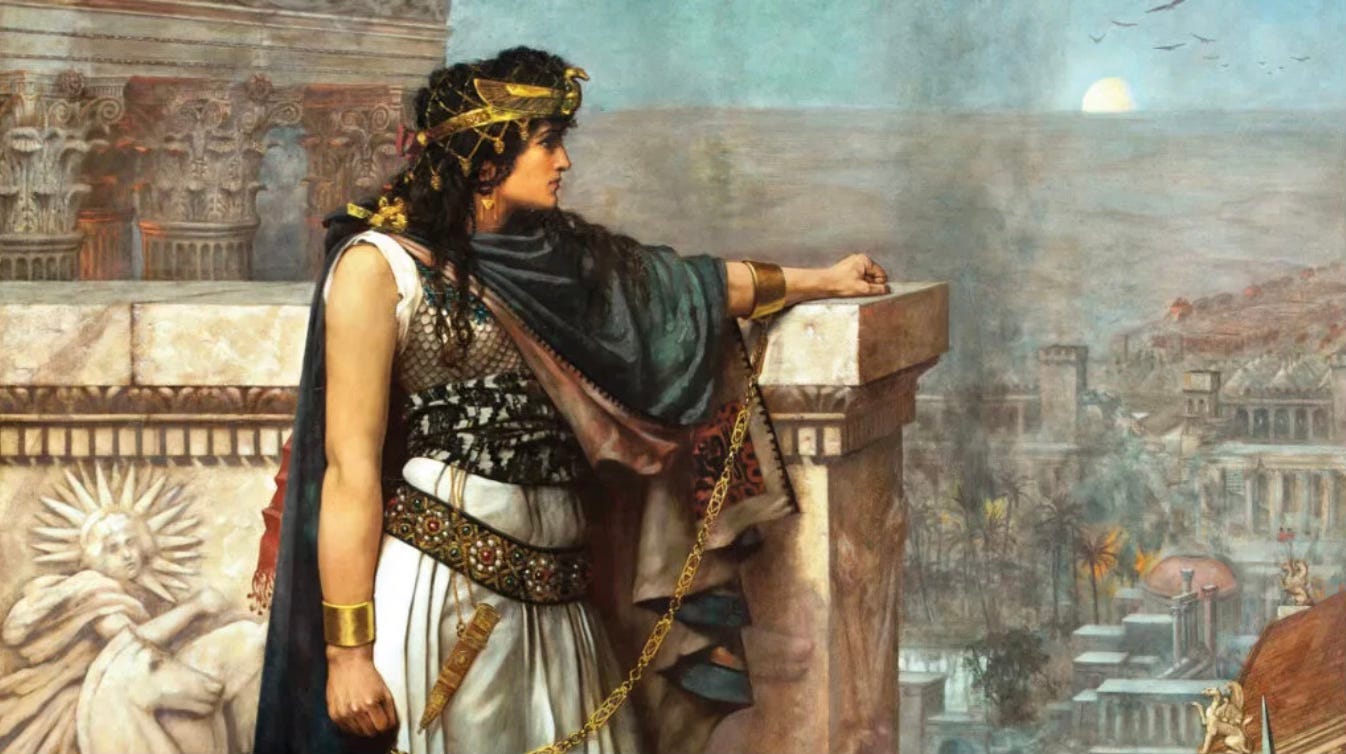
Under Zenobia’s rule, Palmyra became a powerful region. Meanwhile Rome was sinking into internal chaos, the Queen no longer wished to remain a puppet of the Empire. She dreamed of establishing a middle kingdom - one that could stand alongside Rome and Persia. Her armies were strong, her treasury full. After her husband’s death, she and her young son declared autonomy and rebelled against Rome. The Roman Emperor Aurelian marched east to suppress the revolt. When he reached Palmyra, the Bedouins who once supported Zenobia betrayed her and some switched sides. The Roman army advanced without bulwark. The Queen and her son attempted to flee east to seek aid from Persia, but were captured en route. She was taken to Rome and since vanished from history, leaving us wonder what was her eventual fate?
Nevertheless, two thousands years later, today, the people of Palmyra still remember her and adore her. She is audacious and multilingual; her beauty and ambition defied her era. For Palmyrans, she is the Jean D’Arc a symbol of resistance and pride. Zenobia embodied the essence of her city: cultured, courageous, and cosmopolitan. Her physical body may be long gone, but her spirit remains etched in the hearts of her people.
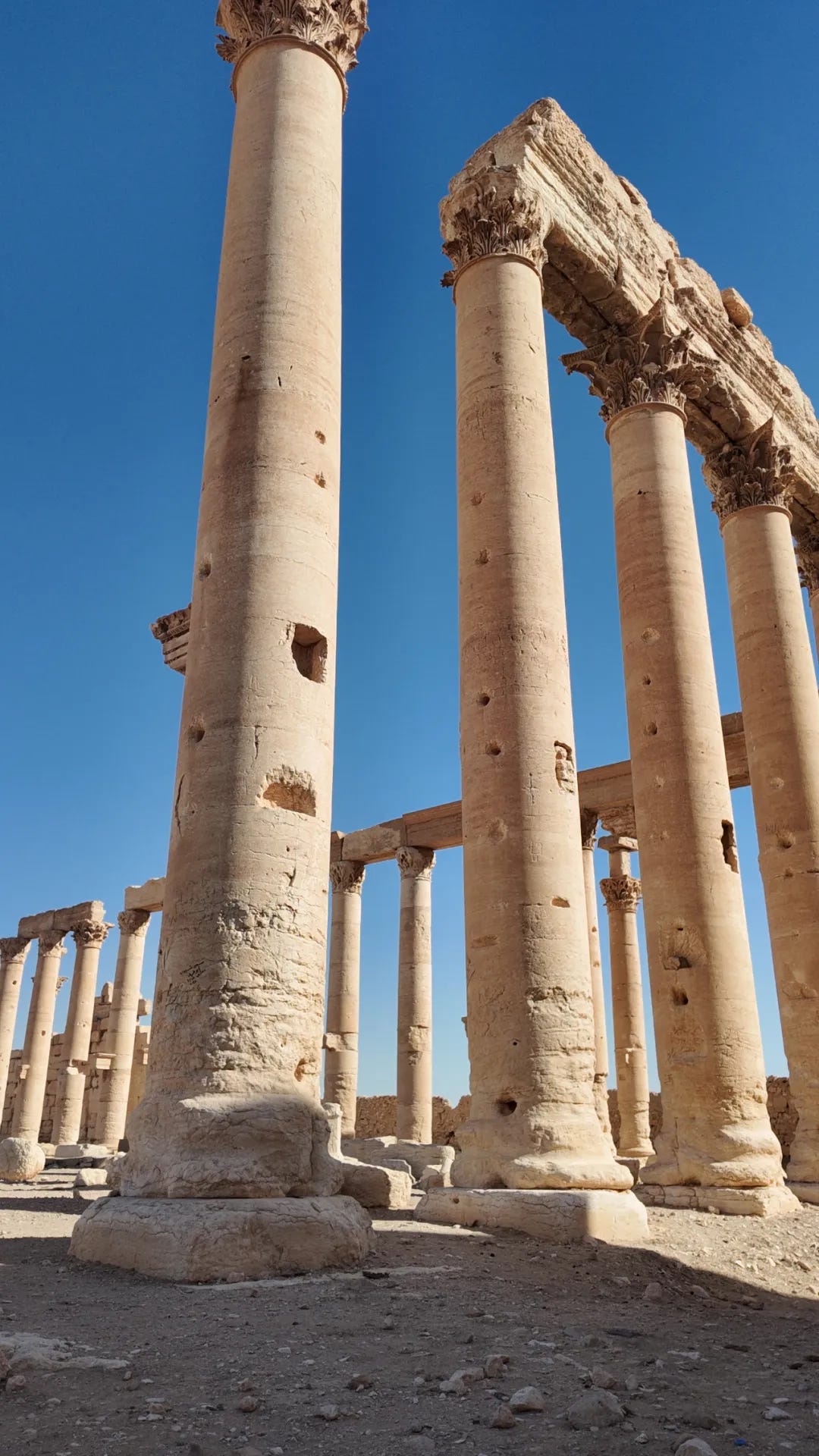
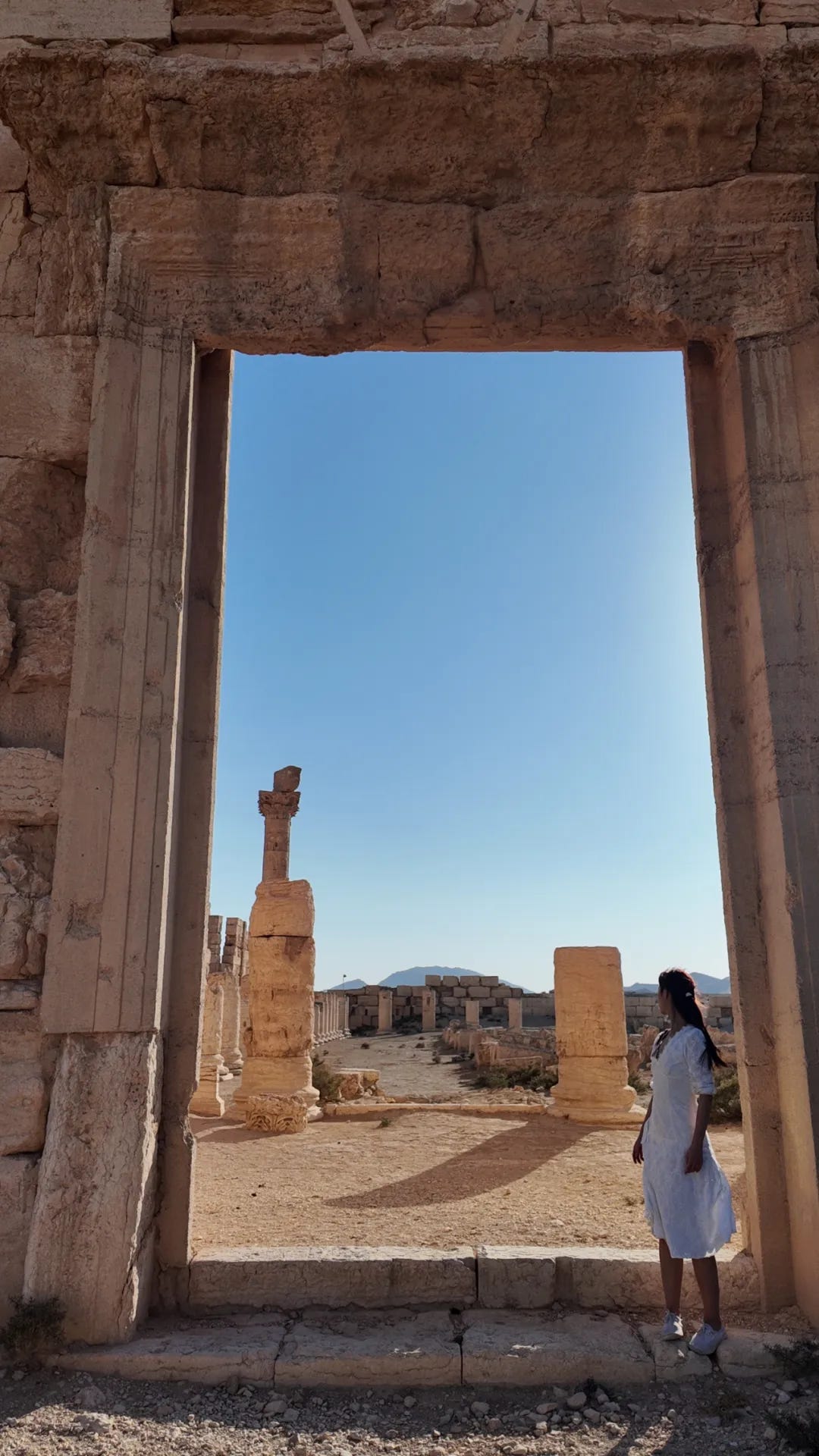
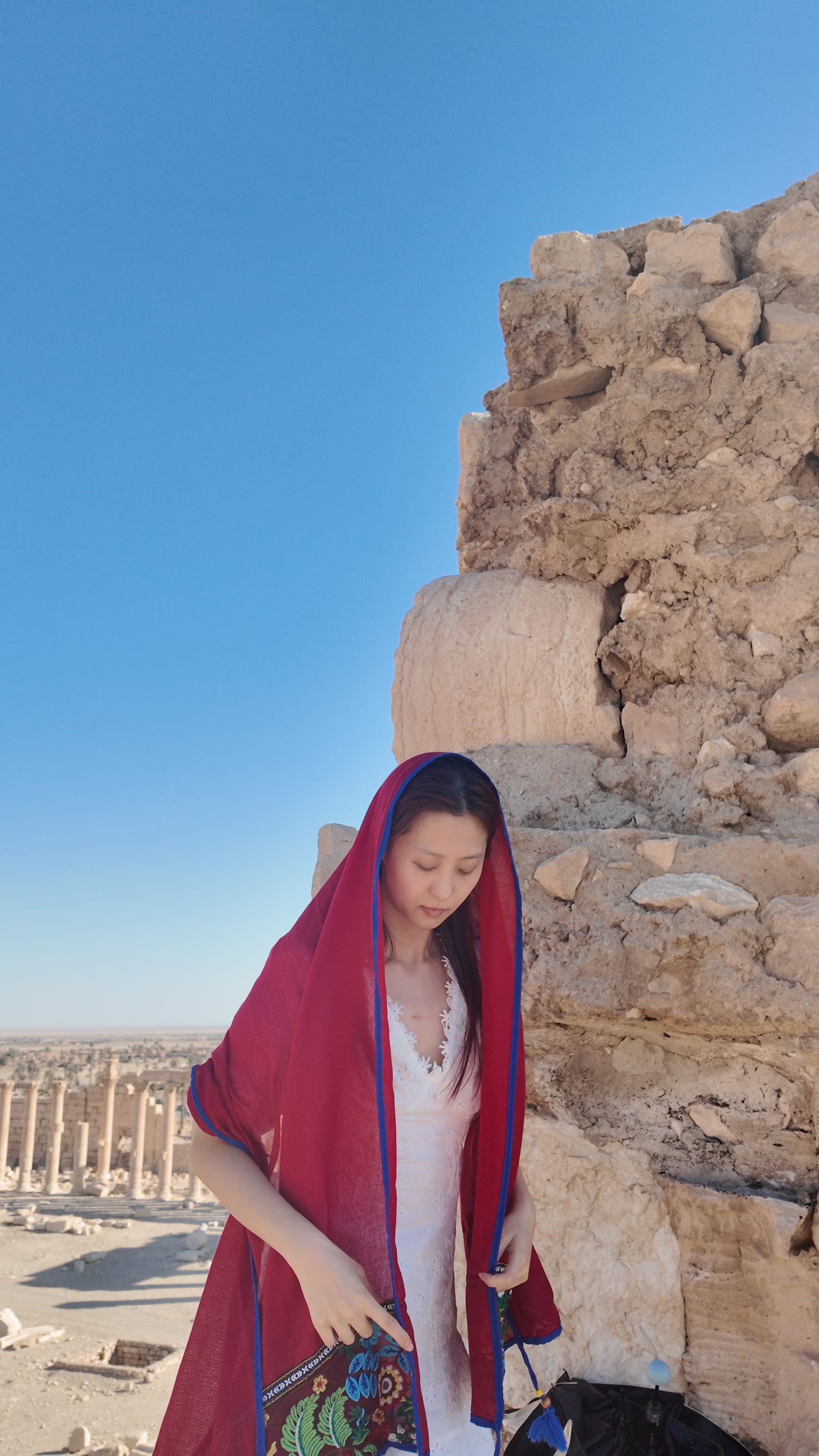
Walking through Palmyra leaves one speechless. The city was vast and in fact, it was the largest Roman ruin I had ever seen. Because of the civil war, I was the only visitor that day. My guide and I wandered through the silent ancient city at sunset, feeling the weight of time pressing gently upon our shoulders.
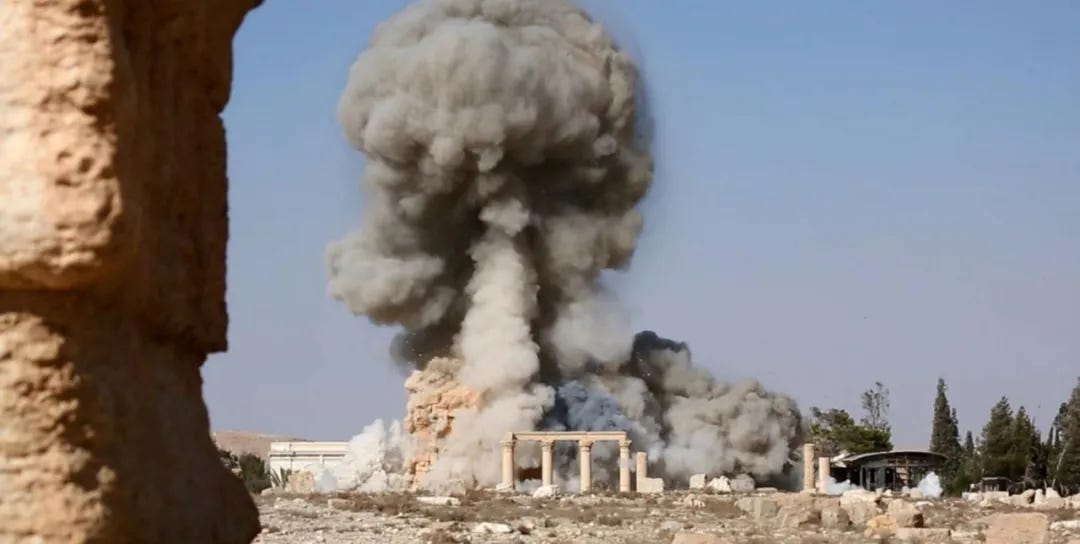
When I walked into the Temple of Bel, I felt a profound sense of sorrow. The Temple was built in 32 CE to honor the city’s chief deity, the god Bel. It symbolised Palmyra’s blend of Roman grandeur and Semitic devotion. In 2015, ISIS seized much of eastern Syria, including Palmyra. They committed unspeakable atrocities and turned this once-prosperous city into a ghost town. The same year, ISIS used tens of tons of explosives to blow up the Temple of Baalshamin and the Temple of Bel. These two sanctuaries that had withstood millennia of invasion and weather reduced to rubble in seconds.
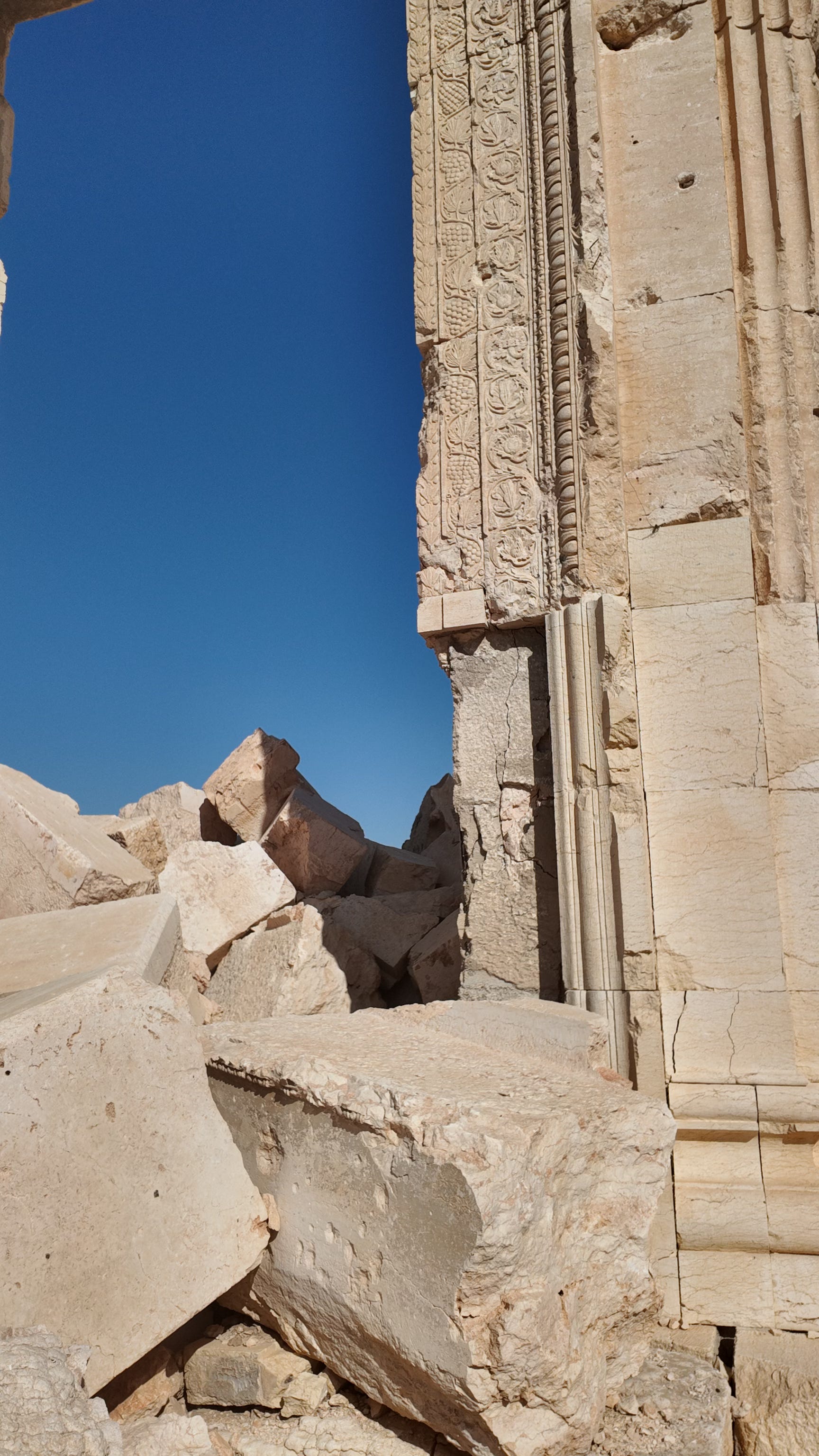
As I strolled through the ruins, I saw only shattered pieces. The Roman-style ceilings that once had vivid palms and golden eggs (symbols of fertility) were gone. My guide and I climbed over piles of broken marbles; on one fragment, the faint carvings of palms and eggs were still visible. The pillars that had endured empires for two thousand years could not survive the madness of modern fanaticism.
I climbed to the temple’s roof and looked down upon the entire city. I was so awestruck. “I need a moment alone,” I told my guide.
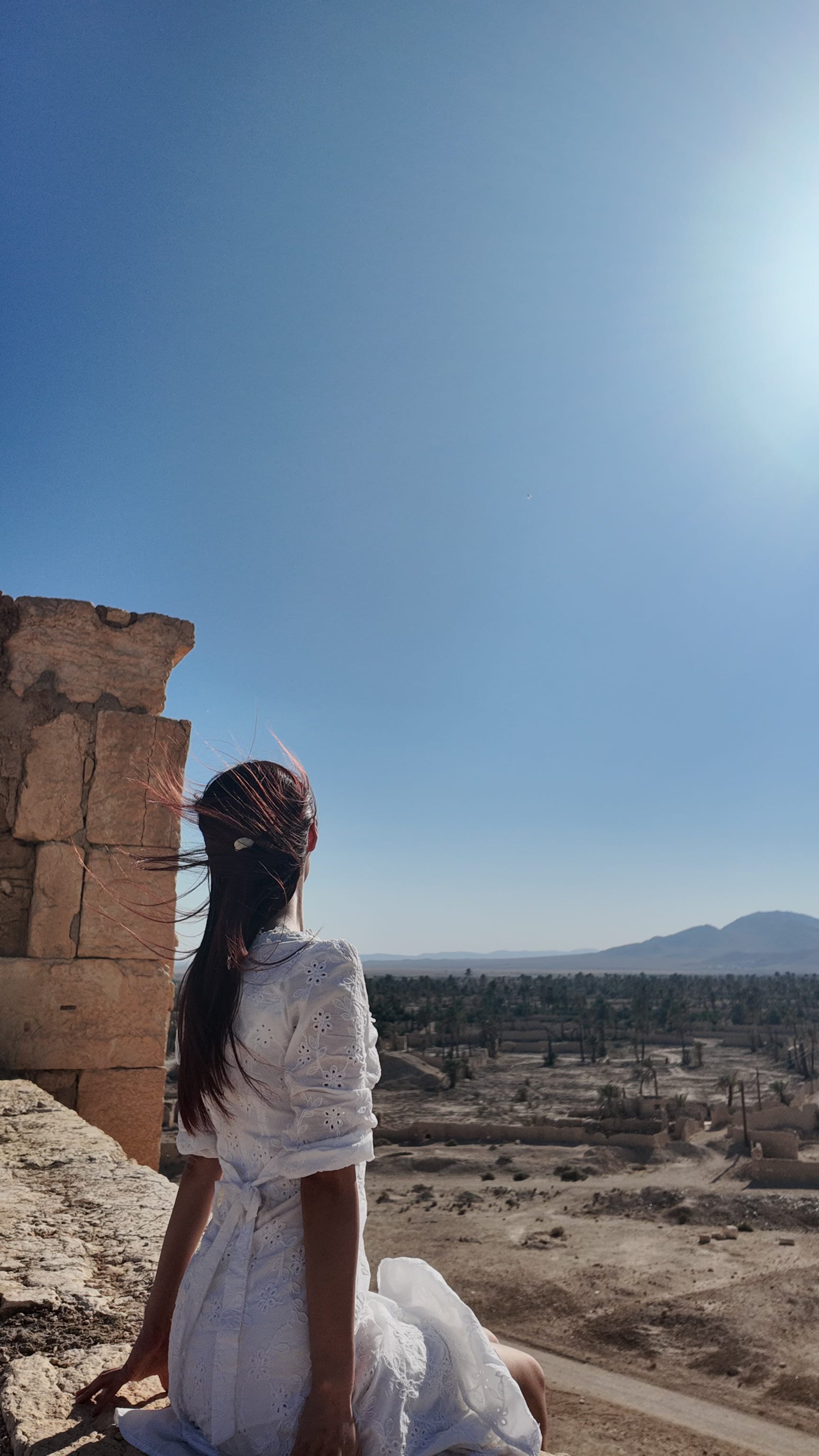
As a mid-aged wanderer who has walked through the ruins of many empires, I do not feel such an overwhelming need for silence often. The last time was on a cliff within the Russian Arctic Circle while trekking through blizzards to reach the Northern Sea Falls, where I stood frozen before the crashing waves and snow-laden wind. Palmyra evoked that same awe, but instead of nature’s vastness, it was the weight of human history itself.
Time and history are like a feather. They fall softly into one’s hand, yet their weight can bend your spine.
My guide told me that the new government plans to use AR/VR to digitally reconstruct the ancient site. I recalled one time I heard from an acquaintance that UNESCO had already partnered with an organization in Italy to assist in digital restoration. From the temple’s height, he pointed toward a deserted hotel nearby.
Before the war, Palmyra was wealthy. Of course, it was blessed with a UNESCO heritage. Its streets were filled with foreign and domestic visitors. People were busy building new hotels, restaurants, etc. to accommodate the expanding crowd. When the fast-spreading civil war erupted and ISIS swept across the city, many couldn’t escape in time. Construction halted midair; most residents fled or were killed. ISIS destroyed temples, beheaded soldiers, journalists, merchants, and ordinary civilians.
I will not recount those images. Too brutal. But any of you may find them online.
Amid the ruins, traces of former grandeur still linger. There are markets, theaters, royal reliefs carved into stone columns, and fragments of ancient legal codes. Kingship and law once coexisted here; it was both an Arab land and a Roman province. The city’s aqueduct system was sophisticated, its water channels flowing down the very columns that lined its streets. When sunset struck the streams cascading from the pillars, the entire city shimmered in gold, spinning off a spectacle proclamation: this is the empire’s glory.
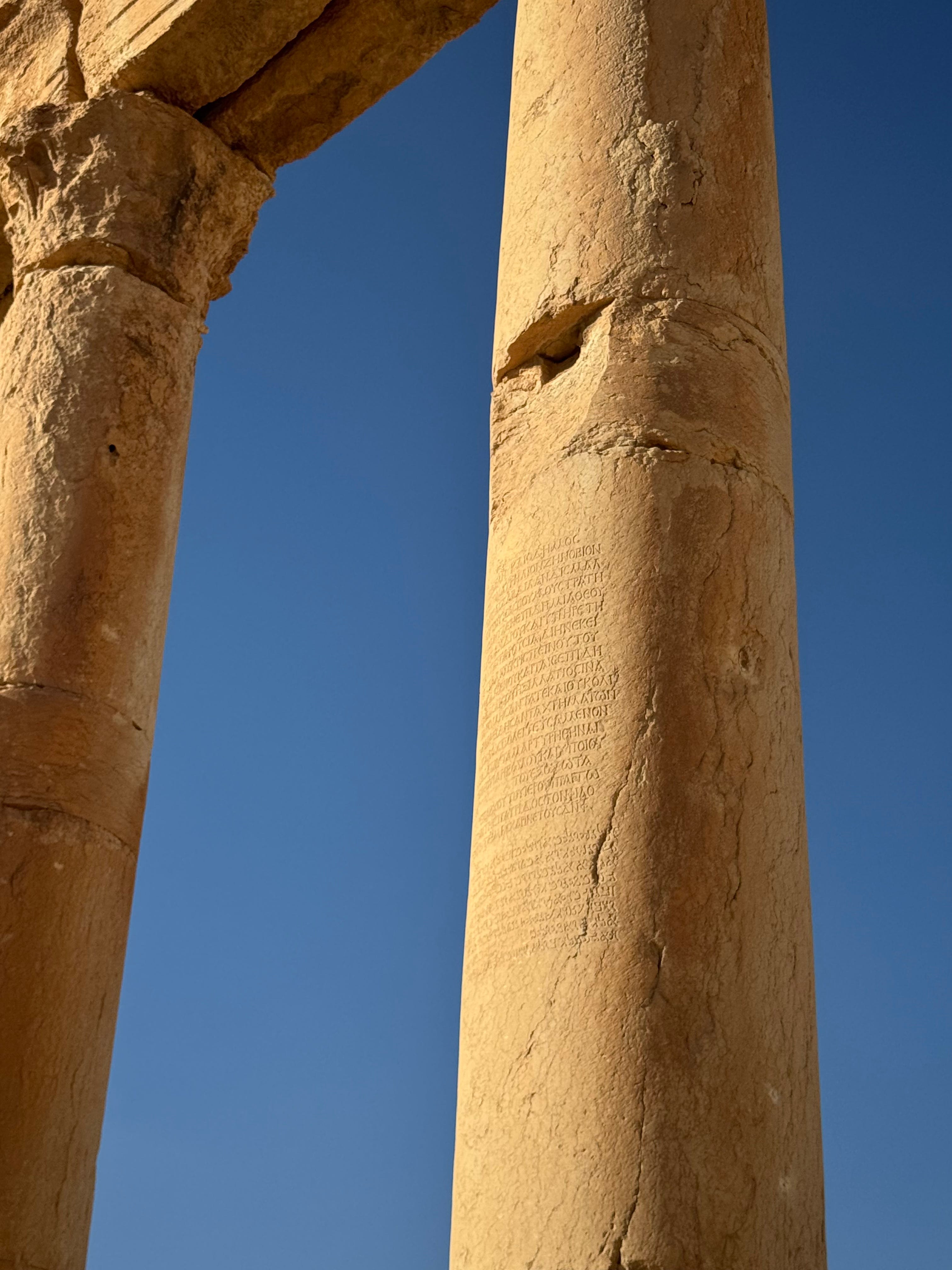
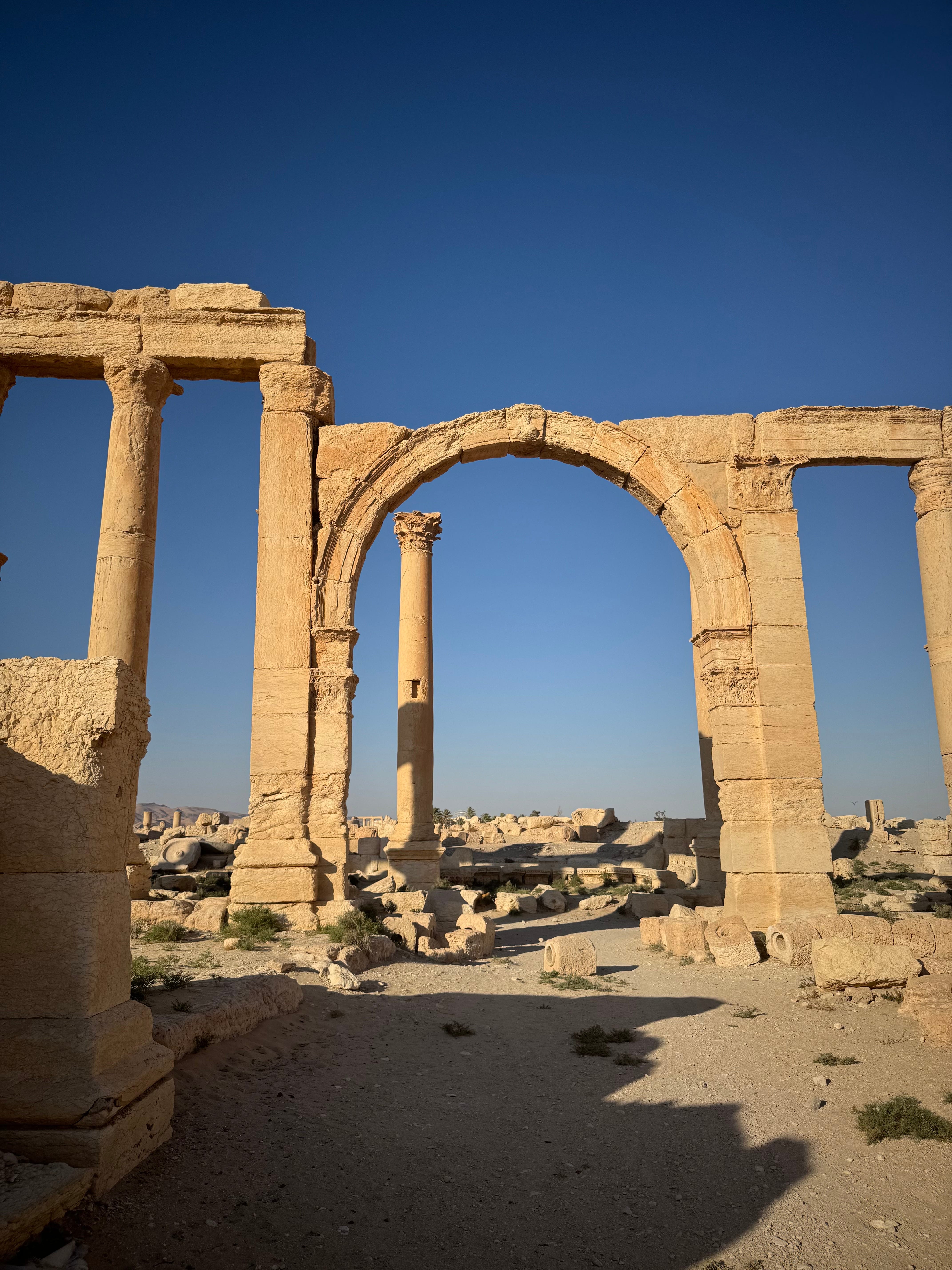
Beyond the splendor of antiquity lies the ruin of modern Palmyra.
The surrounding neighborhoods are still in ruins; walls are riddled with bullet holes. Only the elderly and children remain. Adults are gone. Once, this city held one of the Assad regime’s most infamous prisons. After the rebels took power, political prisoners were released. One man, who had been imprisoned for decades, walked out and could not comprehend what a smartphone was.
Before leaving the beautiful Palmyra, I want my readers to remember one name - Khaled al-Asaad. He was a native of Palmyra, an archaeologist who devoted his entire life to preserving its heritage. In 2015, when ISIS invaded the city, he helped secretly move ancient artifacts to safety. Captured along with his son (also an archaeologist), he was tortured for months as ISIS tried to force him to reveal the hiding place of the treasures. He refused. At 82 years old, he was publicly beheaded. His body was hung in the square, labeled “an apostate” and “idol worshiper,” meant to terrify others.
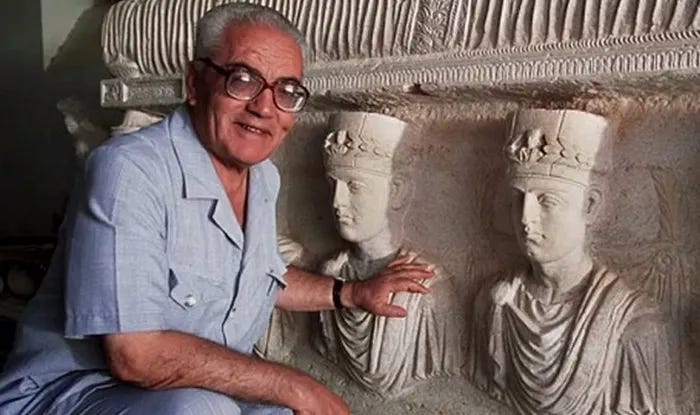
He had no weapons, no army, no political power but only a love for history and the courage to stand by it. His unyielding soul and straight backbone, like that of Queen Zenobia’s two millennia before, are the most precious treasures of Palmyra.
Bosra:The Rebel Stronghold and the Ancient City Devastated by Russian Airstrikes
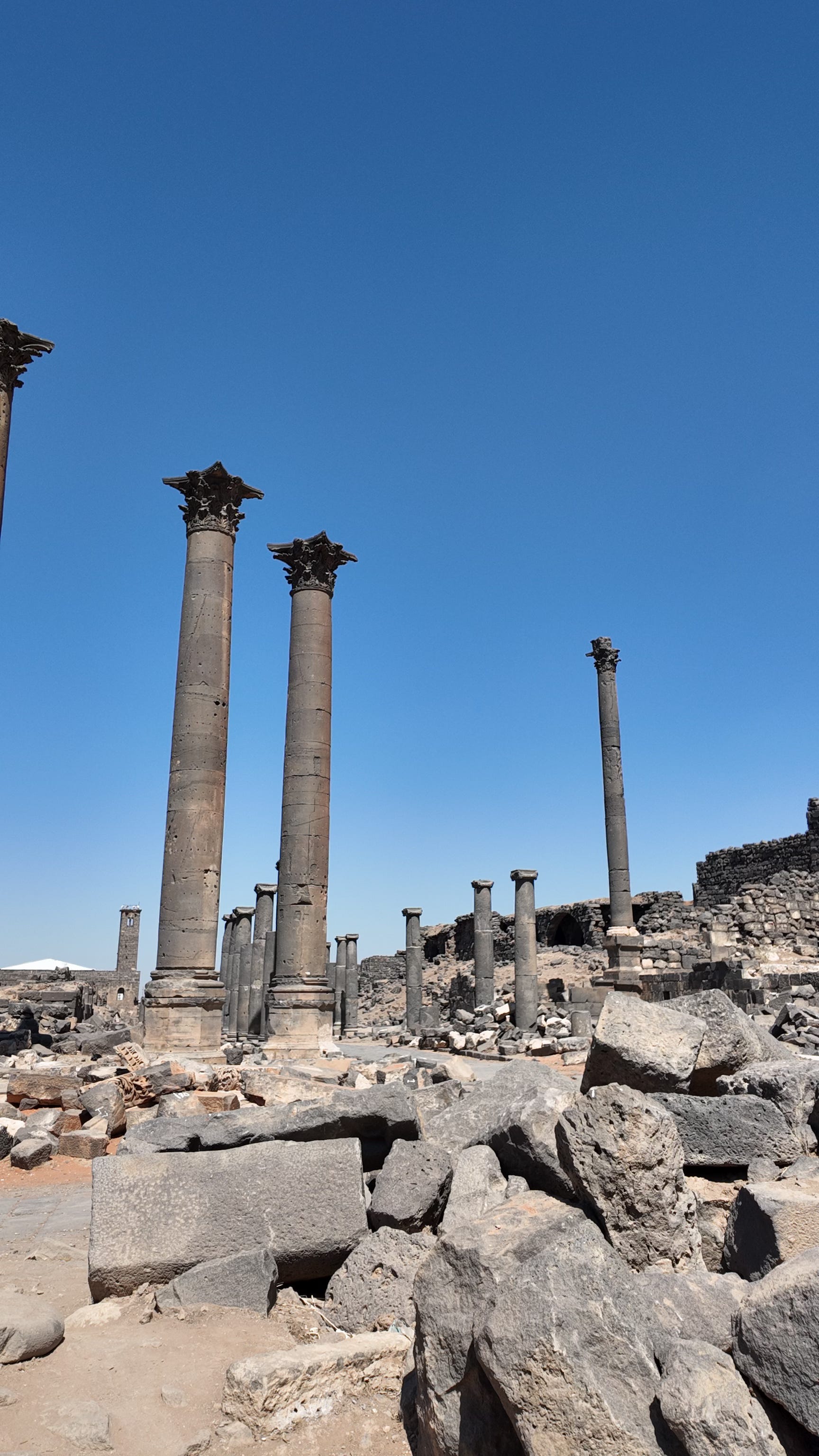
The Prophet Muhammad never reached Damascus in his lifetime. The closest he ever came was the ancient city of Bosra.
As a young boy, Muhammad once traveled westward with his uncle Abu Talib on a trade expedition. Caravans passed through Bosra all the time, so nothing unusual would be about this one. However, there was a monk living in Bosra named Bahira, who, from his study of earlier scriptures, knew that a prophet was destined to pass through.
When Bahira saw the caravan arrive, he noticed a young boy. Wherever he went, a cloud followed him. When he sat to rest under a tree, the cloud stopped above to shade him. Bahira was convinced this child was the one foretold.
He invited Abu Talib’s caravan into his home and told the uncle, “This boy is the Prophet. Escort him back to Mecca now. There are Jews here who would harm him.”
Alarmed, Abu Talib’s caravan set off immediately. Not long after, three men indeed came searching for the child, but Bahira stopped them, saying, “Do not interfere with God’s plan.”
Bosra is famous not only for this prophetic legend but also for its magnificent Roman ruins. Its Roman theater remains remarkably intact. If you stand at the center and speak, your voice echoes perfectly to the highest seats, still today. On the stone benches are carved little square grids, which are ancient games people played while waiting for the show to begin. Many of these games still exist today in Turkey and the Levant. When Islam spread through the region, theater-going faded but people continued to pray on those same benches.
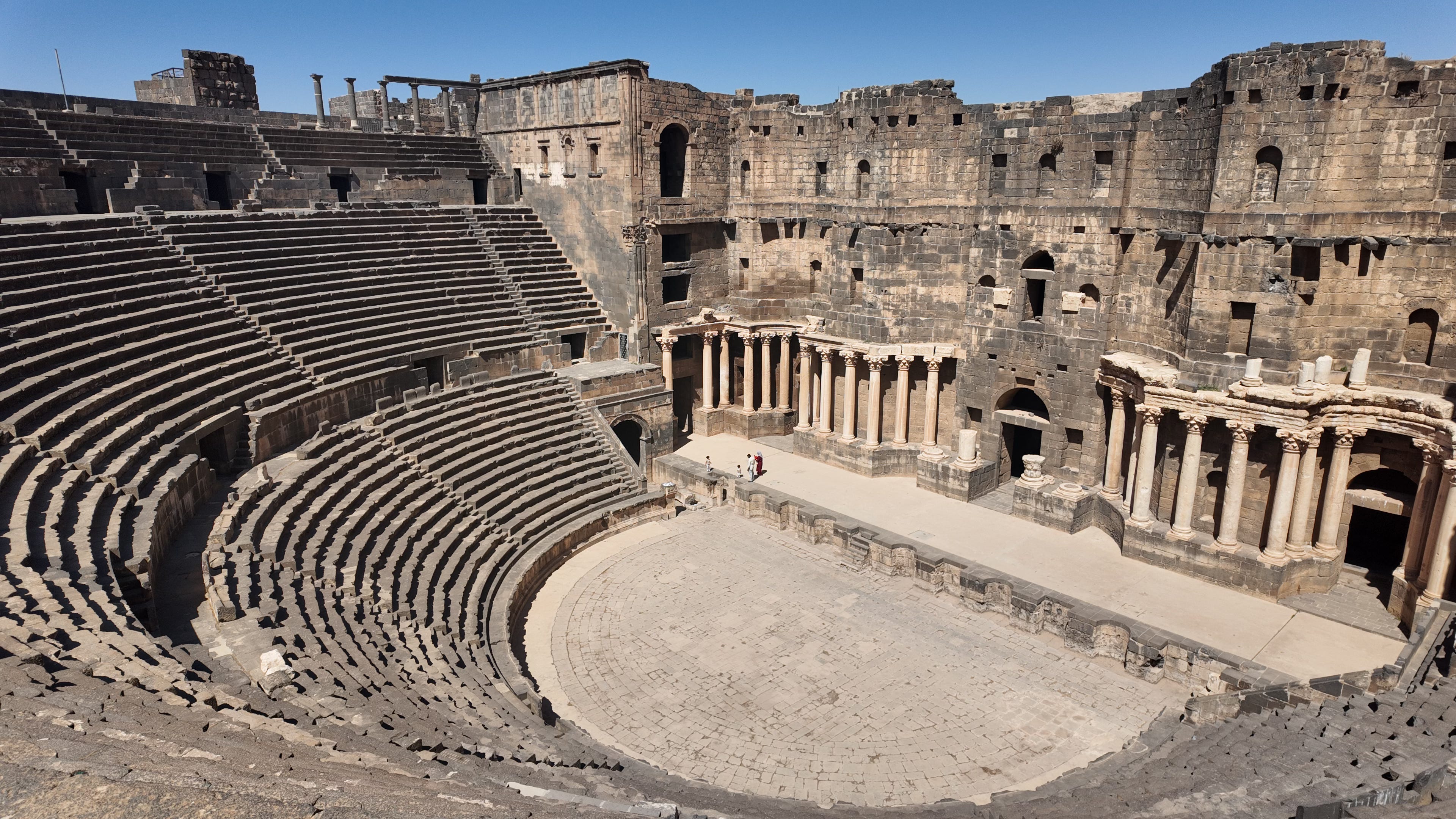
Later, the French colonial rulers left their mark here too, building a small open-air “museum” in the theater courtyard, displaying treasures they had looted from across the region. Bosra’s buildings are made of black volcanic basalt, so any white stone you see was brought from elsewhere, for example, stones from Palmyra with palm inscriptive, and statues hauled all the way from Aswan, Egypt.
Some statues are missing their heads, because of early Muslim iconoclasm. When the conquerors forbade the worship of idols, they removed the heads of Roman and Greek statues and placed them a few steps away, as a gesture of purification.
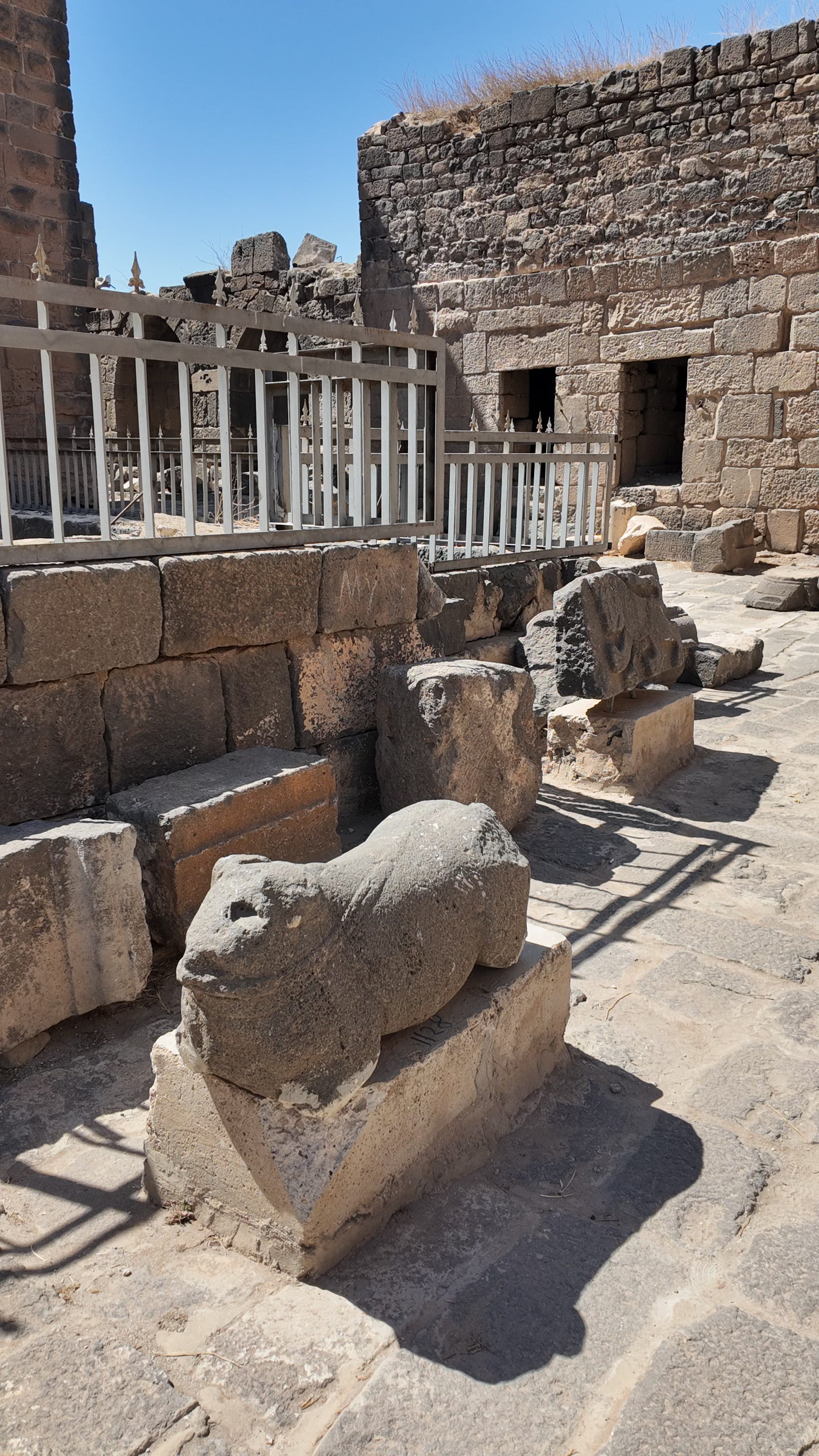
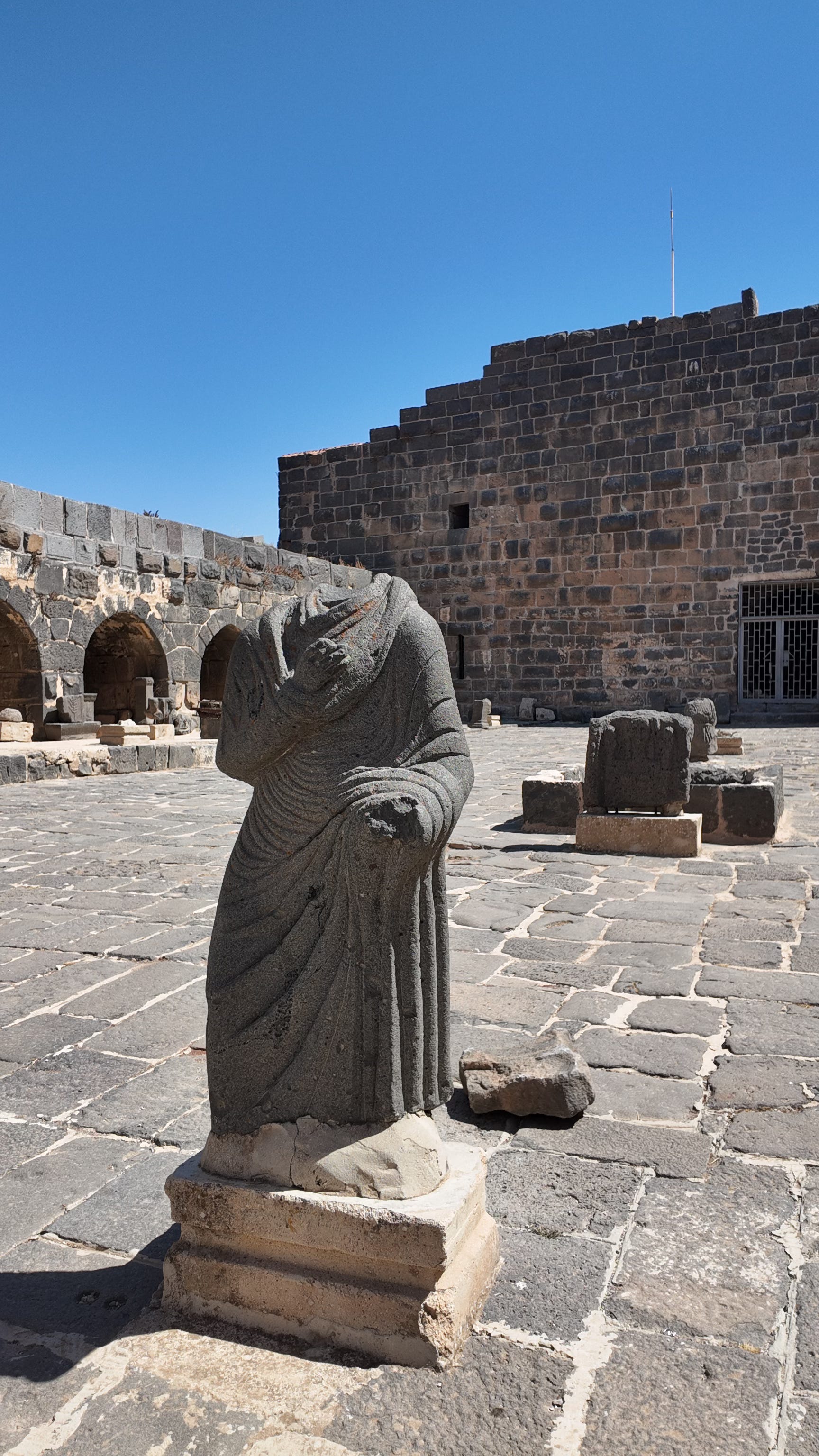
At the time of my visit, the site was quite deserted. Most restaurants were closed. When the drums of war sound, arms dealers fill their pockets with gold, while ordinary people either flee or die and merchants lost everything.
My guide took me to the top of the theater. From there, one can see both the new city and the old. On the left, concrete and steel is the new city; on the right, destroyed is the thousand-year-old old town now, in ruins after Russian airstrikes in mid 2010s.
Before the war, people still lived within those black volcano stone walls. The old town was famous for its volcanic architecture, and life thrived there: bazaars, mosques, bathhouses, even the resting place where the Prophet himself once stayed.
But when the Syrian civil war erupted in 2011, Russia and Iran backed the Assad regime and bombed rebel-held Bosra. The airstrikes turned the city into a river of blood.
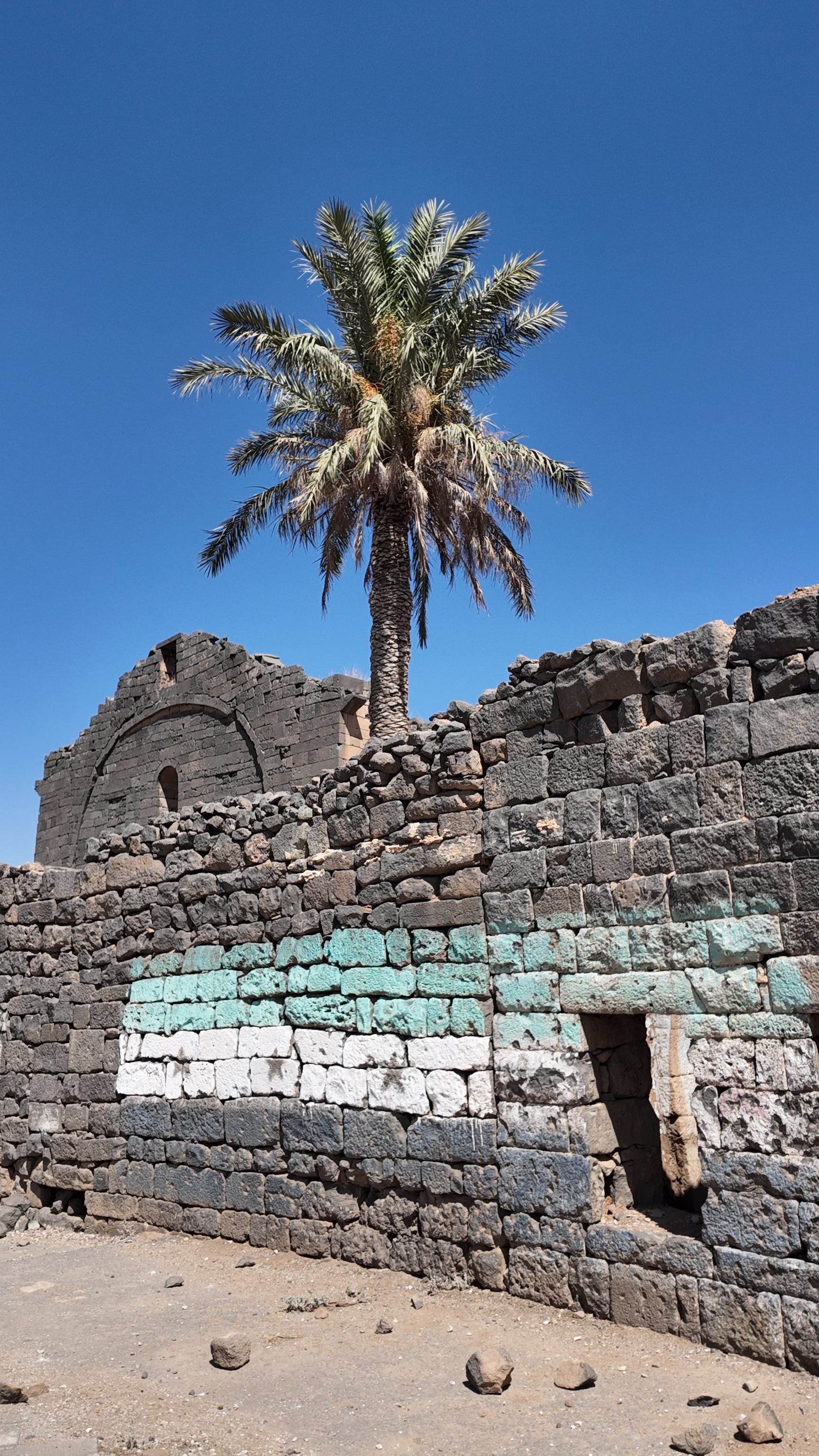
Walking through the ruins today, one can still see the traces of violence. Some may take photos with the Syrian rebel flags (now Syrian national flag) painted on the wall, which, was a daring adventure during the Assad’s time. One might face retaliation or brutal killing because such an image might pin you as a supporter for the opposition. Today, it’s a brand new story. People can freely pose with the flags as their pride lies with the rebels.
Along the old city’s walls you also see rows of Arabic inscriptions, each line marked with a number: 1, 2, 3… Each number represents a name, a vivid life of villains killed in the airstrikes. Many were children.
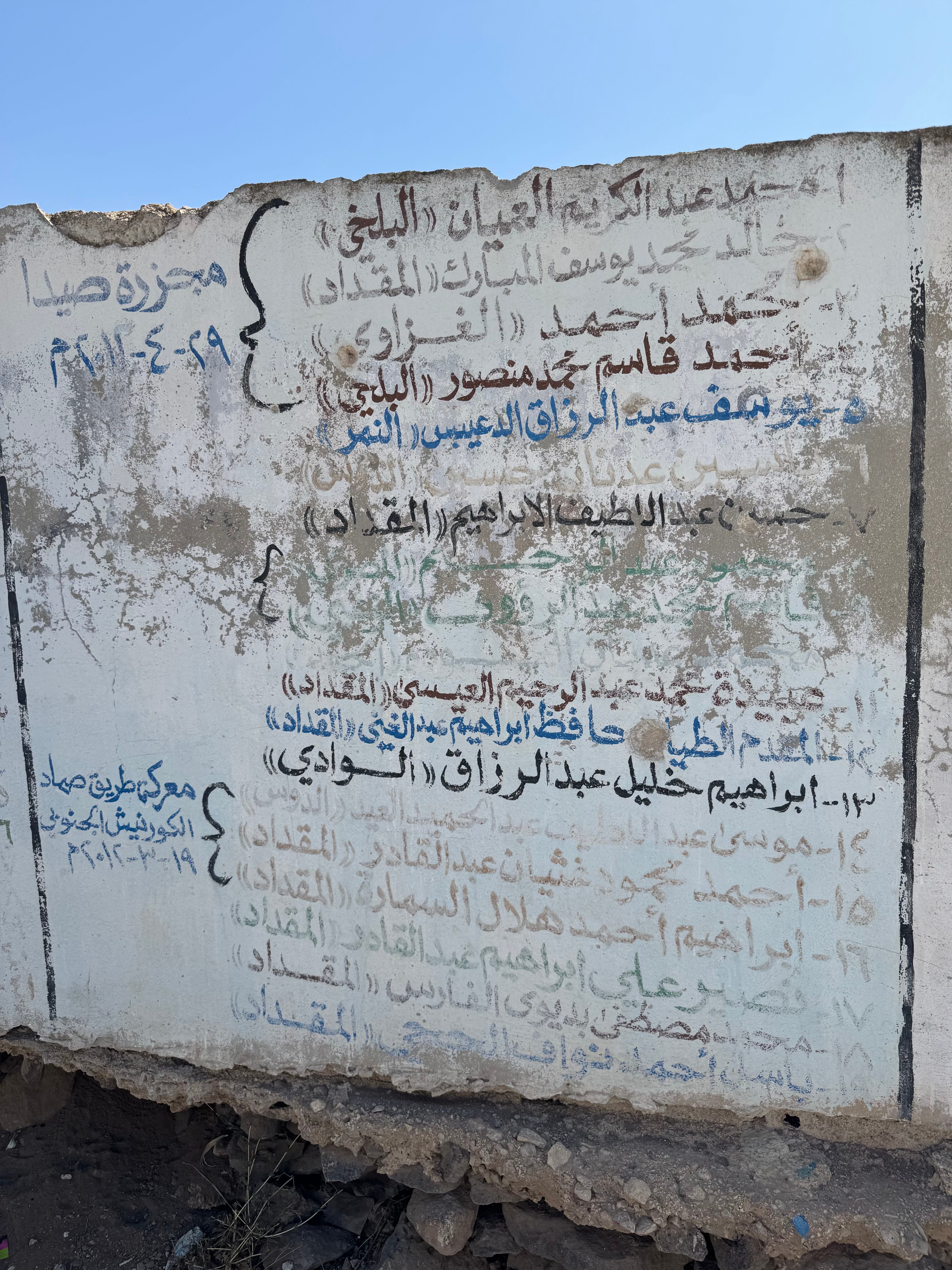
Had those children lived, they would be in their twenties or thirties now. But the war hijacked their shattered dreams.
Before I end the Bosra chapter, perhaps there is this small detail you might not have noticed: now type the word Syria on your iPhone, have you realised that the flag emoji has changed? Try typing “Syria” - is your flag red, or green?
Damascus — The City of Roses, and My Name in Arabic
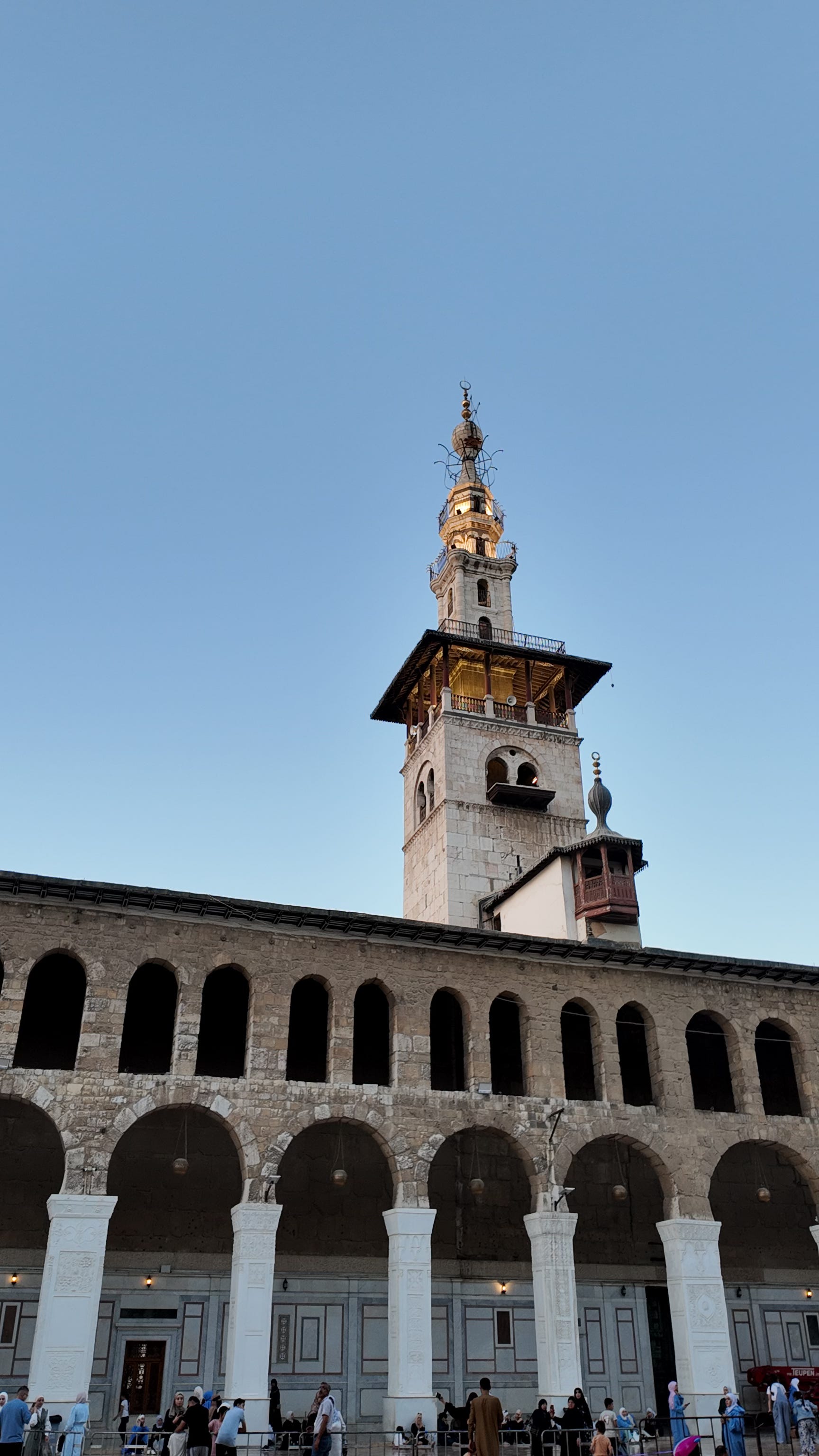
The Damask rose is famous. In the Arab world, beautiful women are often called the Damask roses. Coincidentally, my name “Zhuorui” in Arabic translates to جوري (Jouri) — the Damask rose. Every time I mention my full name to Arabic speakers, they were immediately amused:“Oh, Jouri — the Damask rose!” Perhaps it’s the universality of language; I always tell them that the Chinese character of Rui in my name also means the pistil, the heart of a flower.
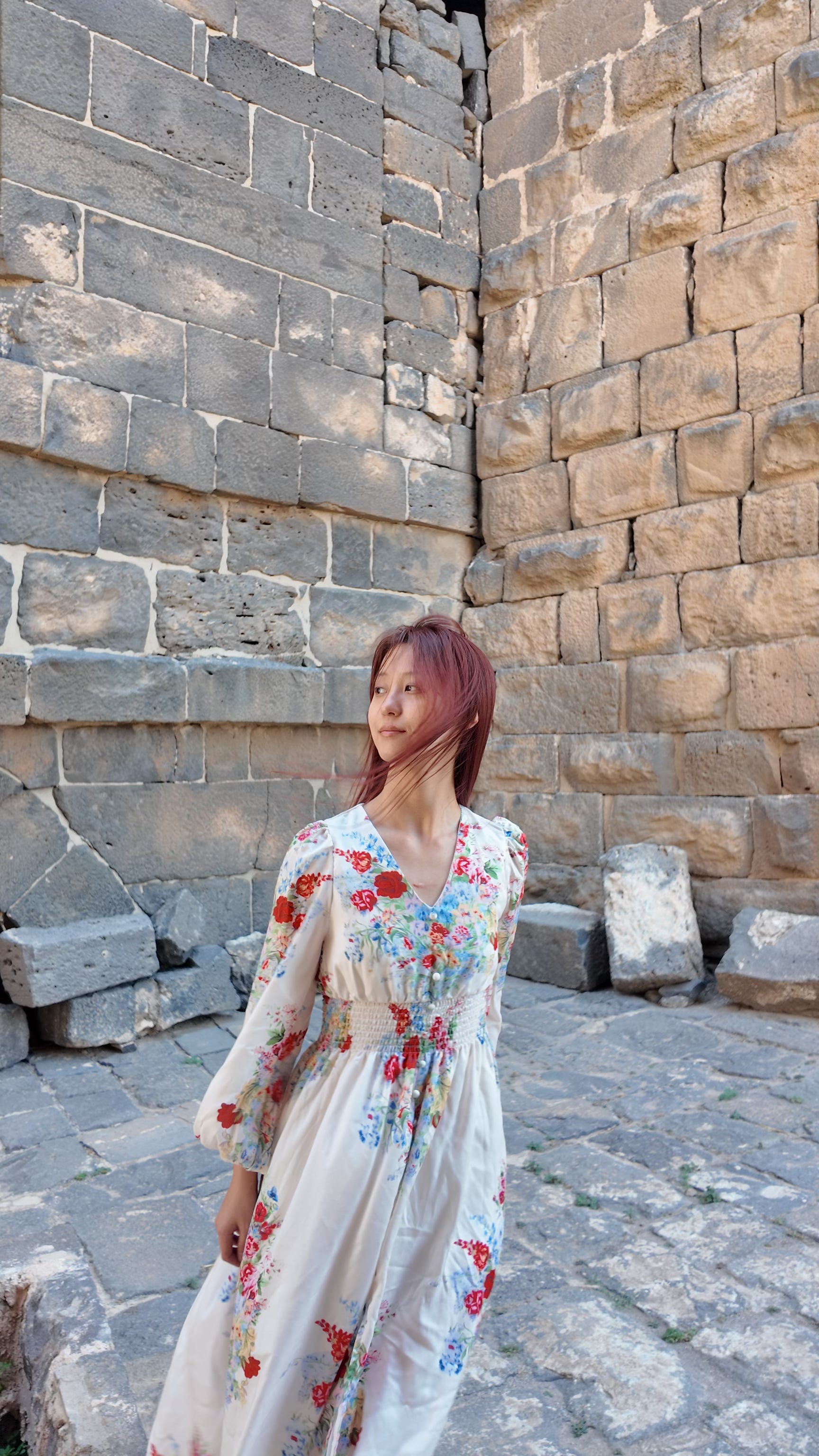
Having swung around with the name “Damask rose” for so many years, I finally found an opportunity to visit Damascus in person, to see with my own eyes the true face of this ancient capital.
My first impression of Damascus was actually the hotel prices. I never stay in old hotels, so I passed on most of the antique-style accommodations in the old city, choosing instead something modern. When I checked prices for newly renovated hotels like the Four Seasons and the Sheraton, I was shocked as they were around $500–700 per night. After the civil war, these hotels are no longer managed by their original international groups, though they still maintain similar standards. Yet in Syria, where the average monthly salary is under $100, such prices are absurd. Even in Dubai, a four-star hotel costs around $100–200 per night, and a five-star rarely exceeds $300–400. Later I found out why: the new government officials and staff from the United Nations and other intergovernmental organisations stay in these hotels. Because of increased security and limited availability, the prices for each piece soared.
The Julani-led new government hailed from Idlib in the North. The rebels did not originally come from Damascus. When it entered the capital, it didn’t have suitable accommodations, so it temporarily requisitioned the luxury hotels. Later, I spoke with one of the top local UN official, who described the Four Seasons as “a golden cage in the ruins.”
Eventually, I stayed at another hotel that cost $300 per night, mostly filled with diplomats and Western journalists. It was a place where foreign political actors gathered and exchanged agendas. The quality of the hotel was equivalent to a basic no-star business hotel in China, but in a country where most buildings have been destroyed, such simple cleanliness already feels rare and cash demanding.
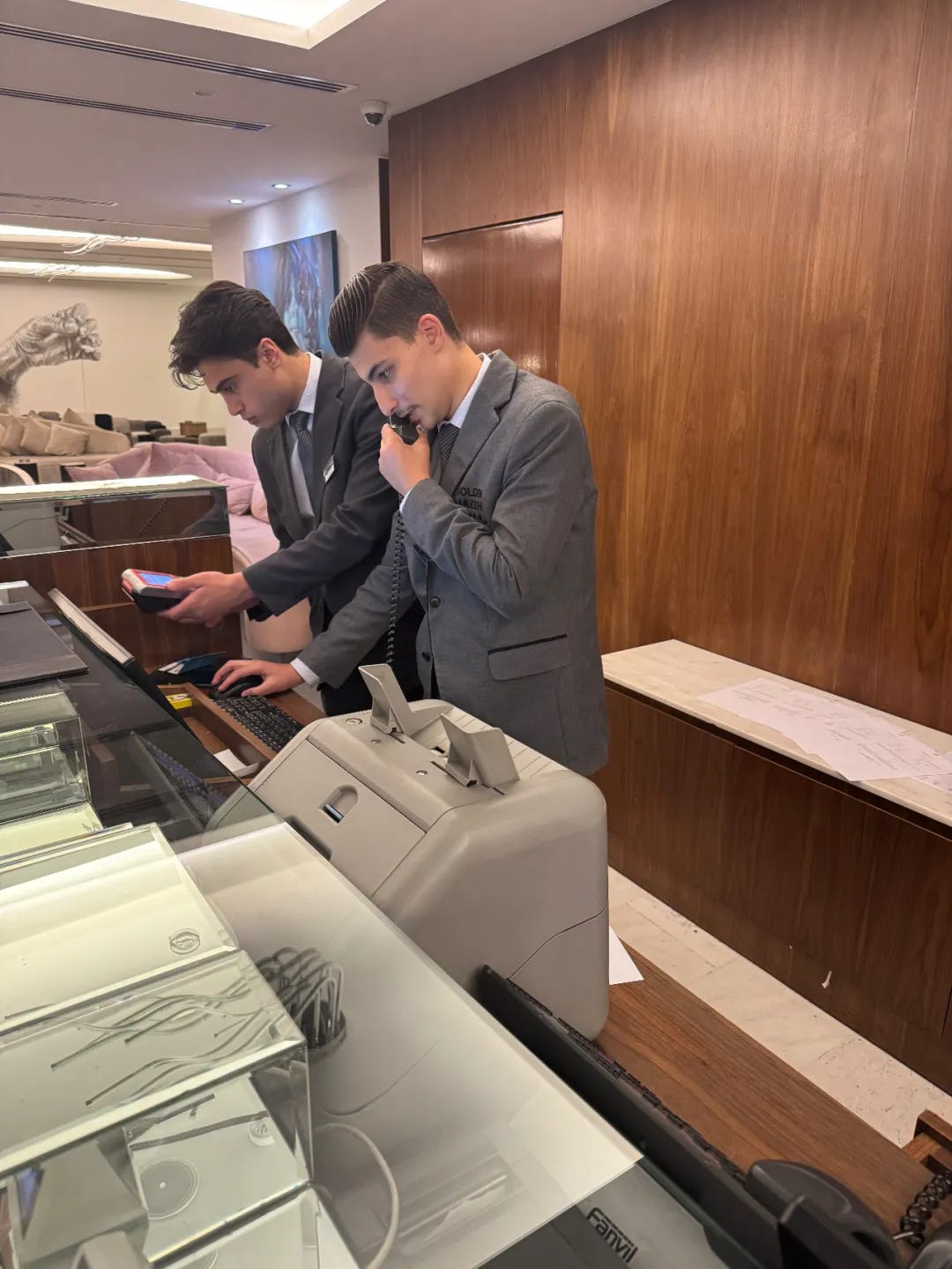
I do really like Damascus, because its spirit and energy reminded me of China in 1949. At the dawn when an old, decaying government fled, and a young, energetic new one took over. Most young people support the new government, and indeed, it has introduced many changes.
Due to my earlier years in Iran, whenever I traveled through the “Axis of Evil” (coined by Israel not me), I couldn’t help but compare them. Iran’s economy, though under sanction, is still far more developed than Syria’s, which was nearly ruined by war. But after thirty years of sanctions, the atmosphere in Iran has always felt depressing to me. Young people do not see hope; people idle their days away in cafés. It feels like there is an invisible net above their heads, trapping their thoughts and vitality. Such gloomy feeling is symbolised by women’s forced hijab. However, Iranians are also very creative and stylish, so they resist through colourful and fashion fitted scarves. It’s a silent resistance against the clergy’s code of conduct.
In Syria, the vibe feels completely different - much closer to Saudi Arabia, which I enjoy and of course had businesses in. Coming from a young entrepreneurial metropole myself, I’ve always been drawn to countries at the start of their growth curve, where you can sense people’s optimism. We can not compare Syria’s economy to Saudi Arabia’s by size, but by the vibrancy of minds, it does feel like postwar Europe that is poised to welcome its own Marshall Plan.
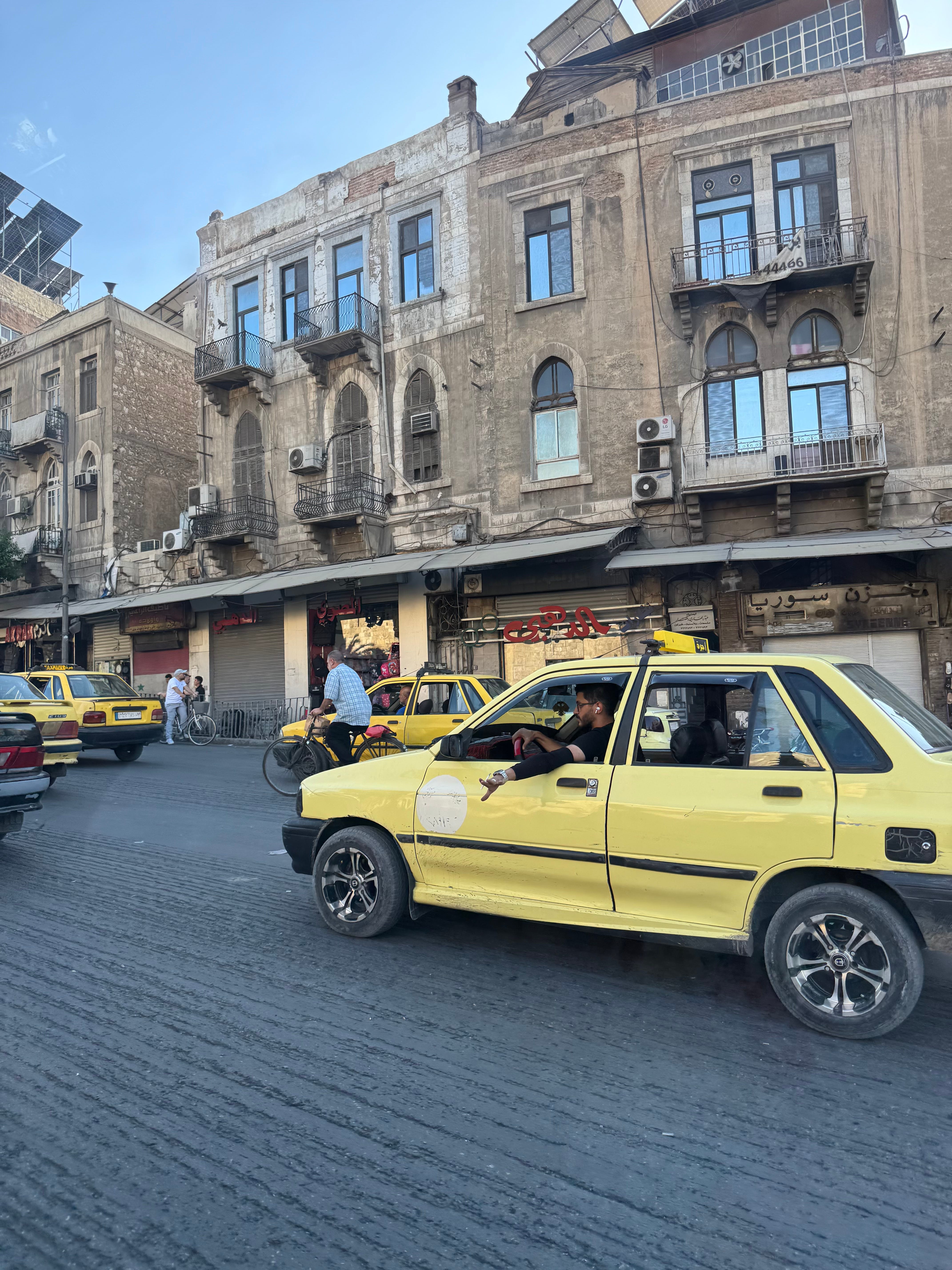
Under Assad, the country ran on kinship. Four oligarchic families, all relatives of Assad, controlled the nation. Innovation was stifled or stolen by the elites. Curfews were strict. The old city was forced to close after 9 p.m. Syrians were forbidden to touch U.S. dollars. Salaries were low. After the new government took power, restrictions on business hours were lifted, allowing merchants to stay open later and the streets to regain vitality. Wages have risen significantly — in June 2025, civil servants’ salaries increased by 200%. My tour guide said his own income had doubled.
When I spoke again with the UN official, I asked whether the optimism I saw among young Syrians was shared at higher levels. He agreed that it was. Like usual, a vast amount of donor money gathered in Syria. The U.S. and Russia, unable to appear directly due to conflicting interests, have sent proxies.
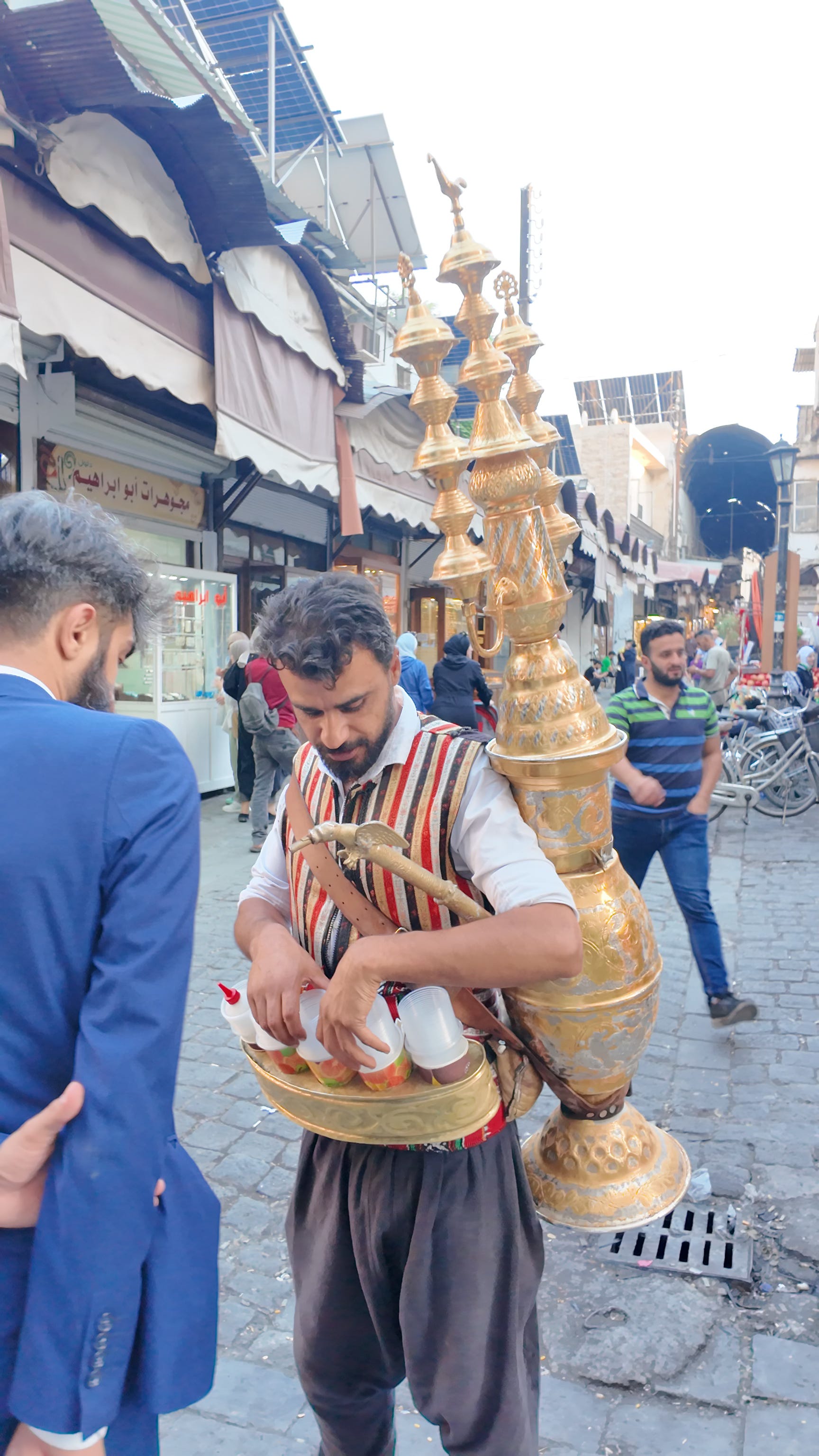
I remain optimistic about Syria’s prospects. After all, following the scent of opportunity is what colonial powers have always done best. May the new Syrian government continue to manage its independence, unlike too many Middle Eastern strongmen predecessors in other countries, who have fallen into the illusion that it can play the great powers off against one another. However, the eagle, the cow, and the bear are the world’s most patient predators and they play too well that only extremely exceptional leaders from the third world could truly outwit in the game of the balance.
Before we end the Damascus chapter, let’s return our lens to its old city.
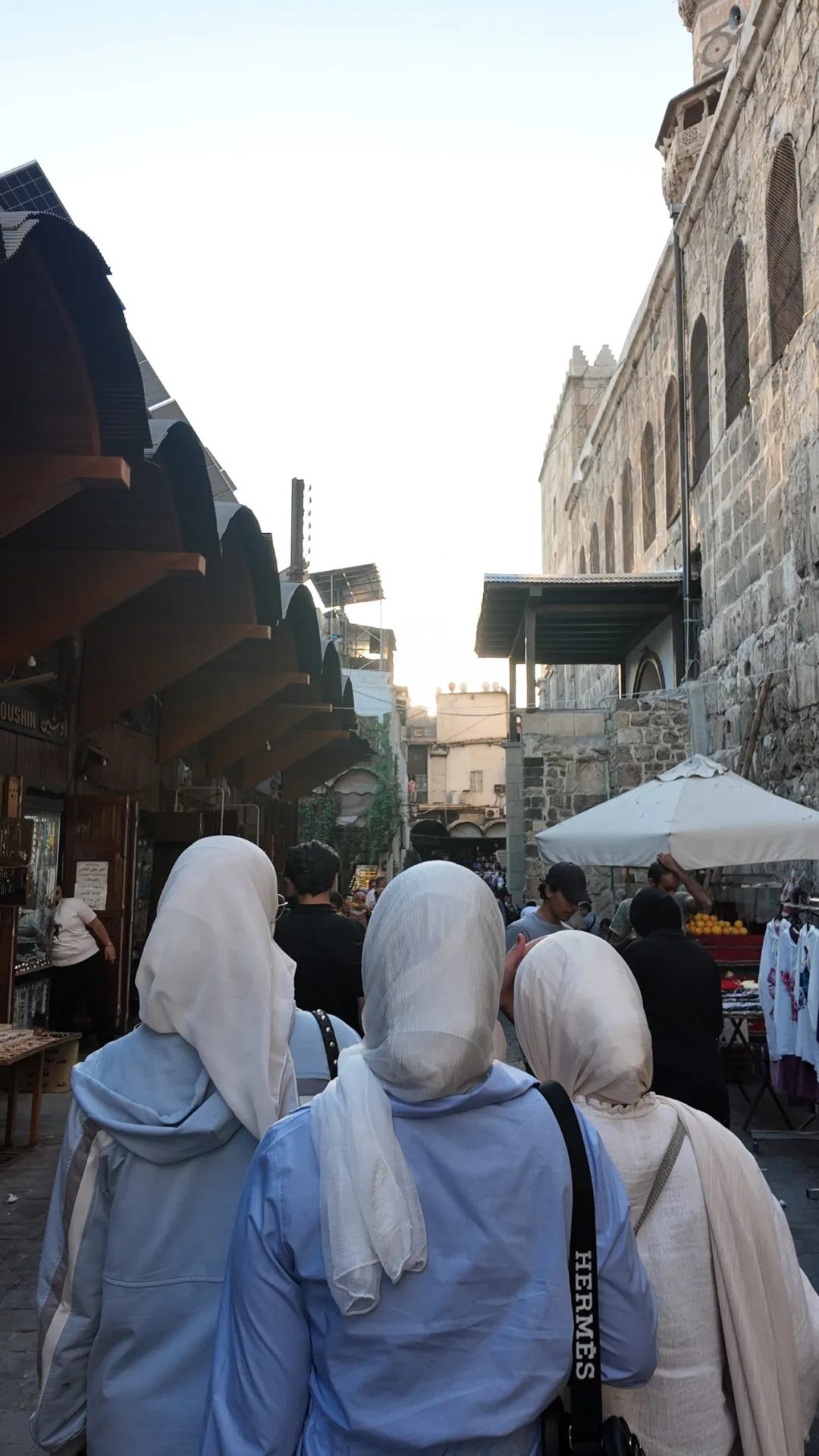
Before arriving, I did my research. I read that Damascus is one of the oldest continuously inhabited cities in the world. I thought it was just a touristy notion, but once I arrived, I realised it wasn’t marketing hype. Walking through the old bazaar, I saw the Roman columns still standing proudly above the modern streets. What was once a temple to Jupiter is now a marketplace crammed with people. Ancient cities carry a certain heaviness. The weight of history and the lightness of human life intertwined in a breath. Compared with cities like Xi’an, Nanjing, or Isfahan, each of which saw dynasties rise and fall within a few centuries, here the continuity of civilisation feels endless.
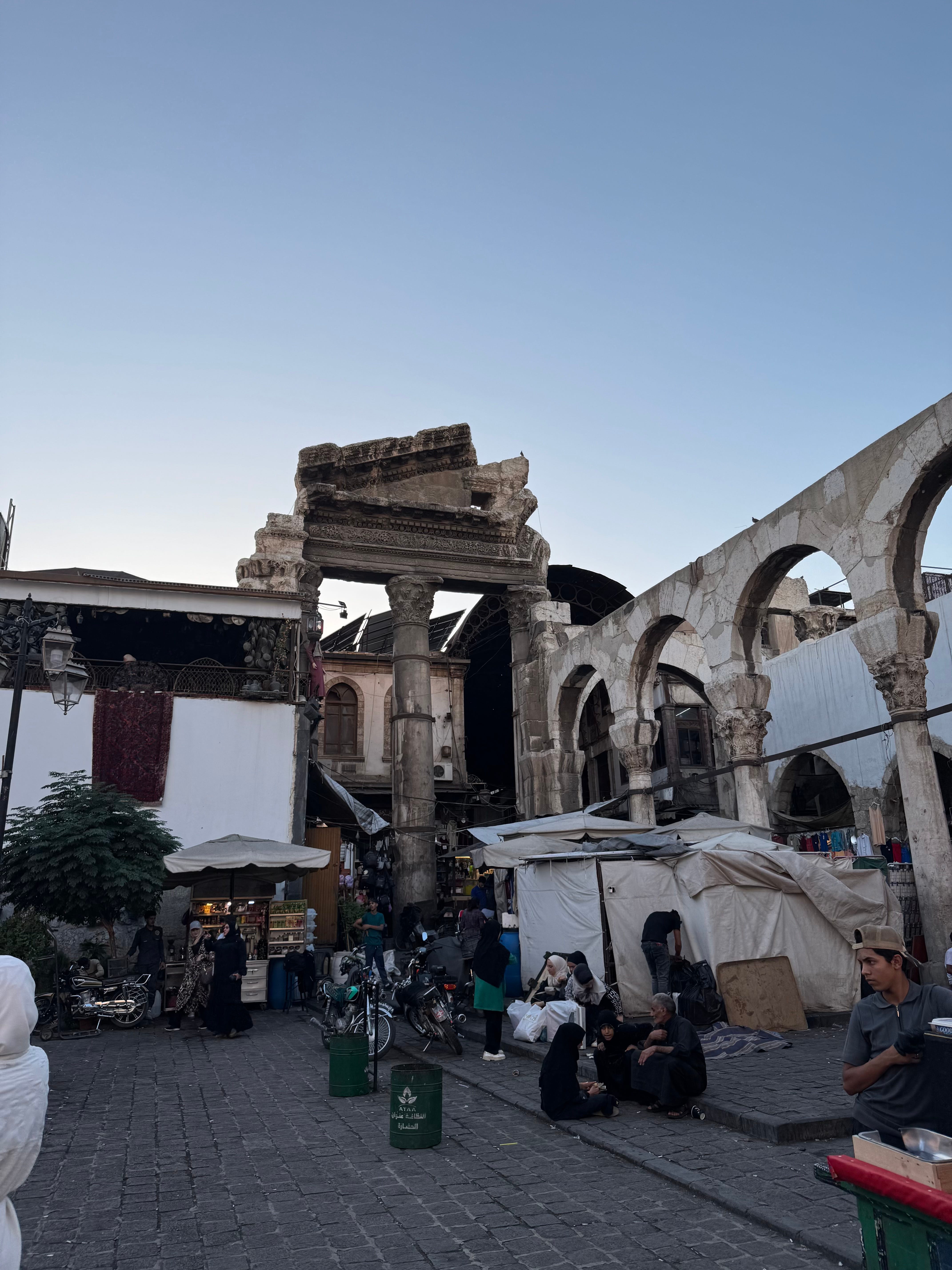
Nearly every ancient empire has ruled this city: the Assyrians, Alexander’s Greeks, the Romans. In 661 CE, the Umayyad Caliphate established its capital here. Afterwards came the Abbasids, the Seljuks, Crusaders, Mamluks, and Ottomans. For centuries Damascus was a crossroads between East and West. During the Ottoman Empire, it was the most important stop on the pilgrimage route to Mecca. In modern times, it was colonised by the French, and after Syria’s independence in 1946, Damascus became the capital.
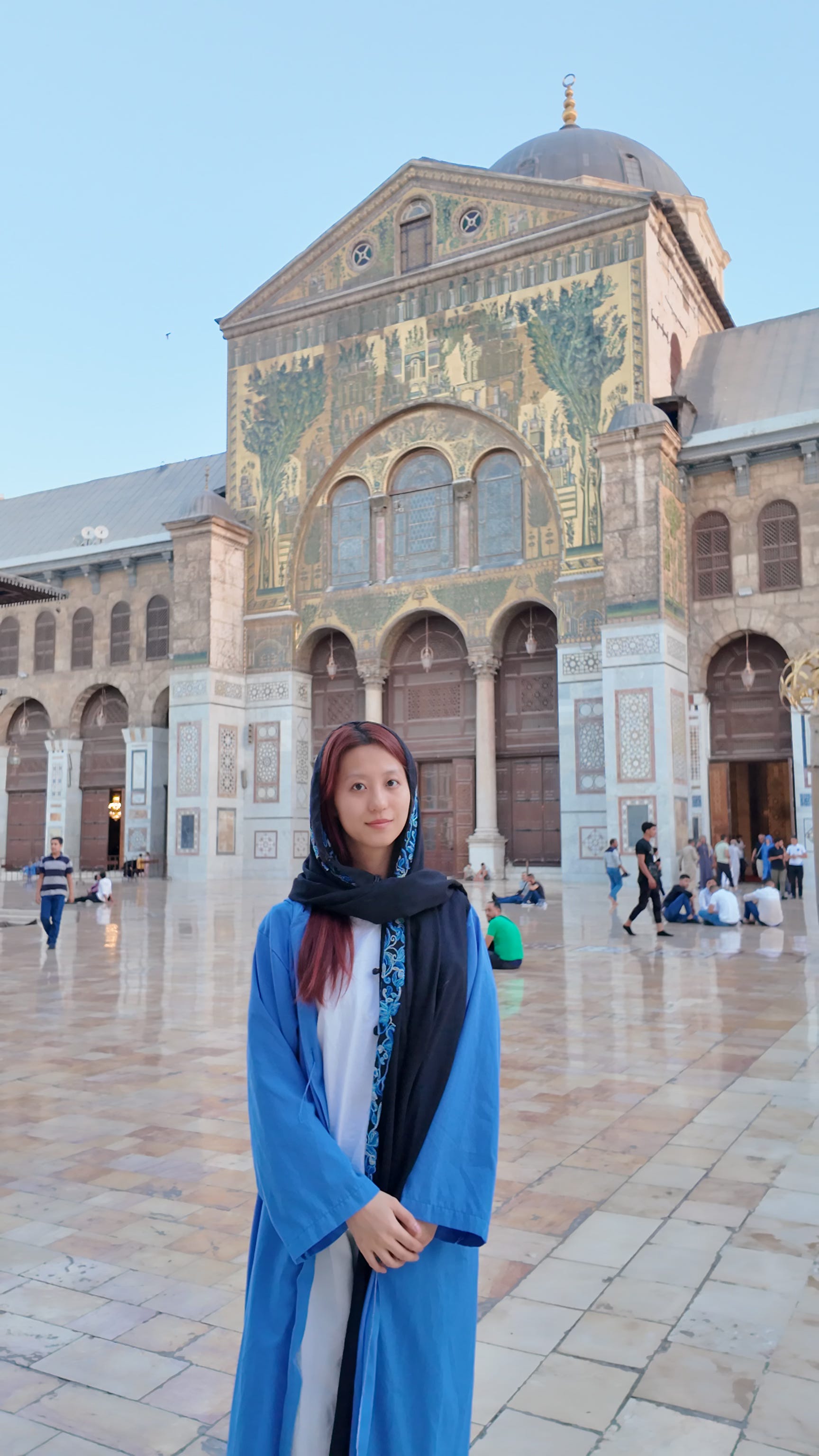
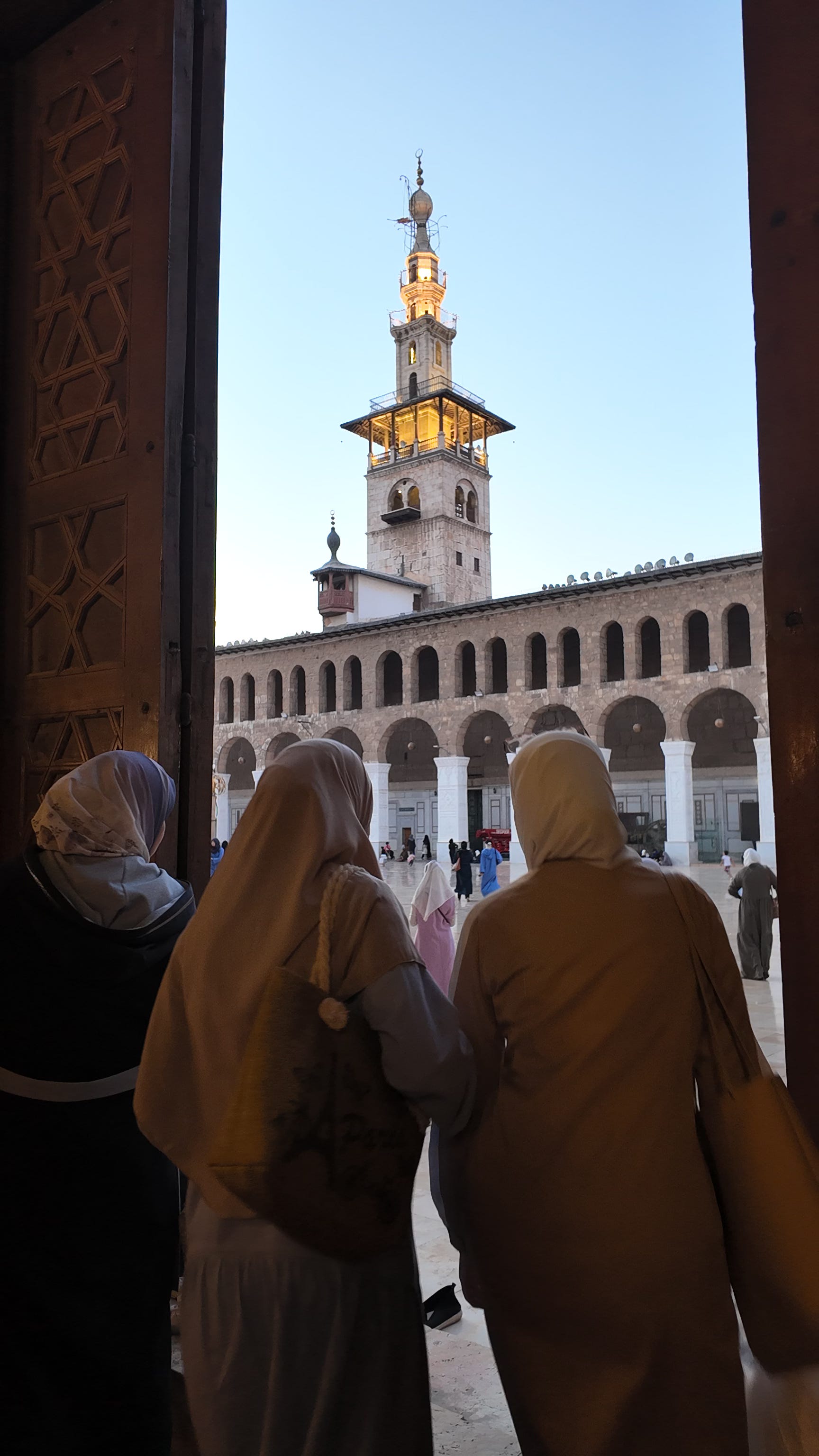
One of the most famous buildings in the city is the Umayyad Mosque. It began as a Roman temple to Jupiter, later became a Christian cathedral dedicated to John the Baptist, and in 715 CE, Caliph Al-Walid I built the mosque upon that foundation. During the Assad years, it was restricted to certain sects, but now it’s open to the public. My tour guide said, “Before Assad made all these divisions, Sunni and Shia didn’t matter. We studied together. No one cared, and most people didn’t even know which faith their classmates followed.”
Around June 2025, the new government carried out a massacre of thousands of Alawites in the south. The Alawites, a small, secretive sect of Shia Islam, are not considered mainstream Shia. Most hide their identity; under Assad, their faith was kept secret. After the fall of the Assad regime, the new government naturally sought revenge against its supporters. But since Alawites don’t wear their faith on their foreheads, no one can say how many innocents were killed by mistake.
I asked my tour guide whether the power transition had been terrifying. He said it was the most frightening experience of his life. For one or two weeks, he and his family locked themselves inside their home as they were too afraid to go out. The streets were downgraded into lawless mess. Random and timeless looting, killing, robbing went rampant. Once, two armed men thought their house was unoccupied and tried to break in. At the precise moment, his father screamed for help, and neighbors heard the noise and came to help. Then, the gunmen fled. When the new Rebel army entered Damascus, it imposed strict laws, withdrew weapons from civilians, and maintained order. The new army did not harass civilians but instead opened many of the previously restricted checkpoints. The Rebels won trusts, and many civilians donated money to help the government rebuild the economy.
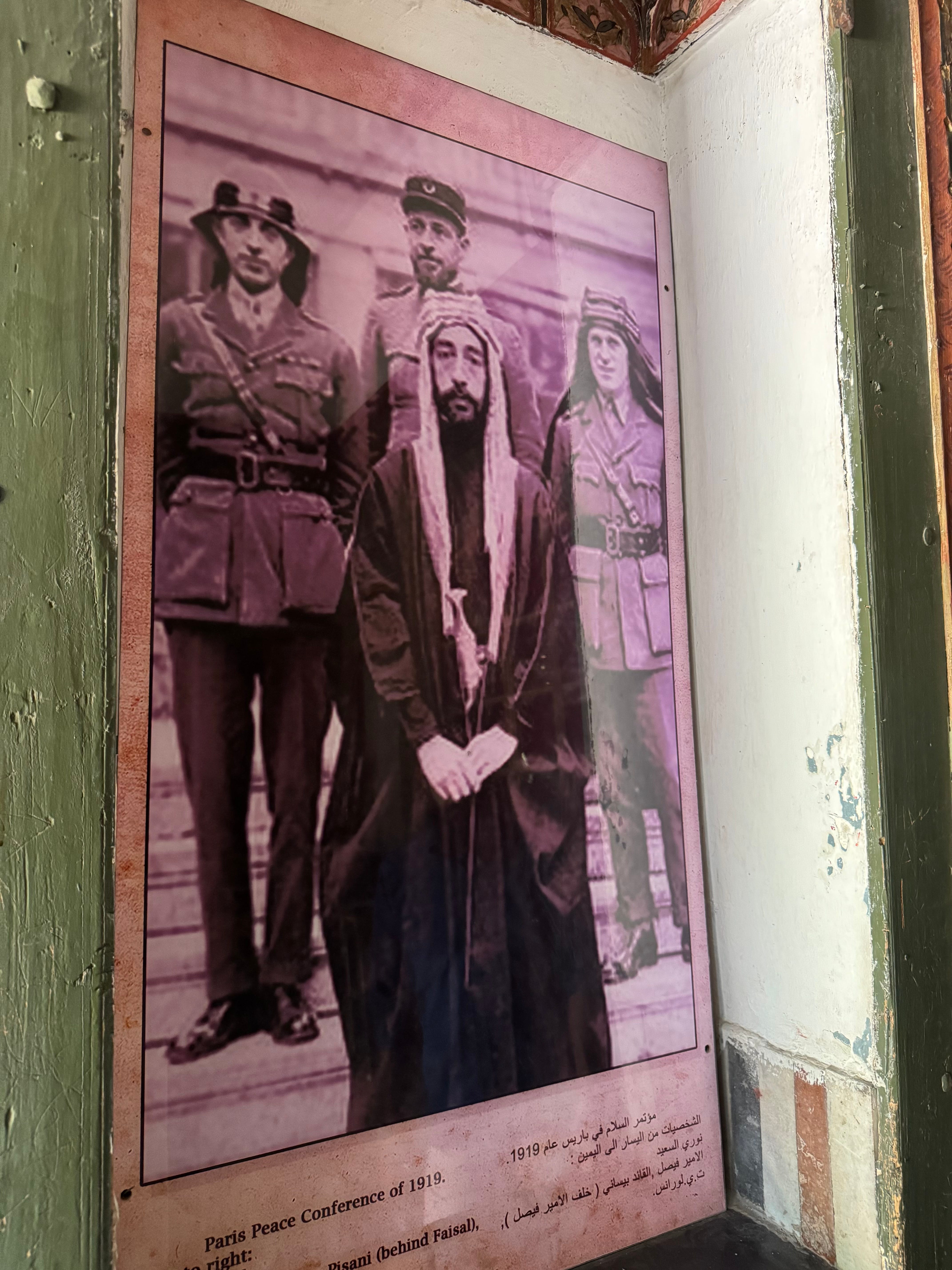
Syria was never truly a nation. In this world, countries like China - with thousands of years of continuous history under one dominant civilisation - are rare. Modern Syria, Lebanon, Iraq, Israel, and Palestine were the border provinces of empires for thousands of years. Only after British and French colonisation did they become “nations,” carved out of the Ottoman provinces. Iraq, for instance, never had a national identity before. After World War I, the British installed King Faisal I, the same Faisal from the era of Lawrence of Arabia, as the ruler of the new state of Iraq meanwhile governing Damascus. The Azm Palace in Damascus, once the residence of Ottoman governor Azm Pasha, later hosted King Faisal I.
Because these countries were invented from thin air and never experienced a unifying process like China, their people remained divided by geography, faith, and ethnicity. Loyalty was to tribe and religion, not to the idea of a “Syrian nation.” The concept of Syrian patriotism was weak, if it existed at all.
“But now that the new government is in power,” my guide said, “for the first time in my life, I feel proud to be Syrian.”
This land has endured endless wars and death. Yet today it stands again, reclaiming its place as a nation. I think we Chinese understand this better than anyone. Once, our own country of 400 million lived in poverty, hunger, and despair; people were slaughtered by warlords and foreign powers as if they were sheep. Life had no value back then. But after decades of struggle, Chinese people eventually won peace, dignity, and unity. Today, even with our vary different dialects and backgrounds, Chinese people speak one language, under one regime.
For the Syrians, may your future behold peace.
*This article is first translated by AI and I edited on top of the English version.
**I have not discussed the ongoing tension between China and TIP (the escaping Uighurs fighters hosted by the current Syrian government). This is an ongoing political issue that would require extra analysis. In a way I am quite daredevil, like usual, to visit Syria out of nowhere and be “on field” while others are merely discussing on paper. However, this is not encouraged as readers should not blindly follow my footsteps and neglect the often underlooked political scenario, especially for Chinese visitors. I find many Chinese visitors quite ignorant to political tensions and assume the rest of the world is as peaceful and well infrastructured in China. As you can see, much of the places I went are empty - empty for a reason. Please be advised.
***For Bosra chapter, I quoted the information given by my tour guide. The “official” year for Russia to airstrike/join the war is 2015 on the internet.