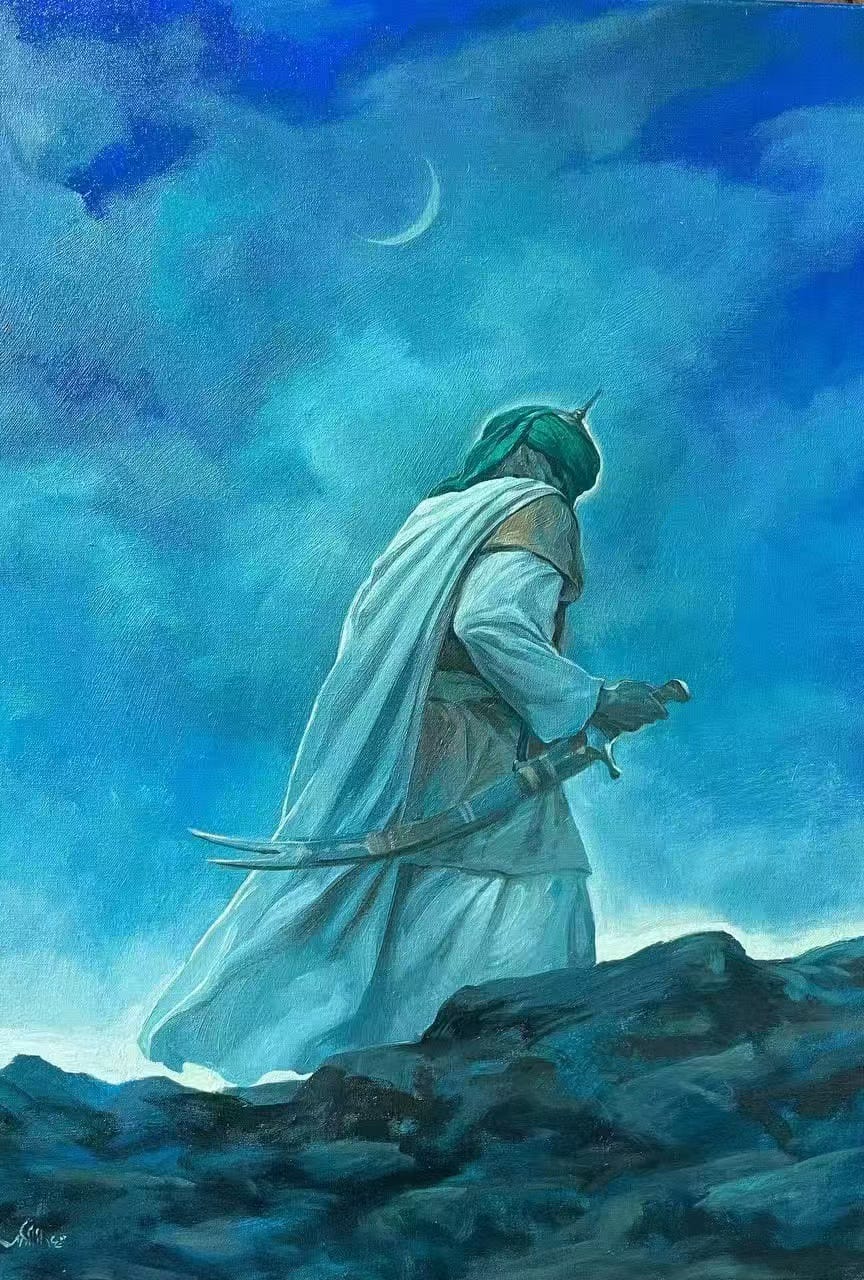
The Powerful Handsome Young Man Died Too Soon
Between the Prince of Lanling and Imam Ali

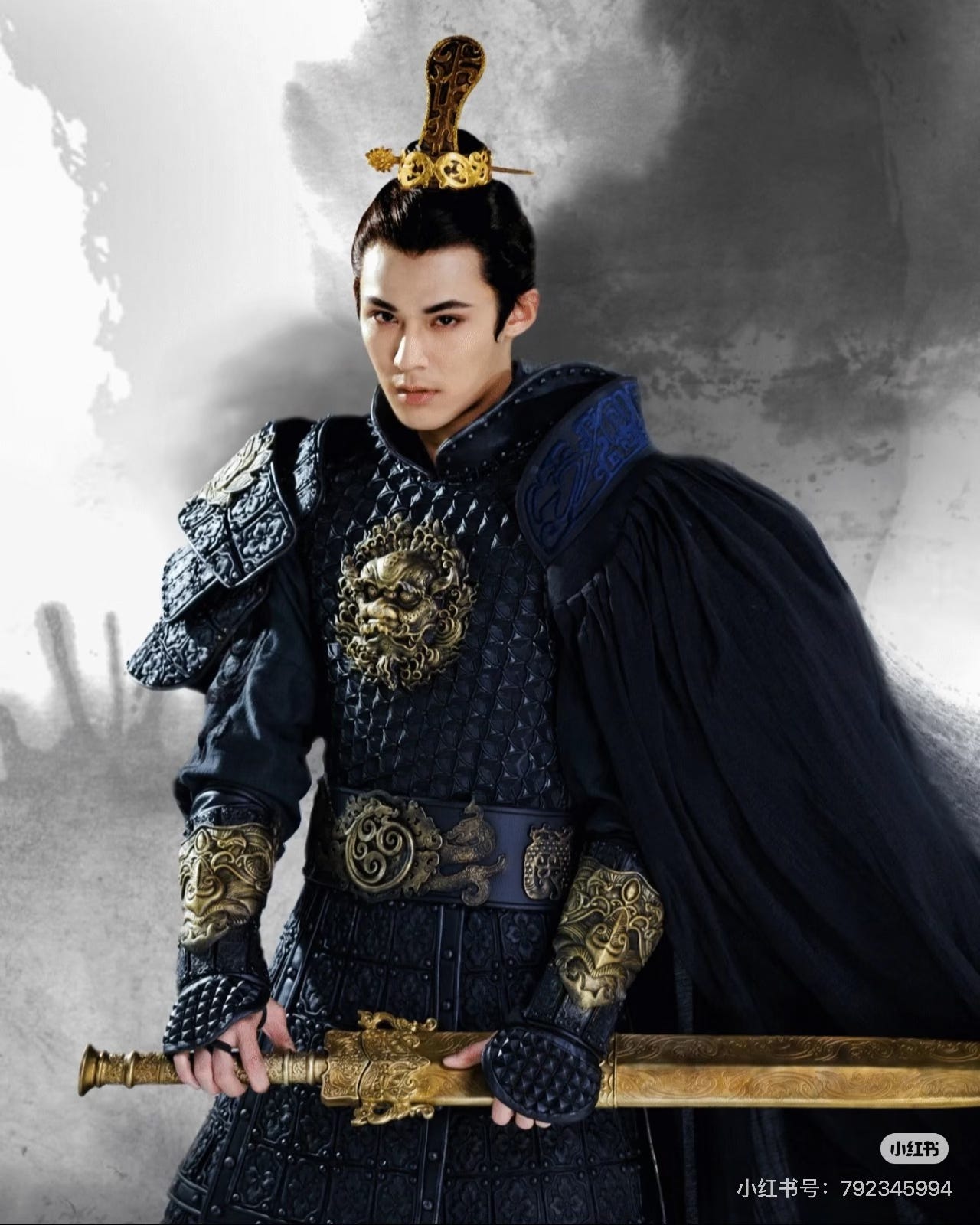
Many observers, both Eastern and Western, struggle to understand Shiists’ deep loyalty to Ali. For me, there is a simple analogy: the beloved Prince of Lanling in Chinese history.
The Prince of Lan Ling (d.573 CE), was a celebrated prince-general of the Qi dynasty, a short-lived dynasty in China’s fragmented history. Historical records describe him as “delicate in appearance, yet resolute in spirit; refined in both voice and bearing” (貌柔心壮,音容兼美). Chinese historiography rarely dwells on appearance, unless a man is so striking that even insecure male historians felt compelled to remark on it.

The Prince of Lanling was “beautiful”. His features were delicate, almost feminine, yet his presence was anything but soft. He was born to a low-ranking concubine, a woman of such marginal status that her name was not recorded in history. One of his brothers, by contrast, was born to a singing performer whose name was preserved. This contrast reveals just how obscure Lanling’s mother was. Despite this marginal birth within the royal lineage, he rose quickly, earning both his princely title and his reputation through military prowess. He distinguished himself in the Battle of Mang Mountain, where he led a daring charge straight into enemy lines, breaking the siege against overwhelming odds. He was also said to wear a silver mask in battle, so that his enemies would not underestimate him for his beauty.

The Qi dynasty is remembered for a succession of young and deeply unstable emperors associated with capriciousness, jealousy, cruelty, and incest. Qi emperors were the worst of the Targaryans in China. Against this backdrop, the Prince of Lanling and his five brothers formed the backbone of the state. Unlike the excesses of the court, he was known for a rare steadiness in both character and conduct. He had only one wife, to whom he was notably loyal. He also shared rewards with his soldiers, sometimes as little as a single melon.
At the age of 32, he was ordered to die by a bowl of poisoned wine. His wife, the Princess of Lanling, urged him to plead his case before the young emperor. But the Prince understood the depth of the emperor’s suspicion. It would be futile. He refused and drank the liquor.
Within four years of his death, the Qi dynasty fell to the Northern Zhou. The entire Qi royal line was slaughtered.
The Prince of Lanling is a symbol of injustice. He is remembered as a near-perfect figure - exceptionally handsome, well-mannered, fair, and loyal - yet unjustly put to death. The elusive man attracted fan girls for centuries (myself included). Chinese history is full of martyrs who died in defiance, but a young and beautiful one is far harder to forget.
Imam Ali, similarly, the fourth caliph of the early Islamic community, was assassinated while praying at the Great Mosque of Kufa. A mosque is a sacred space and any act of violence within it is seen as a violation of the divine. An assassination during prayer is unthinkable - yet it was precisely so that Ali was murdered.
Imam Ali was young, striking, erudite, composed, and loyal to his wife - Lady Fatima, beloved daughter of the Prophet. These qualities were so evident that even his opponents could not diminish them in their accounts.
The Prince of Lanling and Ali both came to embody a similar archetype: the near-perfect young man - loyal, virtuous, and unjustly murdered. Resistance matters, but it lingers longer when it is carried by someone people idolise. Especially when he is young and beautiful, but gone too soon.